Sensors and AI could make textile recycling viable
Textile recycling is stuck on sorting, not intent. Sensors and AI could finally separate blended clothes into fibers worth remaking.
The fashion industry does not have a donation problem. It has a sorting problem. A SINTEF-led research effort makes that plain: the real bottleneck in textile recycling is figuring out what a garment is made of quickly, accurately and cheaply enough to turn it back into something valuable.
The hidden bottleneck is the pile before the machine
Mixed-fiber clothing is the hardest case, because a single sweater can hide a tangle of polyester, cotton, elastane and finishing details that make recycling messy. SINTEF says one tonne of textile waste can contain about 2,000 garments, and that same load can also include bed linen, towels, curtains, upholstery and carpets, which is exactly why simple hand-sorting breaks down at industrial scale. In Norway alone, more than 80,000 tonnes of textiles were thrown away in 2022, and the amount is still rising year by year.
That waste matters far beyond the bin. The clothing industry accounts for 8% to 10% of total CO2 emissions, and Norsk Tekstilgjenvinning says recycling fibre can cut emissions by 91% to 97% compared with making new fibre. That is the kind of reduction the fashion industry has been chasing for years, but it only becomes real when the feedstock is clean enough to reuse.
Why most old clothes still lose value
Right now, industrial recycling of discarded clothing is almost nonexistent, which is why so much textile waste still ends up downgraded. Today’s low-value end points are familiar and underwhelming: rags, mats and insulation, not the next generation of shirting, denim or knitwear. The old, long-standing answer in richer countries has been to ship textile waste to poorer countries, a fix that moves the problem instead of solving it.
Europe is already under pressure to do better. The European Environment Agency says the EU generated an estimated 6.95 million tonnes of textile waste in 2020, about 16 kilograms per person, and 82% of that was post-consumer waste. Of the total, 4.4 kilograms per person was collected separately for reuse and recycling, while 11.6 kilograms per person still ended up in mixed household waste.
The policy direction is clear, but the infrastructure is not there yet. The EU Waste Framework Directive requires member states to establish separate collection systems for used textiles from 2025, yet the EEA warns that without enough sorting and recycling capacity, more collected clothes may still be incinerated, landfilled or exported outside the EU. McKinsey’s 2022 estimate is the bluntest summary of the gap: less than 1% of textile waste is now fiber-to-fiber recycled, even though as much as 70% could eventually be recycled that way once the system matures.
What sensors and AI can actually do
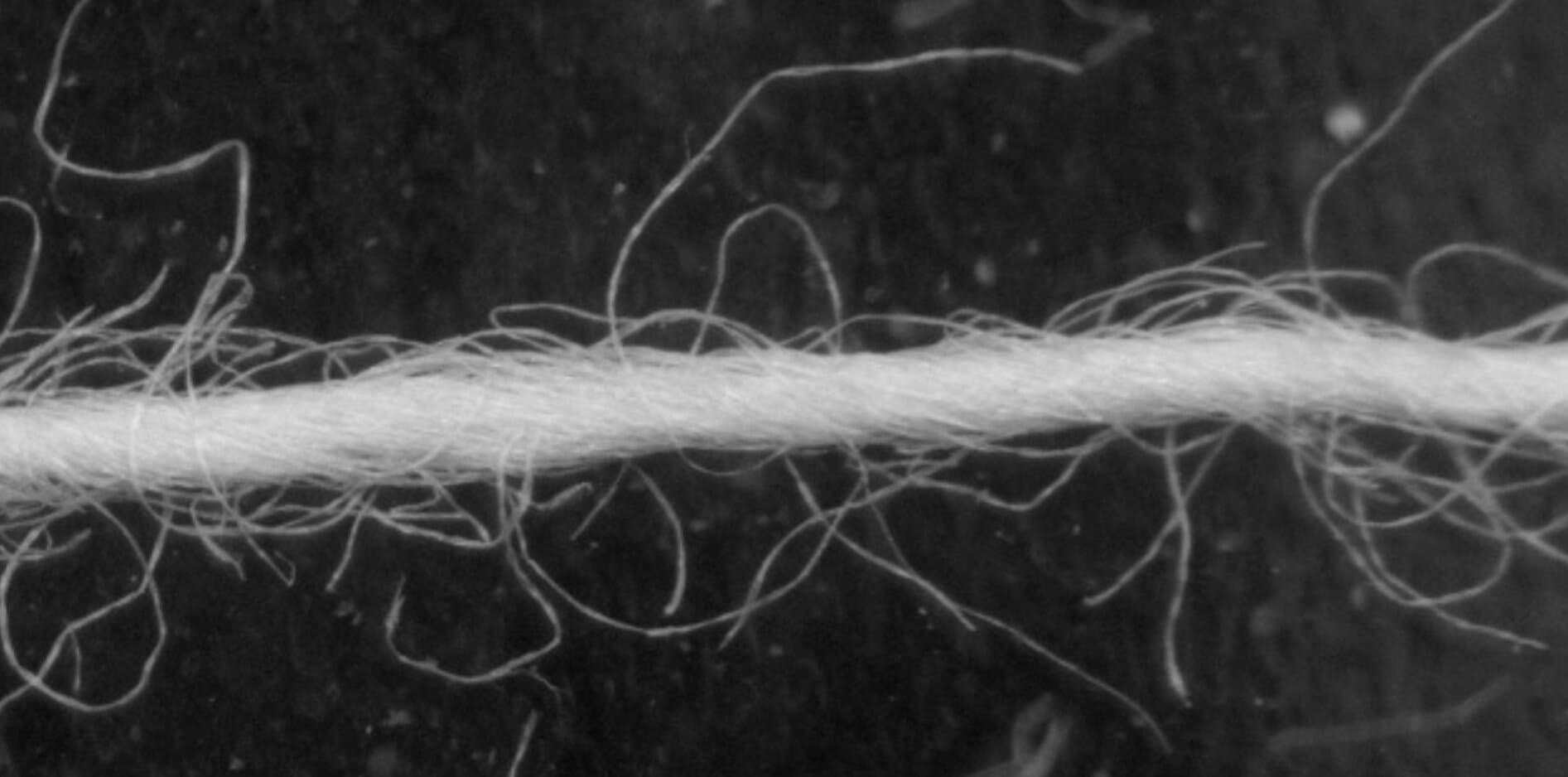
This is where the technology gets interesting, and a little glamorous in its precision. Marianne Bakken, who works on the SINTEF project, says the team has only examined a small piece of a much larger puzzle, but the pilot results point to a useful shift: a sensor system with an extremely high-resolution camera, almost at a microscopic level, paired with artificial intelligence that can reveal fabric type, structure and fibre quality.
That matters because better sorting changes what happens next. If the system knows more about the incoming material, the shredding process can be adjusted to produce better fibre output instead of a generic mass destined for low-grade use. In practice, this is the difference between treating used clothing as trash and treating it as a raw material stream with distinct price points.
Other groups are attacking the same problem from slightly different angles. RIT’s Golisano Institute for Sustainability is developing an automated system that uses machine learning and laser technology to identify and remove non-recyclable elements such as zippers, logos and mixed materials. Refiberd, meanwhile, uses spectroscopy and AI to sort materials for textile-to-textile recycling and reuse, and its CEO Sarika Bajaj has pointed out that different recyclers care about different fiber signatures while manual sorting remains slow and label information is often inaccurate.
Who is closest to making it real
The most concrete progress is happening where sorting meets actual industrial capacity. Norsk Tekstilgjenvinning opened Norway’s first recycling plant in Sandefjord municipality in 2024, and the company says it was first in the Nordics on mechanical textile recycling. Business Norway describes it as Norway’s first textile-to-textile recycling facility, with fibres returning to the value chain as new textile products.
NTG’s model shows why the technology conversation cannot stop at the lab. The plant can mechanically break down clothes that cannot be reused into fibres, which are then sold to spinning mills to make yarn for new clothes, including polyester and blended fabrics. That is already a step beyond the usual downcycling route, but it still depends on accurate sorting before the shredders ever start turning.
In the United States, the scale of the problem is even harder to ignore. RIT says more than 11 million tons of textiles end up in landfills every year, and Waste Dive reported in March 2026 that textile waste is the fastest-growing waste stream in the U.S., with only about 15% of textiles recycled or reused annually based on 2018 EPA data. Those numbers make a strong case for automation, but they also underline the implementation challenge: the technology has to work fast enough, accurately enough and cheaply enough to handle real municipal and industrial volumes.
The test now is speed, cost and accuracy
That is the part that will decide whether textile recycling becomes a true system or stays a pilot story. High-resolution imaging, spectroscopy, laser sorting and AI classification all promise better fiber identification, but they must survive the realities of throughput, capital cost and noisy post-consumer waste. A line that can identify a pristine single-fibre garment is one thing; a line that can keep pace with mixed municipal collection, inaccurate labels and a tonne of roughly 2,000 separate items is something else entirely.
The opportunity is still enormous. Europe’s separate collection rules, Norway’s new plant in Sandefjord and the U.S. push from RIT and Refiberd all point in the same direction: the future of textile recycling will belong to the systems that can sort the mess before they try to remake it. Once the industry learns to see fabric properly, the recycling conversation changes from wishful thinking to manufacturing.
This article was produced by Prism’s automated news system from verified source data, official records, and press releases, then run through automated quality and moderation checks before publishing. The system is built and supervised by the people who set the standards it runs under. Read our full AI policy.
Know something we missed? Have a correction or additional information?
Submit a Tip