April Lockhart Champions Expressive Office Dressing Beyond Safe Neutrals
April Lockhart’s anti-minimalist office dressing proves that suiting, texture, and drape can read polished, not costume-y, when fit is treated as a style tool.
Expressive workwear is no longer a rebellion, it is the new professional language
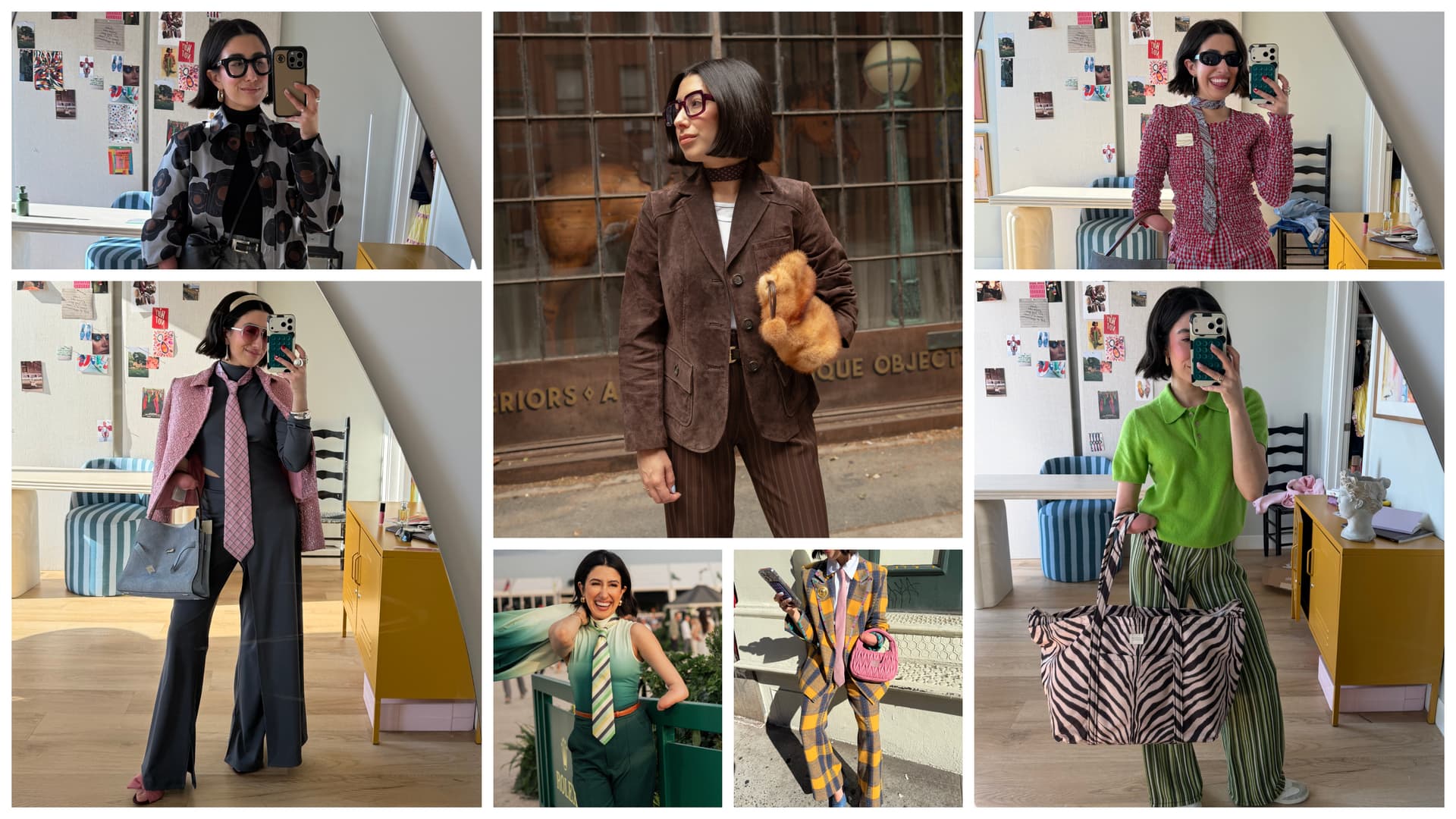
April Lockhart’s case for office dressing starts with a simple refusal: work clothes do not have to disappear into beige obedience. Her version of the modern office wardrobe leans into saturated suiting, tactile fabrics, and trousers with enough drape and stretch to look sharp while moving easily through a full day. The result is not performance dressing or weekend energy in a conference room. It is a controlled kind of maximalism, the sort that makes a strong first impression without ever looking desperate for attention.
That argument lands because the office itself has changed. Brightmine found that formal dress codes enforced through employee contracts fell from 30% in 2018 to 4.3% in 2024, a collapse that explains why so many wardrobes now feel less uniform and more personal. Brightmine also reported that 55.8% of employers now rely on non-contractual guidelines, while 25.4% operate with informal expectations, leaving plenty of room for taste to matter more than rigid rules. In other words, dressing well at work is less about compliance than calibration.
The new office uniform starts with color, not caution
The easiest way to abandon safe neutrals without tipping into costume is to build around one saturated suit. Think deep crimson, cobalt, emerald, aubergine, or lacquered burgundy, shades that feel intentional enough for a boardroom and vivid enough to reset the mood of a weekday morning. A strong suit does the heavy lifting, so the rest of the outfit can stay disciplined: a crisp knit, a clean tee, or a simple button-down keeps the silhouette grounded.
April Lockhart’s approach is especially useful because it respects proportion. A color-forward blazer with a matching trouser already has presence, so the styling should sharpen rather than overwhelm it. In a conservative office, keep the line sleek, the tailoring precise, and the accessories restrained. In a creative office, let the color do more of the talking and lean into bolder earrings, a graphic bag, or a shoe with a little personality, as long as the overall shape stays polished.
Texture is where the outfit gets its point of view
If color is the headline, texture is the sentence that makes the look memorable. Lockhart’s maximalist office formula works best when one fabric brings depth: satin against wool, crepe against leather, mohair against matte tailoring, or a subtle sheen layered under something structured. One high-impact texture is enough to keep the outfit interesting; more than that, and the look starts to read like eveningwear trying to make a 9 a.m. appearance.
This is where the anti-beige brief becomes particularly smart. Neutral outfits often rely on color to carry interest, but expressive workwear uses surface instead. A brushed wool blazer over fluid trousers can feel richer than a flat black suit. A silk shirt under a sharply cut jacket catches the light in a way that reads expensive, not loud. For conservative environments, use texture as an accent hidden inside a strict silhouette. For creative workplaces, let the fabric show, but keep the fit disciplined so the effect remains editorial rather than theatrical.
Fluid trousers make the whole idea wearable
The most convincing part of Lockhart’s formula may be her insistence on trousers that are both elegant and comfortable. That matters because the wrong pant can turn maximalism into fatigue by lunchtime. A fluid trouser with drape and stretch lets the silhouette move, which is exactly what keeps expressive dressing from feeling like a costume piece borrowed from a photo shoot.
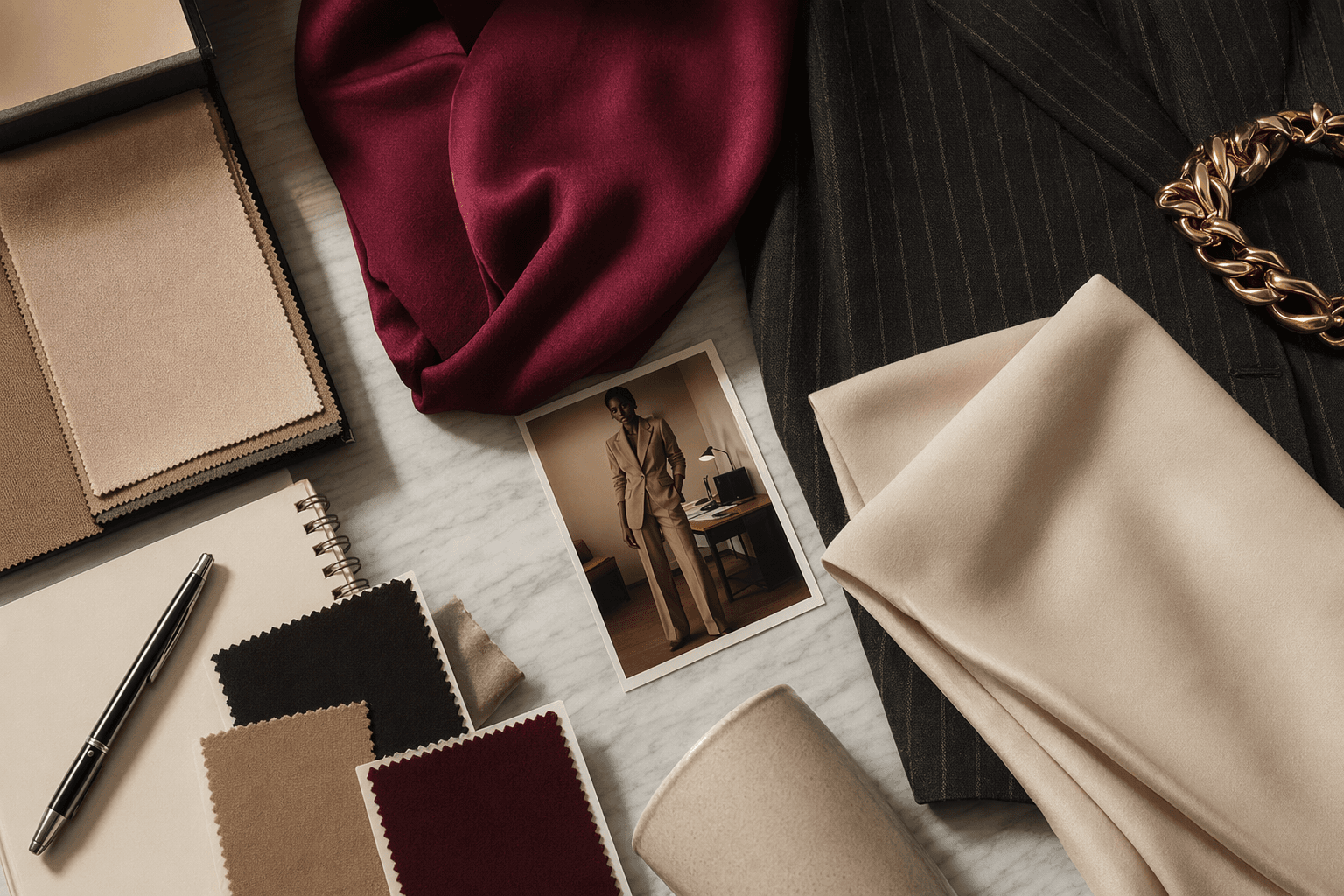
Pair those trousers with clean basics and the outfit immediately reads current. A sleek tank under a statement blazer, a neat knit with wide-leg tailoring, or a structured top tucked into a relaxed trouser all create balance. The more dramatic the fabric or color, the simpler the base layer should be. Conservative offices benefit from hem lines that skim rather than sweep and from trousers that stay tidy through sitting and walking. Creative offices can push the volume wider or the cut looser, but the discipline of a clean top keeps the silhouette from dissolving.
Comfort is not a compromise, it is part of the aesthetic
Lockhart’s role as the founder of Disabled& and an advocate for the disabled community gives this conversation real weight. Her take on office style recognizes that fit, comfort, and self-expression are not separate concerns, especially in workwear that has to function across long days, commutes, and unpredictable schedules. The best expressive office clothes do not ask the body to cooperate with discomfort in the name of style.
That perspective also helps explain why the new work wardrobe feels more personal. International Workplace Group found that 79% of U.S. hybrid workers dress differently now because of more flexible work environments, and workers associated that shift with quiet luxury, dopamine dressing, preppy streetwear, and individualism. Those labels may sound contradictory, but they all point to the same truth: people want clothes that reflect how they actually live. In that context, Lockhart’s mix of polish and personality feels less like a trend and more like a practical response to modern work.
How to scale the look for your office
- In a conservative office, anchor one vivid piece, then keep the rest tailored and contained. A jewel-toned blazer with black trousers and a crisp top is enough to suggest confidence without ignoring the room.
- In a creative office, let color and texture work together. A saturated suit in a rich fabric, or a draped trouser with an unexpected blouse, can carry more drama as long as the fit stays sharp.
- If you want one high-impact detail, make it the fabric. A satin top, brushed wool jacket, or glossy shoe can change the entire mood of an outfit without adding clutter.
- If you want one low-risk upgrade, choose trousers first. Fluid tailoring with stretch gives you movement, structure, and longevity, which is exactly what makes expressive dressing sustainable in real life.
The post-pandemic office wardrobe is no longer built around disappearing into the background. Marie Claire’s survey work showed that 47% of respondents were looking forward to getting dressed up for work again, and more than one-third were shopping for a new work wardrobe, which says plenty about how much appetite there is for intention in daily dress. April Lockhart’s message fits that mood perfectly: the smartest office clothes now are the ones that allow personality to show, while still looking like they understand the assignment.
This article was produced by Prism’s automated news system from verified source data, official records, and press releases, then run through automated quality and moderation checks before publishing. The system is built and supervised by the people who set the standards it runs under. Read our full AI policy.
Did this article answer your question?