AW26 Denim Reinvents Workwear Roots with Transformable Jacket Shapes
AW26 denim drops the skinny-versus-wide fight and gets practical: transformable jackets, sharper cuts, and workwear details that actually change how women dress.
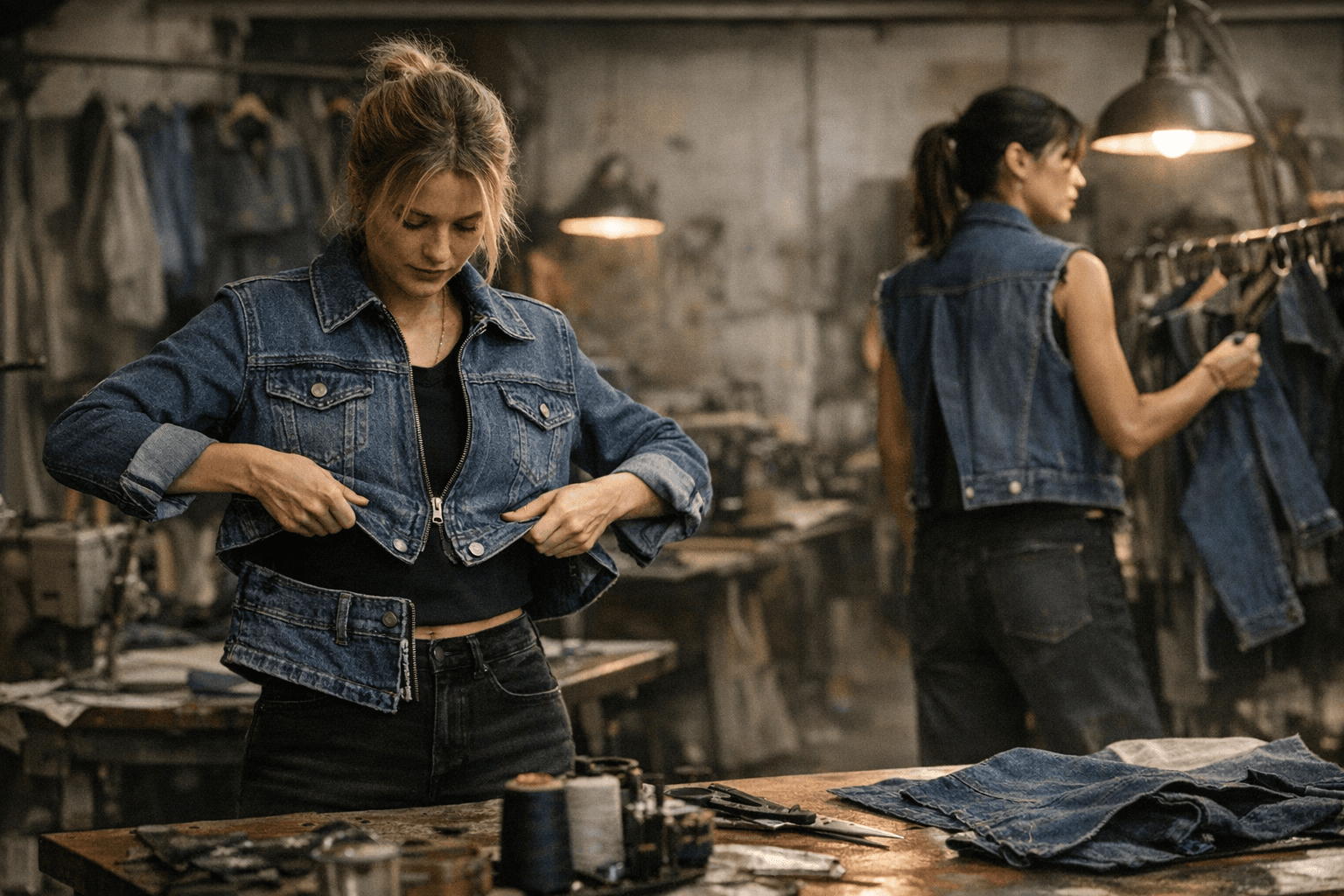
Denim is shedding the lazy workhorse label and getting technical, sculptural, and a lot more useful. The AW26 story is not about choosing sides on skinny versus wide legs. It is about jackets that shift shape, layers that change proportion, and finishes that feel engineered instead of merely distressed.
The new workwear signal
FashionUnited’s AW26 denim read makes one thing clear: the fabric’s workwear roots are still the point, but the season is now about individuality and adaptability rather than a familiar uniform. That matters if you want denim that can move from weekday dressing into something more directional without looking precious. The old stonewashed baseline feels tired next to these new pieces, especially when designers from London to New York are treating denim like a material for construction, not just nostalgia.
The practical takeaway is simple. Look for denim that does more than sit there. The strongest AW26 shapes build in character through volume, length, and detail, but they also have a function. A jacket with a transformable line or an adjustable layer gives you more styling range than another standard trucker ever will.
The jacket is where the season really lives
The standout development is the denim jacket, which has moved far beyond wash updates and embroidered tweaks. AW26 collections pushed it into new territory with oversized collars draped around the neck, shoulder tabs, ruching, asymmetric cuts, layered constructions, and even denim trains. That is runway language, of course, but the idea underneath is useful: denim outerwear is becoming more architectural, more personal, and less predictable.
The most wearable version of that idea is the cropped, sharply drawn jacket. A rock-inspired cut with long sleeves still gives you edge, but it reads far more realistically than a trailing denim coat. A knee-length style with ruching or a jacket with a strong collar can work as a substitute for a blazer when you want structure without stiffness. The denim train belongs to the catwalk; the clean asymmetric jacket belongs in real wardrobes.
Transformable details are the real story
If you want to know what actually feels new, it is the transformable stuff. Stella McCartney showed jeans with two full-length vertical zips running from waistband to hem, so the silhouette can be worn symmetrically or shifted into an asymmetric shape. That is the smartest idea in the whole lineup because it turns one pair of jeans into multiple moods. It is also the kind of detail that could realistically land in retail without losing its point.
Eckhaus Latta took a more radical route, layering long denim legs cut out at the crotch and attached over brief shorts. Tibi added a loincloth-style panel over long jeans, while Jonathan Anderson’s JW Anderson presented a piece sitting between a skirt and capri trousers, finished with extra layers. These are runway constructions first, but they point to a broader commercial shift: denim is being used as a modular system, not just a pant.
For everyday dressing, that means you should watch for pieces that let you adjust proportion rather than commit to one silhouette. The most useful transformable details are the ones that change how the garment sits on the body, not just how dramatic it looks on the hanger.
What will actually make it into your wardrobe
The runway will always push denim into fantasy, but the retail winners are easier to spot. The shapes most likely to filter into actual workwear dressing are the ones that balance novelty with control: cropped jackets, layered tops, cleaner asymmetric hems, and trousers with a visible structural twist.
- A jacket with a strong collar or shoulder tab gives you shape without looking overdesigned.
- Ruching matters when it is used to contour the body, not to overwhelm it.
- Asymmetric cuts work best when the rest of the garment stays clean.
- Layered denim is strongest when one piece can be worn alone, then styled under tailoring later.
That is the sweet spot for women who want denim that feels directional but still earns its place in a real rotation. You want enough weirdness to make the outfit, not so much that the piece becomes a costume.
Finish is moving beyond distressing
The trade-show conversation around pre-fall 2026 matters here because it explains where the market is headed. FashionUnited says Pre-Fall 2026 sits in the key May-to-July selling window, which makes denim a commercial cornerstone and a soft-launch zone for new ideas. Designers are using it to test the shift away from traditional distressing and toward surface interest, which feels like the right move for a market tired of fake wear and tired rinse jobs.
Première Vision pushes that further, describing AW26-27 denim as a season of hybrid workwear, sculpted silhouettes, precise cuts, and technical innovation. The interesting part is that the mood is not purely industrial. It also brings brutalist shapes, outsized forms, and a more deliberate sense of tailoring, which gives denim the polish it has needed for years.
Colors and fabrics are getting richer, not louder
The fabric story is just as important as the shape story. Première Vision points to warm wool and cashmere blends, herringbone, mottled textures, deep indigos, and near-blacks, with grey-indigo emerging as a new staple. That is a smart palette for women who want denim that can sit with tailoring, loafers, or a proper coat without screaming “weekend.”
This is where the category gets genuinely wearable. Deep indigo feels sharper than washed blue in an office setting, while grey-indigo has enough quiet depth to work with everything from black knits to tan outerwear. The wool and cashmere blends also suggest a softer, more expensive hand, which matters if you want denim that feels elevated rather than rugged for the sake of it.
Why this season feels bigger than a trend cycle
Première Vision frames the AW26-27 season against socio-cultural complexity, economic and political instability, and urgent ecological and social challenges. That backdrop explains why denim is leaning harder into identity, versatility, and utility. Fashion is looking for pieces that can hold multiple meanings at once, and denim is one of the few categories sturdy enough to do that.
That is why this season’s best denim does not just look cool. It adapts, it layers, it changes shape, and it brings workwear logic back into the conversation without getting stuck in heritage cosplay. The real AW26 shift is not that denim is becoming more fashion-forward. It is that it is becoming more useful, and that is the upgrade that will last beyond the runway.
This article was produced by Prism’s automated news system from verified source data, official records, and press releases, then run through automated quality and moderation checks before publishing. The system is built and supervised by the people who set the standards it runs under. Read our full AI policy.
Did this article answer your question?