barbell object brings quiet Japanese workwear to international shelves
barbell object is the kind of Japanese workwear label insiders notice before the crowd catches up. Its small-run jackets, cargos, and technical fabrics look built for real wear, not fast hype.

barbell object is the rare workwear label that feels like it was made for people who actually live in their clothes. There is no public-facing personality to soften it up, no busy feed to explain it away, no website trying to turn restraint into marketing theater. The brand’s anonymous designer has made the point in the cleanest way possible: these clothes are meant for people who will handle them with care.
The appeal is in the silence
That silence matters because the market is drowning in brands that shout first and tailor later. barbell object does the opposite. Its identity is stripped down to the garments themselves, and even the name was chosen to “give off a strong vibe,” a blunt little mission statement that fits the brand’s severe, unshowy energy. One retailer described the concept as “silent, wild clothing,” which is exactly the right contradiction: the clothes look restrained at first glance, then they reveal a sharper edge the longer you study them.
The brand’s public footprint is almost stubbornly minimal. Its Instagram has no posts, no website, and no profile picture. That kind of absence is not a gimmick when the clothes are good enough to stand on their own. It feels more like a filter, one that keeps out anyone looking for easy clout and leaves the brand for people who care about shape, fabrication, and longevity.
What barbell object actually makes
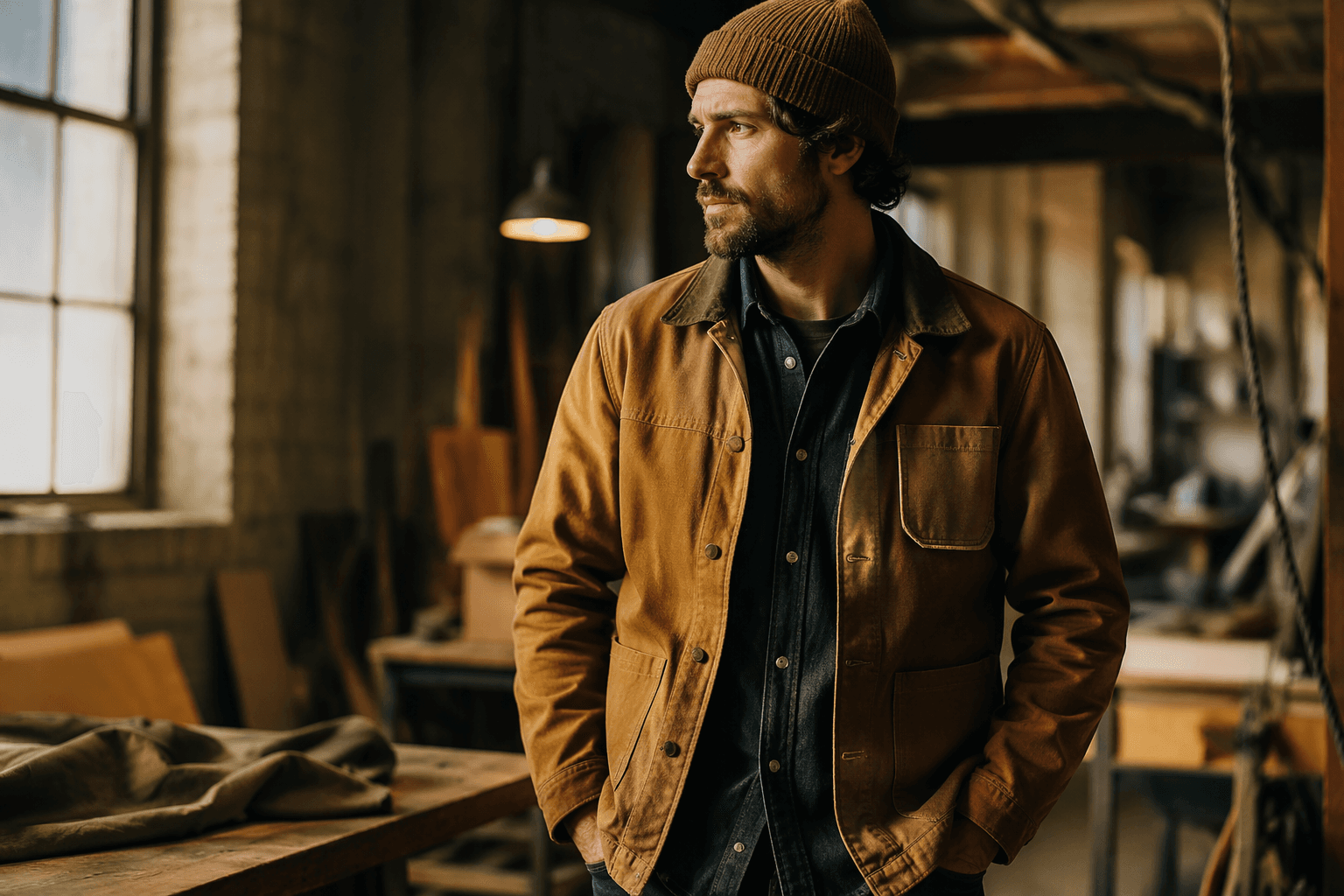
This is not fashion built around a logo or a seasonal mood board. barbell object works in classic silhouettes: work jackets, cargo pants, trousers, and technical pieces that lean into utility instead of decoration. The label’s first season, which debuted for Fall/Winter 2023, was tiny by design, with just five styles. That lineup included a velour pullover, trousers, a canvas setup, and wool T-shirts. Five styles is barely a drop in today’s fashion economy, and that is exactly why it lands with force.
The early looks told you what the brand was chasing. There were extremely long-sleeved tops and pants with side zippers, details that nudge workwear away from pure nostalgia and toward something more adaptive, more experimental. The clothes feel like they came out of a real design problem rather than a trend forecast. They hold onto the bones of utility dressing, but they do not play museum piece.
Technical materials are part of the point too. In a market packed with faux-vintage cotton and copycat carpenter pants, fabric choice is where a brand proves it knows the difference between costume and construction. barbell object’s materials give the silhouettes a quieter futurism. That is what makes the label interesting: the shapes are familiar, but the finish keeps them from reading like retro cosplay.
Why the design feels personal, even without a face
The anonymous designer has tied some of the ideas to aging, including gaining weight and not being able to lift your shoulders. That detail is the most revealing thing in the whole story because it pulls the brand out of abstract style talk and into the daily reality of wearing clothes on an actual body. These are not fantasy garments for a perfect frame. They are clothes that seem to understand that bodies change, shoulders tighten, and fit becomes a negotiation.
That perspective changes how you read the workwear. A good jacket is not just “durable.” It needs room where you need room. A good pair of cargo pants is not just “baggy.” It should move with you, not against you. barbell object’s appeal is that it seems obsessed with those invisible tests. The pieces are not screaming for attention on a hanger; they are asking a better question: how do these feel after a long day, after weight gain, after years of wear, after the body stops behaving like a fixed ideal?
That is where the brand separates itself from trend-driven labels that treat utility as a costume. barbell object’s clothes sound less like styling tricks and more like solutions. The fact that the designer says the brand should be handled by people who really care about it only sharpens that impression. These are not disposable flex pieces. They are the kind of garments that reward patience.
Why the international move matters
barbell object is now leaving the realm of insider Japanese discovery and stepping onto international shelves. HAVEN in Canada is carrying the summer collection, and FAVRICS, formerly Base Store, is set to pick up the brand from Fall/Winter 2026. That matters because brands like this do not usually broaden out unless buyers believe the design language can survive outside its home context.
It also places barbell object inside a broader wave of Japanese menswear labels that have been getting more global attention for exactly this kind of disciplined, fabric-first approach. The current conversation already has room for names like a.PRESSE, COMOLI, AURALEE, and ssstein, labels that have trained shoppers to look past hype and toward silhouette, textile, and proportion. barbell object fits that lane, but with a colder, more anonymous edge.
The international retail move is also a test. Once a label leaves the private comfort of niche Japanese coverage and lands in Canadian and global stores, the clothes have to justify themselves without the mystique doing all the work. If the pieces hold up, the brand becomes one of those quiet fixtures that collectors, stylists, and workwear obsessive keep returning to. If they do not, the anonymity will not save it.
How to tell if it is real wardrobe value
The easiest way to separate long-term value from scarcity hype is to ignore the scarcity and study the design. barbell object gives you a clear checklist.
- Does the silhouette do something useful, like adding room through the shoulder or through the leg without looking sloppy?
- Do the fabrics feel chosen for wear, not just for photos, especially in pieces like canvas setups, wool T-shirts, and technical layers?
- Does the garment look better the more you imagine it after months of use, not just on drop day?
- Can the piece survive outside a trend cycle because the workwear reference is real and the construction feels deliberate?
That is where barbell object looks strongest. The brand does not rely on flash, and that is the whole advantage. Its clothes are small-run, highly considered, and shaped by a very specific idea of how bodies move and change. In a market bloated with louder labels and faster jokes, that kind of discipline is what makes a brand feel worth watching. barbell object does not need to shout to look like the future.
This article was produced by Prism’s automated news system from verified source data, official records, and press releases, then run through automated quality and moderation checks before publishing. The system is built and supervised by the people who set the standards it runs under. Read our full AI policy.
Did this article answer your question?