Build a Place-Aware Work Capsule for Every Office Occasion
Your office needs more than one mode — here's how to build a 10-piece capsule that shifts from client-ready to commute-proof without buying more.
The modern office doesn't ask you to dress one way anymore. It asks you to dress for five different versions of the same Tuesday: a 9 a.m. client presentation, a midday walk between buildings in March wind, a casual afternoon of deep-focus work, and a post-work dinner you somehow forgot to plan around. The wardrobe that can't handle all of that isn't a capsule; it's a collection of missed moments.
Place-aware dressing is the framework that solves this. It's not a trend, and it's not about buying more. It's about choosing pieces that understand where you'll be standing at any given hour, and performing accordingly.
Why "place-aware" is the only way to think about workwear now
The old model of workwear was geography: you wore office clothes to the office. But the office has fractured. A single workday now moves through a commute, a conference room, a lunch spot, possibly a co-working space, and sometimes a client's lobby with a very different dress code from your own. Workplaces in 2026 expect a range of looks that are polished for client-facing moments, functional for commutes, and comfortable enough to sustain eight hours of actual work. That's not one outfit. That's a system.
A place-aware capsule is built around that system. Every piece earns its slot not just because it looks right, but because it works across at least two or three of those contexts without requiring a full costume change.
The 10 pieces that anchor the capsule
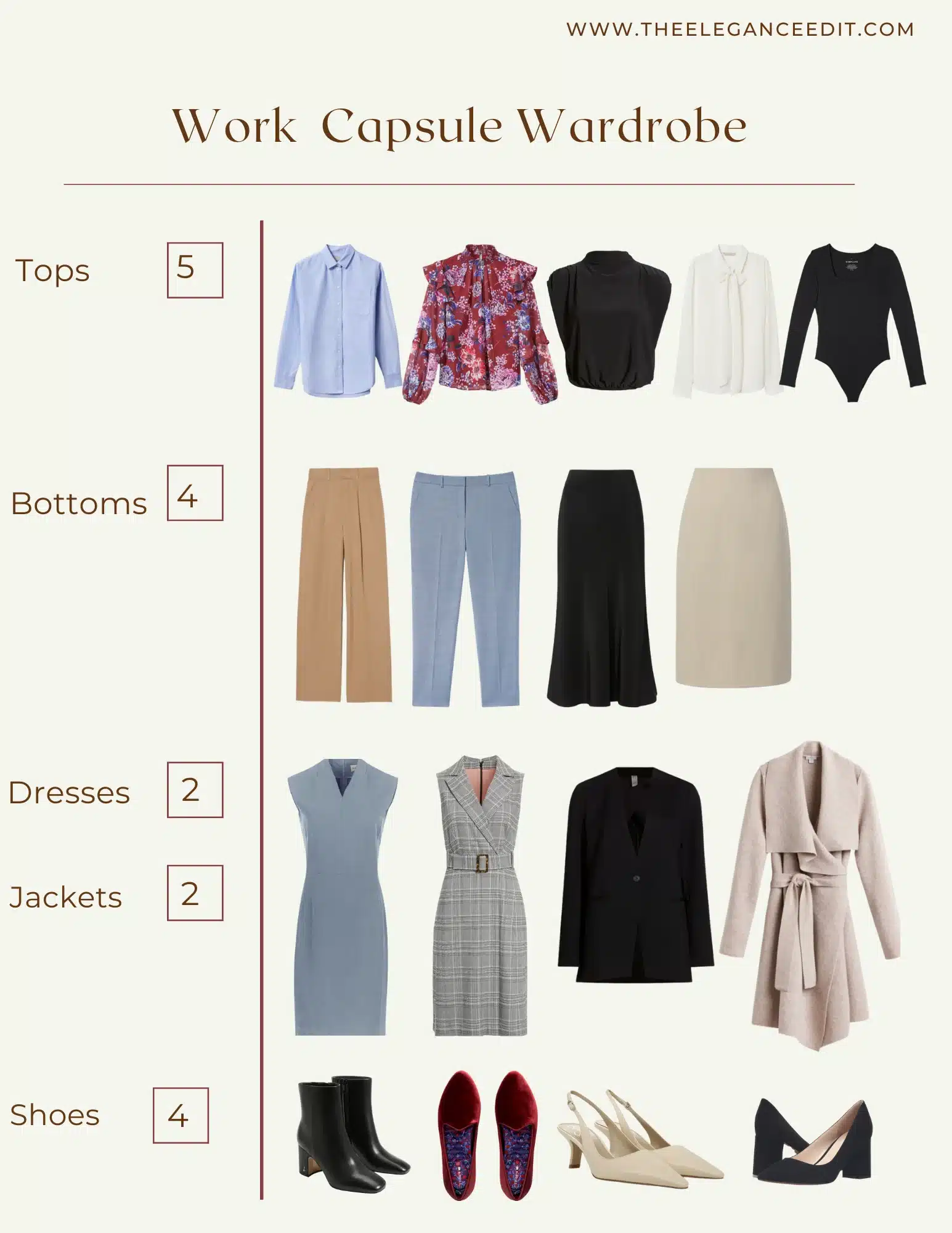
Think of these not as ten separate items but as a network. Each one connects to at least two others, and together they cover every office occasion without redundancy.
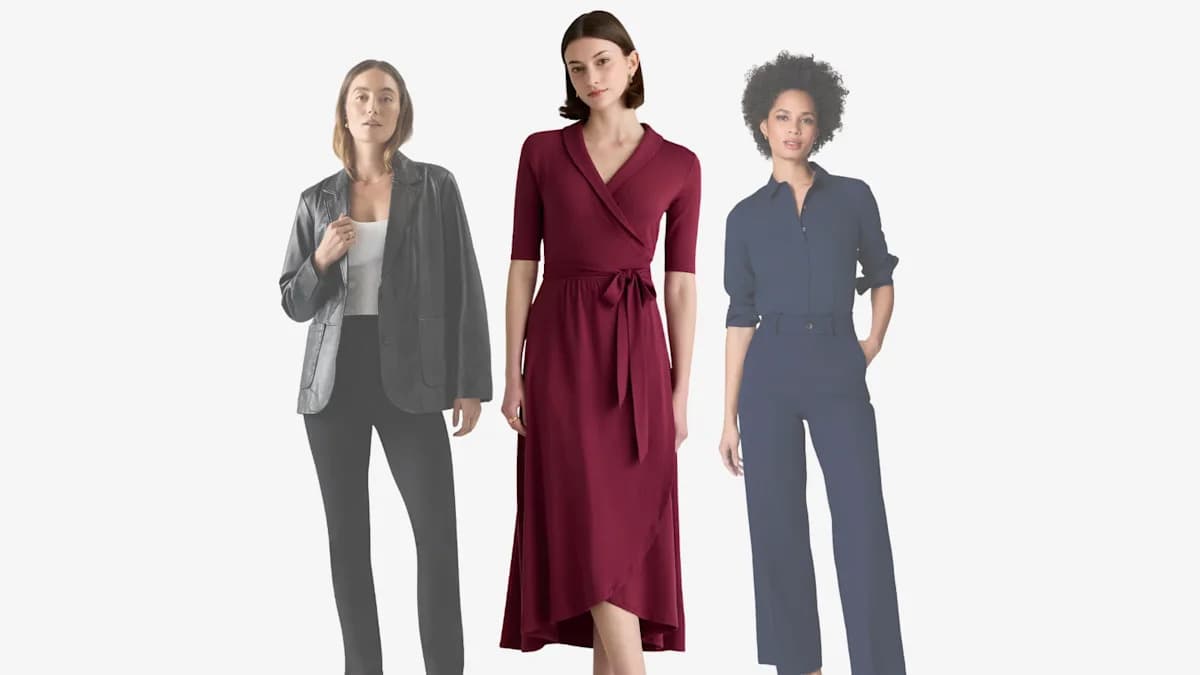
- A tailored blazer in a mid-weight fabric, navy or camel, that reads boardroom over a white shirt and approachable over a knit. The cut matters more than the brand: a slightly relaxed shoulder keeps it from looking stiff on casual Fridays without losing authority in the conference room.
- A fluid trouser in a neutral, ideally in a fabric with some natural drape, like a wool-viscose blend. Paired with a blazer it's formal. Paired with a tucked-in knit it's smart-casual. It should not require a belt to stay put, because that detail alone determines whether it works on a long commute.
- A crisp white or ivory button-front shirt. The foundational layer. Look for one with a slightly longer hem that can be fully tucked, half-tucked, or worn open over a tank on warmer days. Fabric quality here is non-negotiable: thin cotton goes transparent under fluorescent light, which is the exact opposite of client-ready.
- A fine-gauge merino crewneck or v-neck. This is your versatility engine. It layers under a blazer without bulk, works alone with trousers on creative-casual days, and travels without wrinkling. Merino, specifically, regulates temperature across a commute and a climate-controlled office.
- A midi wrap skirt or A-line skirt in a substantial fabric. The silhouette matters: midi length photographs professionally on video calls and reads as polished in person. Wrap styles adjust to bloating, long days, and the fifteen-minutes-of-walking-you-didn't-plan-for.
- A structured tote or top-handle bag large enough to carry a laptop without stretching its shape. Nothing undercuts a put-together look faster than a bag that's visibly straining. The bag is a place-aware piece too: it signals whether you've arrived for work or just passing through.
- A versatile dress in a solid or subtle print that can carry a full day without a layer. Shirt dresses and wrap dresses both work because the structure does the job of looking intentional even when you've kept the rest of the effort minimal. Avoid anything that requires shapewear to work; place-aware dressing is also body-aware dressing.
- A cardigan or unstructured jacket for temperature negotiation. Conference rooms are cold. Restaurants at lunch are warm. The piece that moves between those environments without looking like an afterthought is worth its weight. A longer cardigan in a ponte or structured knit reads more polished than a short, casual one.
- A pair of low-heeled or flat shoes that hold their line across eight hours. The era of suffering through stilettos to look professional has been quietly ended by a generation of women who noticed that confidence is harder to project when you're in pain. Block-heeled mules, leather loafers, and low ankle boots all deliver the visual sharpness of a heel without the cost.
- A silk or satin-finish blouse as the one piece that escalates any combination. When the client meeting runs into a dinner, this is what you reach for. It changes the register of the whole outfit without requiring a bag change or a shoe swap.
How to work the capsule across occasions
Client-facing days call for structure. The blazer-over-blouse-with-trousers combination is a permanent authority signal; vary the blouse weight and color to keep it from feeling like a uniform. On days when the calendar is internal-only, the knit-and-skirt combination gives you warmth, movement, and the kind of relaxed confidence that reads as intentional rather than underdressed.
Commute days demand practicality without sacrifice. The merino crewneck worn under a blazer, with the tote carrying your shoes until you arrive, is a legitimate strategy: you preserve the polish of the outfit and the comfort of the journey simultaneously. This is exactly the kind of layering logic a place-aware capsule is designed to support.
For hybrid schedules, where a Tuesday might begin at home on a video call and end in a client's office, the dress does the work. A solid-color wrap dress with the structured cardigan layered over it covers both contexts; when the cardigan comes off, the dress is formal enough. When it stays on, you're camera-ready for the home-office hour.
The investment logic
A 10-piece capsule only works if the pieces are actually good enough to hold up. Fabric quality, construction, and fit determine whether each item can be repurposed or whether it stays siloed. A blazer that pills after three wears, or a trouser that loses its crease by noon, removes itself from the capsule network and becomes dead weight in your wardrobe.
The math is simple: ten well-chosen pieces that each connect to four or five others generate more outfit options than thirty poorly-considered ones. Place-aware dressing isn't minimalism for its own sake. It's efficiency in service of looking exactly right for wherever you end up standing.
This article was produced by Prism’s automated news system from verified source data, official records, and press releases, then run through automated quality and moderation checks before publishing. The system is built and supervised by the people who set the standards it runs under. Read our full AI policy.
Did this article answer your question?