Charlie Constantinou Reimagines Industrial and Historic Uniforms for AW26 Workwear
Constantinou translates 18th- and 19th-century military ornament into toggles, epaulettes, and expandable nylon workwear, plus a Chilly’s collaboration featuring 3D-printed, hand-dyed bottle accessories.

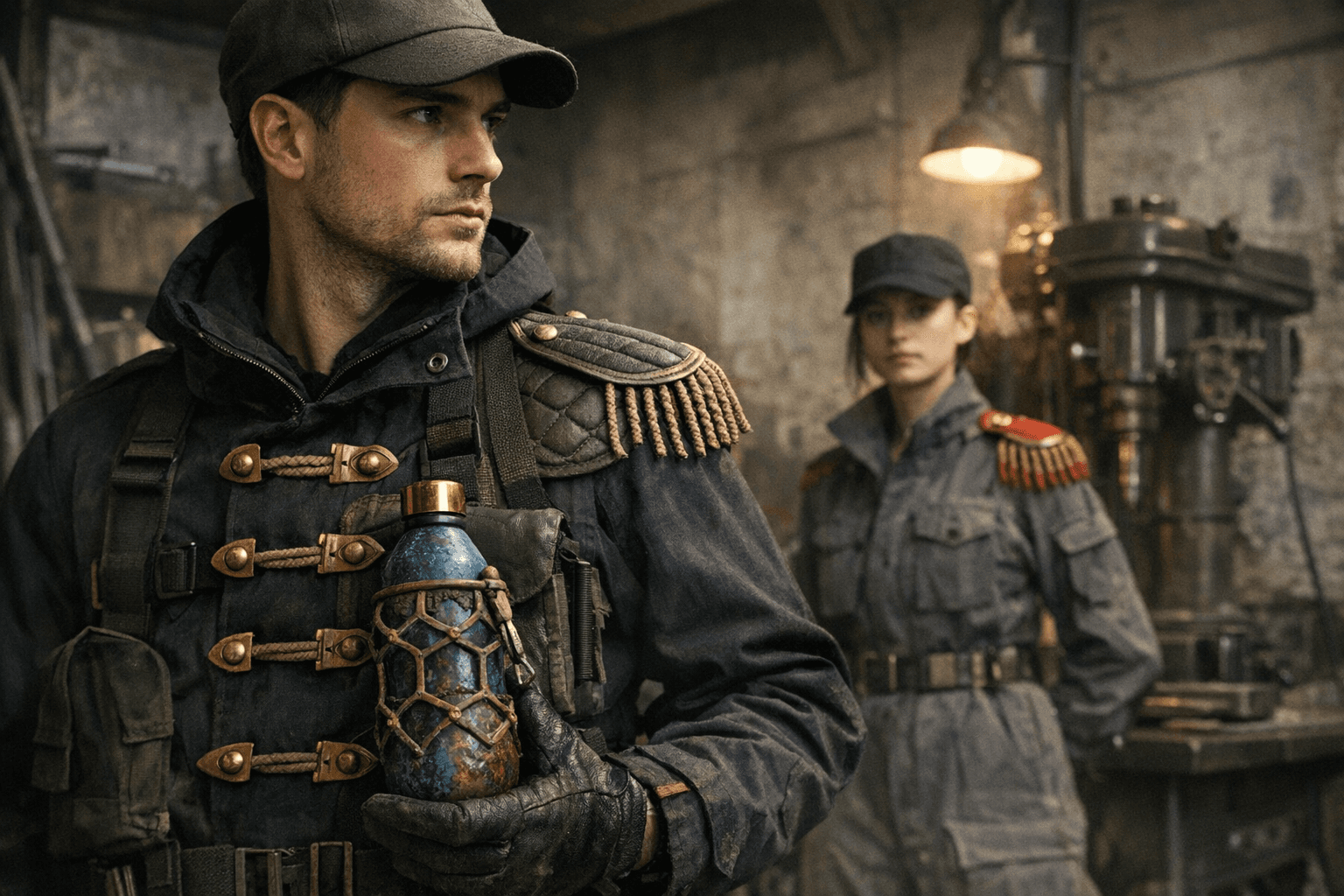
Charlie Constantinou mines 18th- and 19th-century military dress and flips ornamental detail into practical mechanics, translating decorative pleating and braiding into toggles that make garments modular and responsive. “I’m really fascinated by these romanticized, almost costume-y silhouettes and details,” Constantinou told Vogue Runway, explaining a move to make historic flourishes “actually more wearable.”
Vogue Runway laid out the specifics: a stone gray mackintosh and a padded chore jacket arrive with asymmetrical fastenings redolent of a lieutenant’s jacket, complete with jutting epaulettes and shoulder tabs. A hooded zip sweater arrived with a nipped-in storm flap and punchy purple appliqués that echo admiral’s gilt frogging. Constantinou also described a atelier method: “We produce everything in white first…Then we hand-dye or print everything in-house,” a process that informed the collection’s arc from darker, colder tones toward warmer hues.
WWD recorded the collection’s martial undertow in further detail, noting pinned epaulettes on hoodies and jackets and tops that recalled pieces of shoulder armor. Wide-legged trousers carried armor-style knee details while jersey dresses read like finely detailed breastplates. WWD also emphasised Constantinou’s material strategy: “Constantinou mainly uses deadstock, hence all of the nylon looks,” and highlighted a palette of weathered navy and gray punctuated by deep red with “shocks of electric purple and sky blue” that animated the silhouettes.
Noctismag framed the season as an interrogation of uniformity and described how decorative rank markers become functioning expansion points. “They repurpose what were once static, decorative markers of rank into functional points of expansion, allowing the silhouette to fluctuate and respond to the wearer’s environment,” Noctismag wrote, and reported on a cross-category collaboration with Chilly’s. Working with the London reusable bottle brand, Constantinou developed “a bespoke hand-dyed bottle housed accessories,” 3D-printed bottle sleeves that “incorporate our textures into the surface,” and a range of reusable bottles and bottle bags made from Chilly’s dead stock.
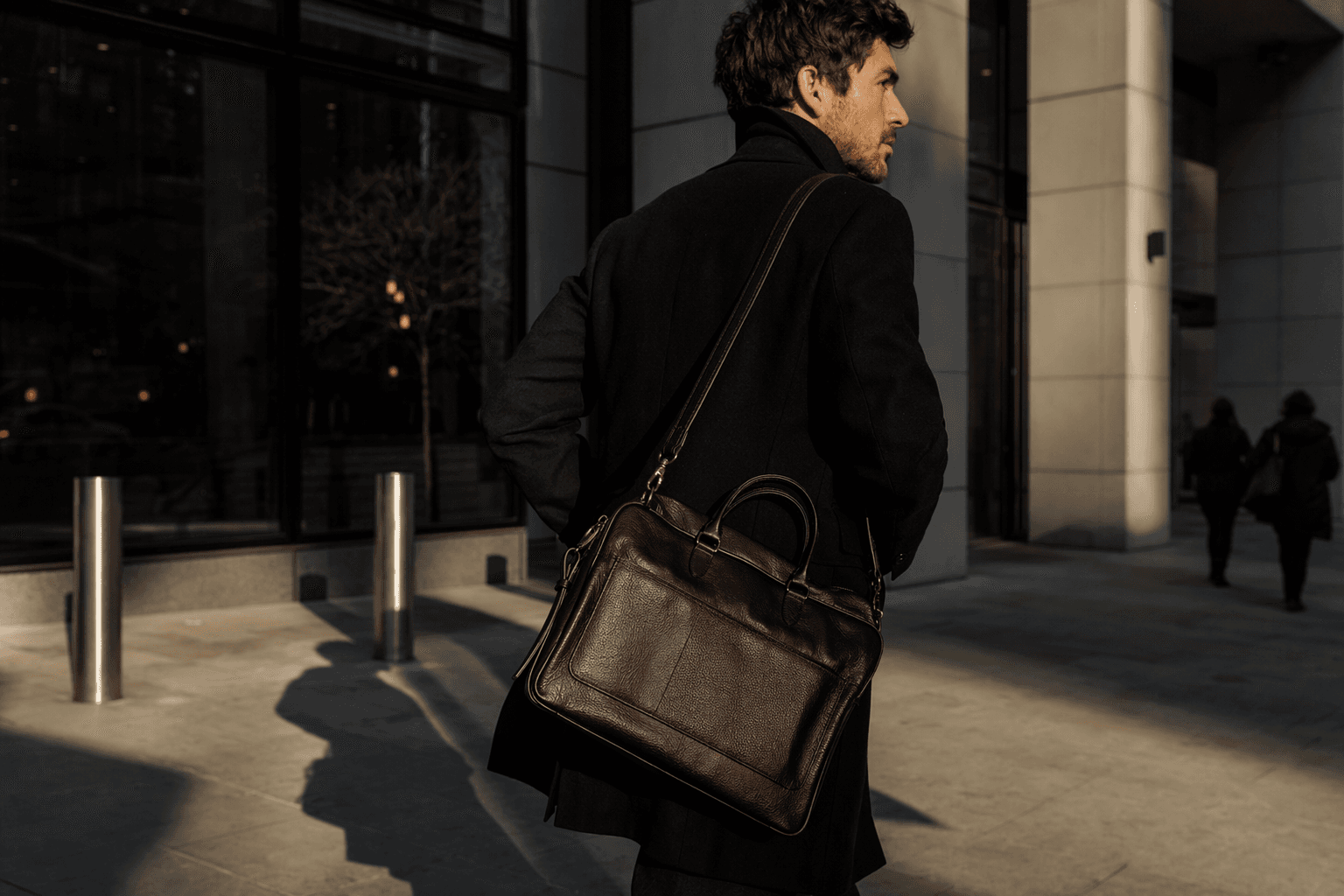
Accessories received a further formal treatment in TheGlassMagazine’s account of the show. The designer’s signature expandable quilted bags return with silver pigments that catch the light and new finishes that enhance tactility; their modular design allows expansion and contraction, “echoing the collection’s theme of transformation.” TheGlassMagazine also called out zippers as a recurring motif, “Zippers punctuate the collection, not just as functional details but as tools for texture and visual rhythm, catching light and breaking up surfaces”, and mapped a colour sequence in which “NIGHT gives way to day,” moving from graphite greys toward bursts of red and purple.
Coverage of the work spans outlets that label the season differently: 10 Magazine and Noctismag refer to AW26, TheGlassMagazine and WWD frame it as Spring/Summer 2026, and Vogue Runway runs the looks under Fall 2026 Ready-to-Wear. 10 Magazine summed the project as a transformation of industrial uniforms into “dynamic, individualistic ensembles that blend functionality with bold style.” Taken together, Constantinou’s process-led craft, deadstock-forward materials, and cross-category experiments position his workwear as functional armor and adaptable utility, garments and accessories that privilege movement, modularity, and tactile detail over mere costume.
Know something we missed? Have a correction or additional information?
Submit a Tip