ESP+ Promo Picks: Worthwhile Workwear
Ring-spun cotton duck canvas and insulated bibs are leading the pack: ESP+'s most-searched workwear reveals exactly what frontline buyers and uniform programs need right now.
When distributors log into ESP+ and start searching for workwear, the demand signals are precise. They are not browsing vaguely for "uniforms." They are typing in fabric weights, searching for insulated bibs, filtering by hi-vis compliance, and looking for pieces with enough flat surface area to take a quality embroidered logo. The platform's April 2026 top-search data makes the current appetite for this category impossible to ignore, and the lead item anchoring that list crystallizes exactly what corporate buyers and uniform managers are after right now.
The Carhartt CT106672: What 12-Ounce Duck Canvas Actually Means on a Jobsite
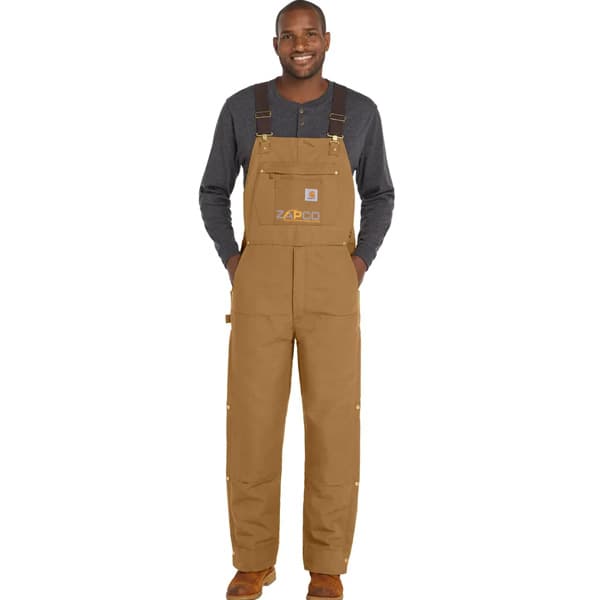
The Carhartt Firm Duck Insulated Bib Overall (CT106672) sits at the top of the ESP+ workwear search rankings for reasons that make immediate, material sense. Built from a 12-ounce, firm-hand, 100% ring-spun cotton duck canvas, this is not lightweight layering apparel. The fabric weight places it firmly in the category of genuine protective outerwear: dense enough to cut wind, stiff enough on arrival to resist abrasion, and substantial enough to soften into shape after wear without losing structural integrity. Ring-spun construction means the cotton fibers are twisted tightly before weaving, which produces a smoother, stronger surface than open-end spun alternatives. On a construction site or factory floor, that difference in fiber density translates directly into season-after-season wearability.
The construction details compound that durability. Carhartt reinforces the CT106672's main seams with triple-stitching and installs metal rivets at the stress points that bear the most strain during physical work: pocket corners, suspender anchors, the bib attachment points. The front features seam-to-seam chap-style double-layer construction, and the knees are doubled too, with openings sized to accept knee pad inserts. These are not marketing claims about toughness; they are engineering decisions visible at every seam.
Inside, a quilted nylon lining runs to the waist, paired with 100% polyester insulation for midweight warmth. The result is a bib that handles cold-morning site conditions without the bulk of a full winter layer. Ankle-to-thigh leg zips allow ventilation when temperatures climb or during the heavy-work phases of a shift. Adjustable elastic suspenders give individual wearers a personalized fit across a size run that extends from S to 3XL, a range that matters enormously when spec'ing a uniform program for a mixed crew. The multi-compartment bib pocket includes a zip closure to secure phones and small tools. Colors run to Carhartt Brown, Black, and Dark Navy, all of which accept embroidery cleanly on the bib panel.
The Bottom-Half Argument That Too Many Promo Sellers Miss
The ESP+ editorial makes a point worth underlining for every account executive pitching a workwear program: branded apparel in the promo industry defaults to the top half of the body. Polos, quarter-zips, performance tees, hoodies. The instinct is understandable because outerwear is visible, easy to logo, and comfortable to sell into corporate gifting. But genuine workwear programs are not the same category as corporate casual. For construction companies, manufacturing operations, and contractor fleets, a comfortable, movable pant is equally essential to the uniform, and it is dramatically undersold by most distributors.
A bib overall solves that gap elegantly because it eliminates the pairing problem entirely. The CT106672 covers both the torso and the leg in a single garment, which means one embroidered logo on the bib serves the whole silhouette. For a buyer outfitting a crew of twenty in a cold-climate region, a single SKU that covers top and bottom simultaneously is a logistical and budget argument as much as a style one. When pitching to construction or manufacturing clients, the move is to present the bib as the core uniform piece and build the branded layer system around it, rather than treating the bottom half as an afterthought.
Fabric Weight as the Decision Framework for Workwear Buyers
The top-search behavior on ESP+ reveals something specific about how workwear buyers think versus how general apparel buyers think. Fabric weight is a filtering criterion, not an afterthought. A buyer sourcing branded polos for a sales team rarely asks about yarn construction. A buyer outfitting a crew for a steel fabrication facility or an outdoor infrastructure project asks about it first.
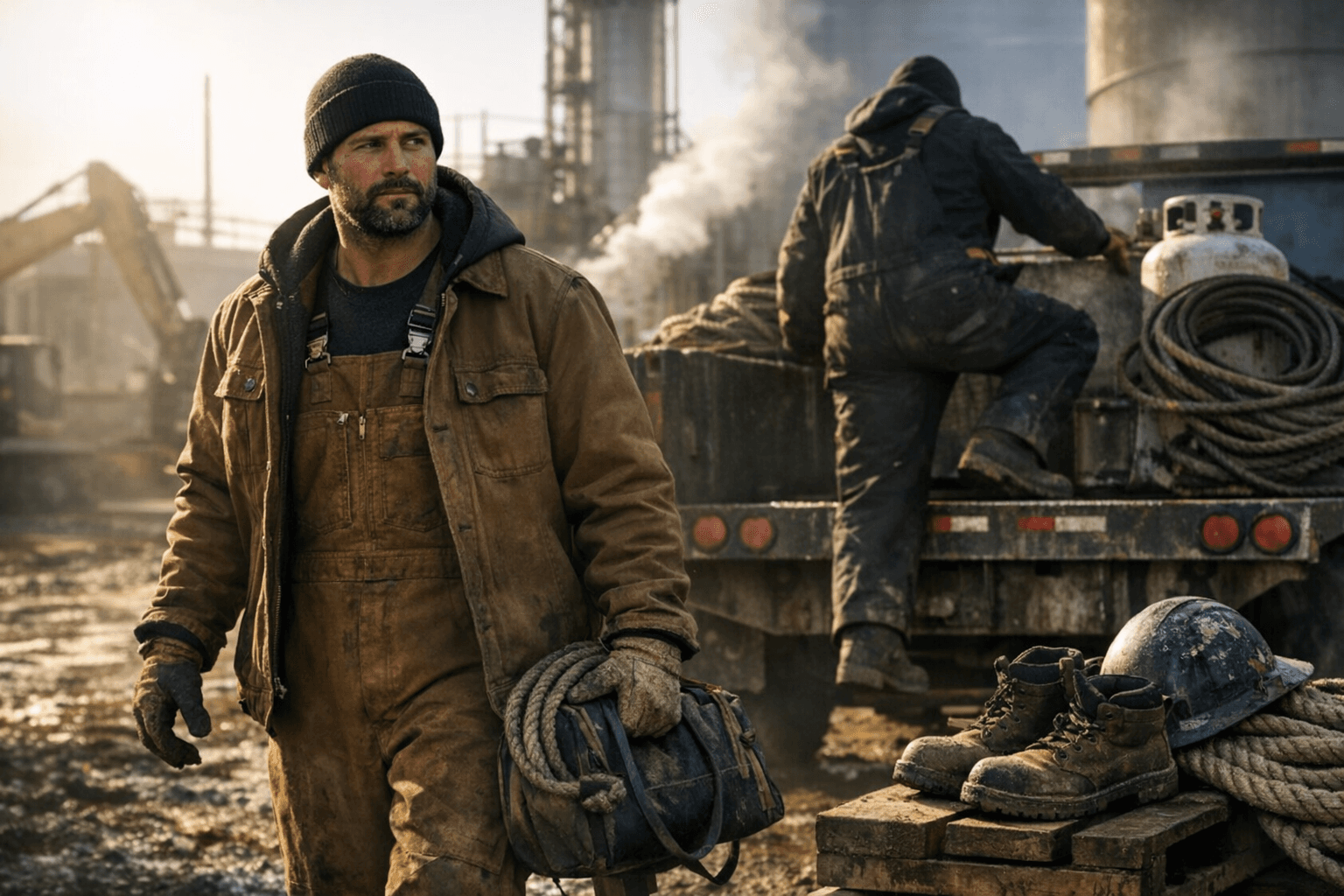
The reason is durability accounting: heavier fabric means longer garment life, which means lower cost-per-wear over a uniform program's lifecycle. A 12-ounce duck canvas bib that survives three years of daily site use is cheaper in total program cost than two lightweight alternatives replaced annually, even if the initial unit price is higher. For distributors presenting workwear proposals, leading with this math, rather than with logo placement options, reframes the conversation from a commodity purchase into a facilities management decision. That positioning typically lands at a higher level within a client organization and produces stickier account relationships.
Safety, Hi-Vis, and the Branding Surface Problem
Safety compliance is its own demand signal in the ESP+ workwear data, running parallel to the durability-fabric conversation. Construction clients, municipal contractors, and utility crews operate under ANSI/ISEA 107 visibility requirements that dictate reflective striping and hi-vis colorways. The challenge for promo sellers in this segment is that ANSI-compliant garments have specific surface constraints: the reflective tape placement and the mandated high-visibility background color limit where and how a logo can be applied without compromising certification.
This is where the bottom-half strategy intersects with safety programming. A hi-vis vest or safety shirt may carry compliance markings that complicate logo placement, but a bib overall worn beneath or alongside compliant outerwear can serve as the primary branded piece with fewer restrictions. The dark navy and black colorways of the CT106672, for example, work as the branded base layer in a system where a compliant hi-vis vest provides the visibility requirement on top. Understanding the garment system rather than selling single pieces is what separates a competent workwear distributor from a transactional one.
The Off-Clock Case for Workwear Aesthetics
The current cultural moment makes the styling argument for quality workwear easier than it has been in years. Duck canvas bibs have crossed out of purely functional territory into streetwear and workwear-inspired fashion. Carhartt's own broader brand presence in style-conscious retail has given the CT106672 silhouette genuine recognition beyond the job site. A crew wearing branded Carhartt bibs does not read as purely utilitarian; in many industries, it reads as competent and current simultaneously, which matters for companies whose on-site workforce is also a visible representation of the brand.
For uniform buyers making decisions on fabric weight and fit, that dual legibility is a meaningful additional value point. The same bib that protects a worker through a full shift in variable weather also projects a considered, professional aesthetic when the crew is visible to clients. The loose fit that allows full-range movement during physical work also happens to land squarely within the relaxed silhouette that has dominated fashion-forward workwear for the past several seasons. The best uniform spec for a frontline team, in 2026, often looks surprisingly good after the shift ends.
The workwear category's strength on ESP+ is not seasonal or incidental. Construction cycles, infrastructure investment, and the continued growth of manufacturing employment mean the demand for durable, brandable, compliant workwear programs is structural. Distributors who build genuine literacy in fabric construction and safety compliance will find those conversations compound into category ownership that's genuinely difficult for competitors to displace.
Know something we missed? Have a correction or additional information?
Submit a Tip