FabIndia Weaves Ikat and Ajrakh Into Modern Office-Ready Silhouettes
FabIndia put Dabu mud-resist and Ikat weaves into cotton-linen office silhouettes, certified by Craftmark tags, across 350+ stores from March 17.
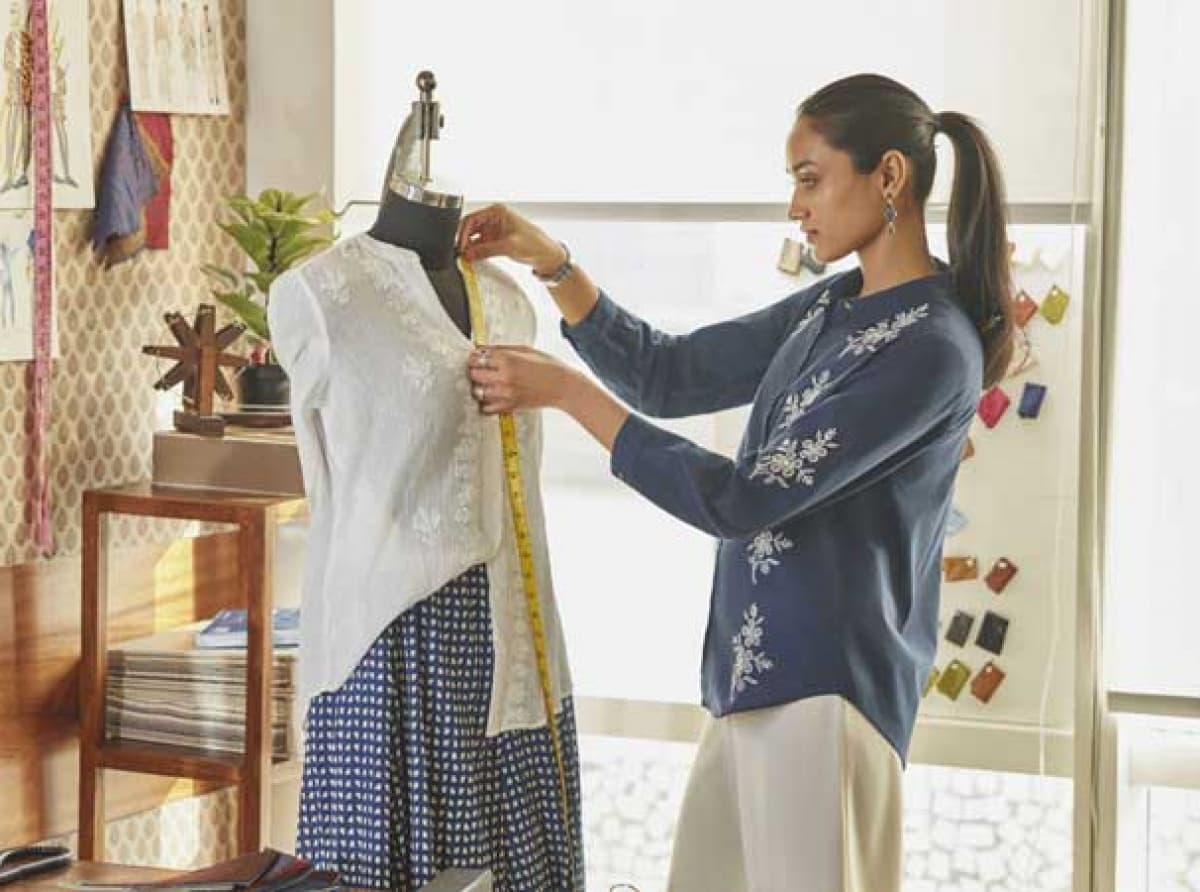
The question an artisan-craft garment has to answer for the urban professional isn't whether it's beautiful. It's whether it survives a 40-minute commute, holds its shape under fluorescent lighting and stays breathable when the temperature outside hits the mid-30s Celsius. FabIndia's "Write Your Own Code" workwear campaign, which launched in New Delhi on March 17, 2026 and now runs across more than 350 stores nationwide, was designed around exactly that friction.
The collection covers both wardrobes completely. Women's silhouettes include short dresses, co-ord sets, kurtas, dupattas and saris worked in Chikankari embroidery, hand embroidery and block prints. The men's edit runs from crisp shirts and short and long kurtas to Bandhgala jackets carrying Ikat weaves alongside Bagru, Ajrakh and Dabu prints. All garments are handcrafted in premium textured cotton and linen, a material decision that functions as an engineering call as much as an aesthetic one when a subcontinental spring is already registering heat before April.
Linen's open-weave structure allows air circulation that synthetic office fabrics cut off entirely; textured cotton holds its drape through a full workday without clinging or going translucent under overhead office lights. Three outfit combinations stand out for their range across the workday: an Ajrakh Bandhgala jacket worn over a plain kurta, which carries the silhouette authority of tailored suiting without the afternoon-heat penalty of wool; an Ikat-weave linen shirt with straight-cut trousers, where the warp-resist geometry reads as pattern intelligence rather than decoration; and a Dabu-print co-ord set in textured cotton, whose internal print coherence does the styling work without requiring anything else. For professionals moving directly from desk to evening, an Ajrakh-block-print sari draped over a fitted blouse handles both without a wardrobe change. Leather bags and jewellery with tribal and floral motifs in silver, gold and dual-tone finishes complete each look without competing with the craft-dense textiles.
Every piece in the range carries a Craftmark tag certifying its handcrafted authenticity, which is a tangible accountability measure in a market where the word "artisanal" has become more marketing shorthand than structural guarantee. The regional origins are specific: Ajrakh block-printing developed in Kutch, Gujarat and Sindh, where a resist process involving natural dyes runs to multiple production stages. Dabu is a mud-resist technique from Rajasthan, in which printed fabric is dusted with sawdust to fix a clay paste before overdyeing. Ikat is practiced by Sambalpuri weavers in Odisha and Pochampally craftspeople in Andhra Pradesh, where tying and dyeing warp or weft threads before weaving produces the soft-edge geometric that is structurally impossible to replicate at industrial speed.

"Workwear today is no longer about blending in; it's about standing out through authenticity," a FabIndia spokesperson said at the launch. "By merging India's rich artisanal heritage with contemporary cuts, we are empowering our customers to bring their whole selves to work."
FabIndia, which has operated since 1958 and built its business model around artisan supply chains, is betting that the office has become the right venue for that argument. The Craftmark tag is its evidence.
This article was produced by Prism’s automated news system from verified source data, official records, and press releases, then run through automated quality and moderation checks before publishing. The system is built and supervised by the people who set the standards it runs under. Read our full AI policy.
Did this article answer your question?