Five Men’s Office Looks Mixing Tailoring, Denim, and Spring Color
Office dressing is looser now, but not sloppy. These five looks keep tailoring crisp, denim sharp, and spring color exactly where it should land.
Client day
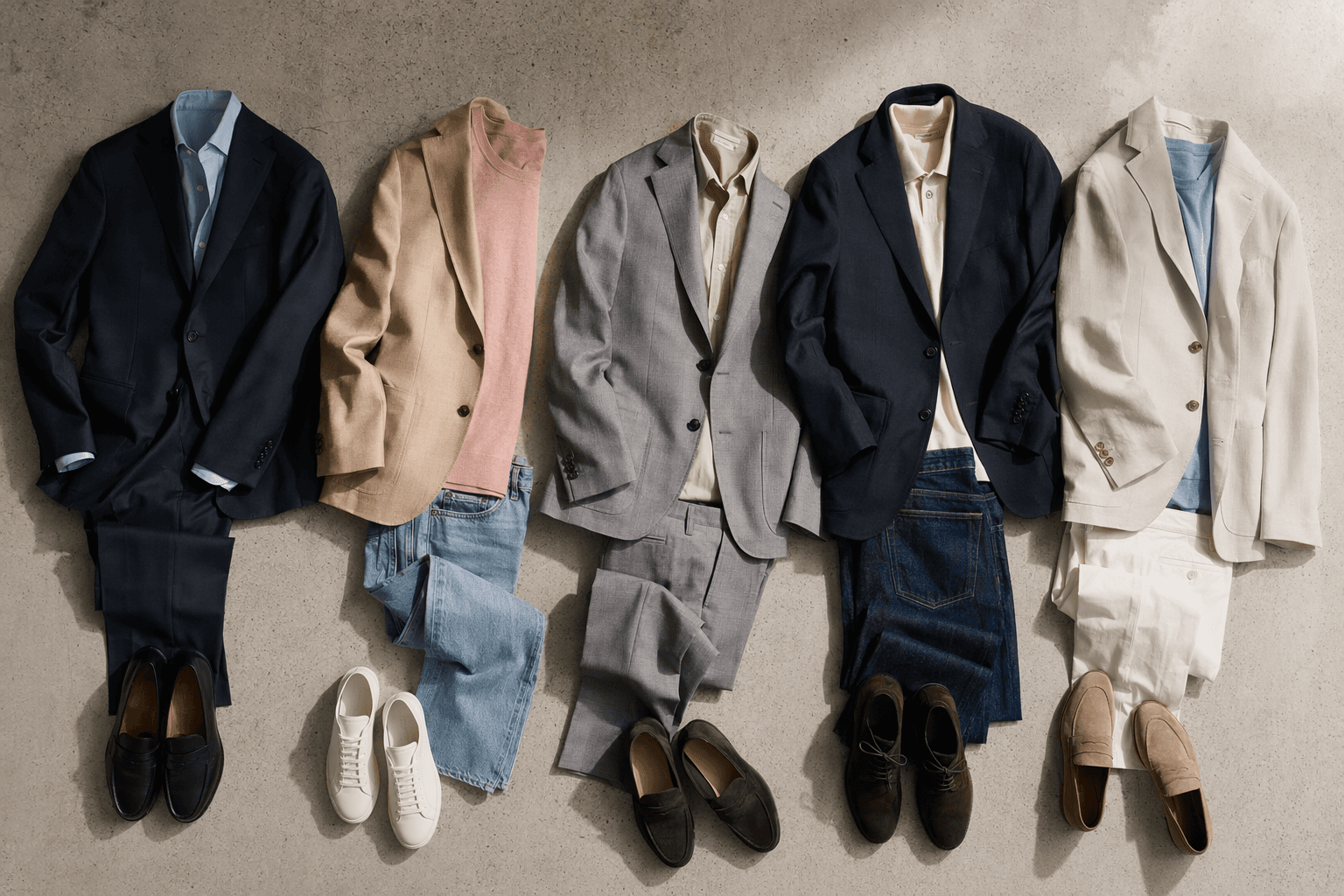
The office uniform is no longer a uniform. Monster’s January 2025 poll found 43% of workers had not worked in an office with a dress code in the past year, and among the people who do have one, 63% say it leans business casual. That is the opening you want for client day: tailoring first, denim only if it is dark, clean, and cut with enough discipline to read like trousers.
Build the look around a navy or charcoal blazer, a pressed shirt, and one controlled spring note, like pale blue, soft pink, or mint. If you want denim in the mix, keep it rigid and unripped, with a hem that breaks cleanly over leather loafers or sleek derbies. The goal is to look like you understand the room before you speak in it.
Casual Friday
This is where the office loosens its tie knot, but it should not fall into weekend mode. Monster found that 27% of workers secretly loved sneakers with suits and 25% loved denim on denim, which tells you exactly where the new comfort zone lives: still polished, just less precious. On Friday, a tailored jacket can handle a darker jean, and a spring shirt in sky blue, lavender, or soft green keeps the whole thing from sinking into gray.
Keep one anchor formal so the outfit does not drift. A crisp tee under a blazer works if the tee is thick and bright white, and sneakers only work if they look deliberate, not like you just left the gym. Workers still draw a hard line at workout gear, shorts, sandals, and anything too formal for the setting, so the sweet spot is neat, easy, and a little bit self-aware.
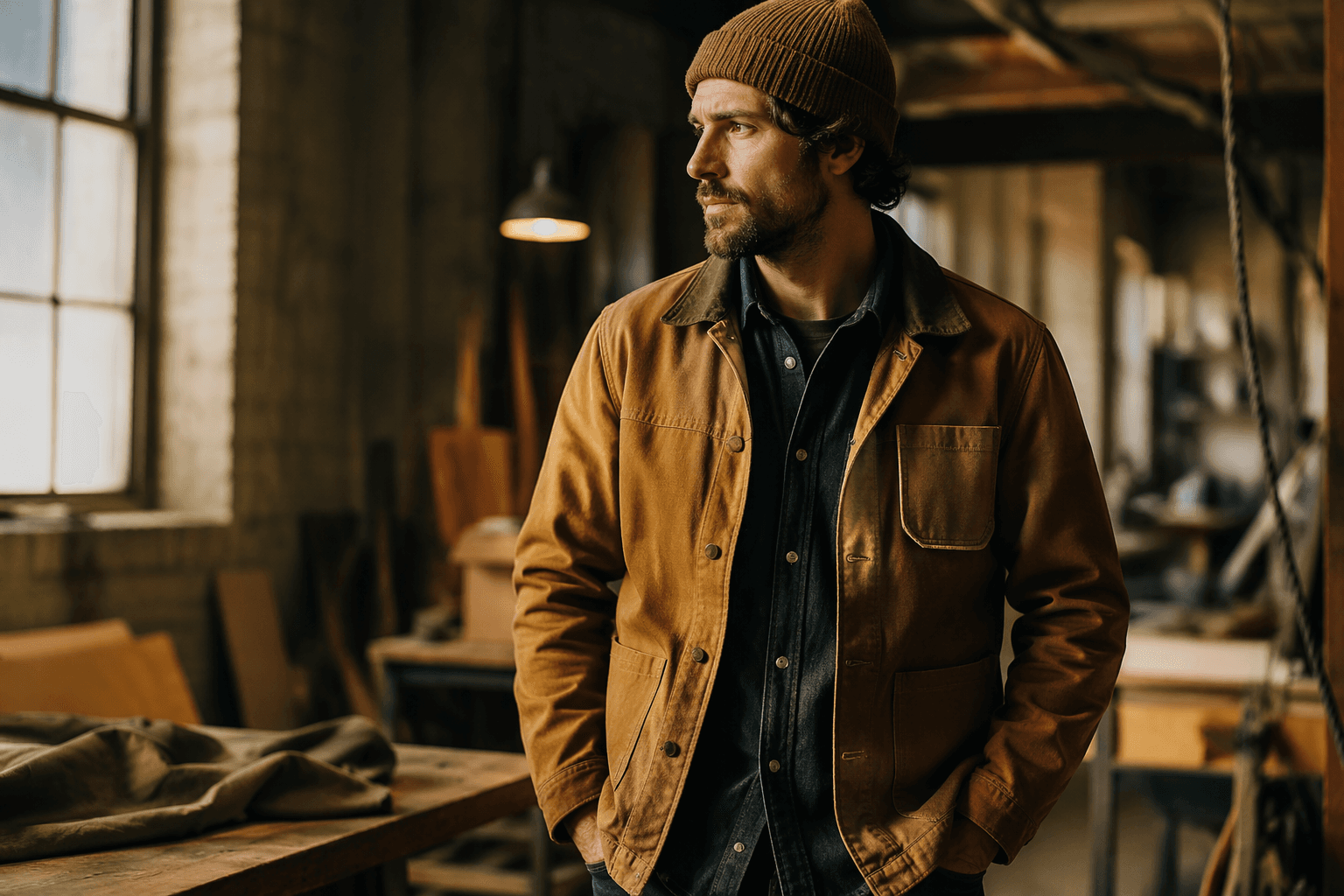
Creative office
Creative offices are where business casual gets interesting instead of safe. A relaxed suit in washed navy or olive, paired with a denim shirt or a dark jean, gives you structure without stiffness, and that balance matters in rooms where everyone notices fabric before they notice labels. Add spring color through a fine-gauge knit or a lightweight overshirt, not through a loud novelty piece that looks like you are trying to win a style contest.
This is also where the history lands hardest. Marketplace traces the office shift back to Hawaii’s Aloha Friday in 1966, then through Casual Friday and the business-casual wave of the 1990s, when khakis and softer dressing moved into the mainstream. Inc. noted that casual business attire revolutionized the American office environment, and by 1999, 95% of U.S. companies had some kind of casual-day policy, up from 24% in 1992. In a creative setting, that history translates into permission, but not chaos.
Hot-weather commute
Hot-weather dressing is where good tailoring earns its keep. Choose unlined or lightly constructed jackets, breathable cotton or linen blends, and denim that is lighter in weight but still holds a crease, because flimsy jeans and airless suiting both collapse the minute you step onto a crowded platform or into a sun-blasted sidewalk. The best color move here is pale, but not washed out: stone, powder blue, soft sage, and cream keep the look seasonal without turning it beachy.
This is the outfit that has to survive the commute, the office, and the walk back out again. Roll the sleeves once, not three times, and keep the silhouette close enough to the body to look intentional, not clingy. The shift toward more relaxed dress codes has made comfort part of the job description in practice, even when no one says it out loud.
After-work plans
The best after-work outfit is the one that already knows where dinner is happening. Start with dark denim, then add tailoring that sharpens the line: a blazer with some shape in the shoulder, a clean shirt, and one spring color in the knit, pocket square, or undershirt so the whole thing feels alive after 5 p.m. This is where a polished jean really matters, because it keeps the look grounded while the jacket does the talking.
The smartest move is to leave yourself one easy reset. Unbutton the top button, swap the tie for an open collar, and let the jacket stay on so the outfit still reads office-ready if the night starts with a last-minute meeting and ends at a bar. That flexibility is the real modern business casual story, and it is not just style, it is policy: the EEOC says Title VII bars discrimination based on race, color, religion, sex, or national origin, and employers generally have to accommodate religious dress and grooming unless doing so would create an undue hardship. The best office clothes now leave room for professionalism, individuality, and the reality that work does not stop at the desk.
This article was produced by Prism’s automated news system from verified source data, official records, and press releases, then run through automated quality and moderation checks before publishing. The system is built and supervised by the people who set the standards it runs under. Read our full AI policy.
Did this article answer your question?