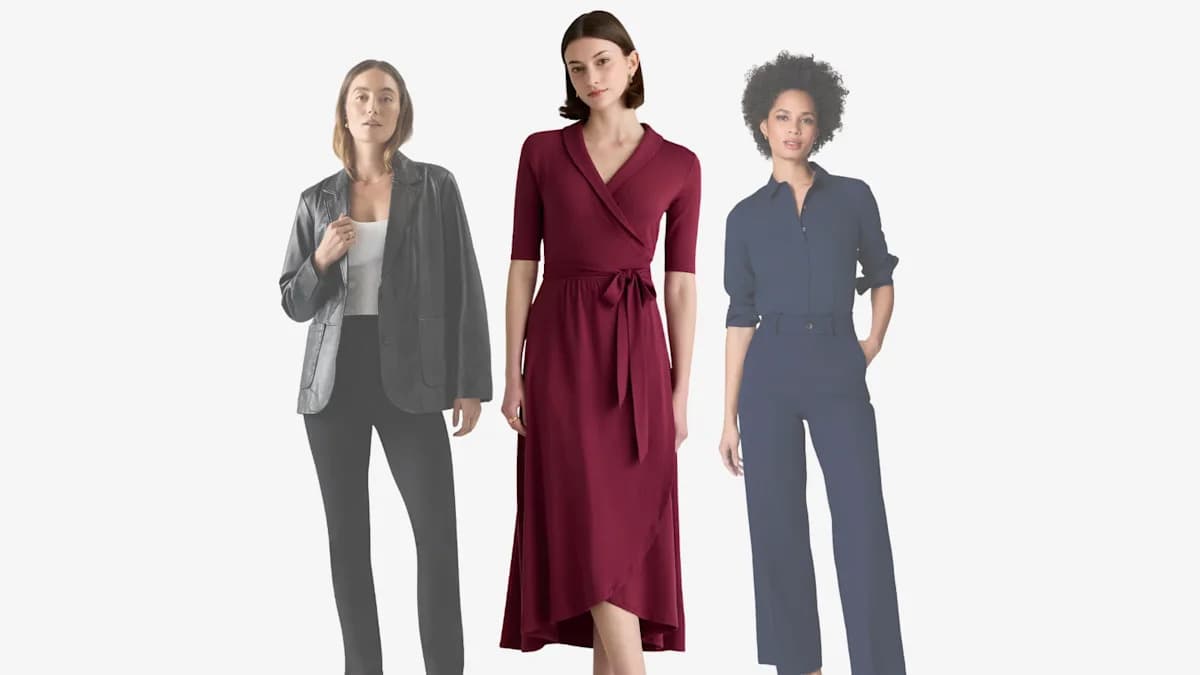
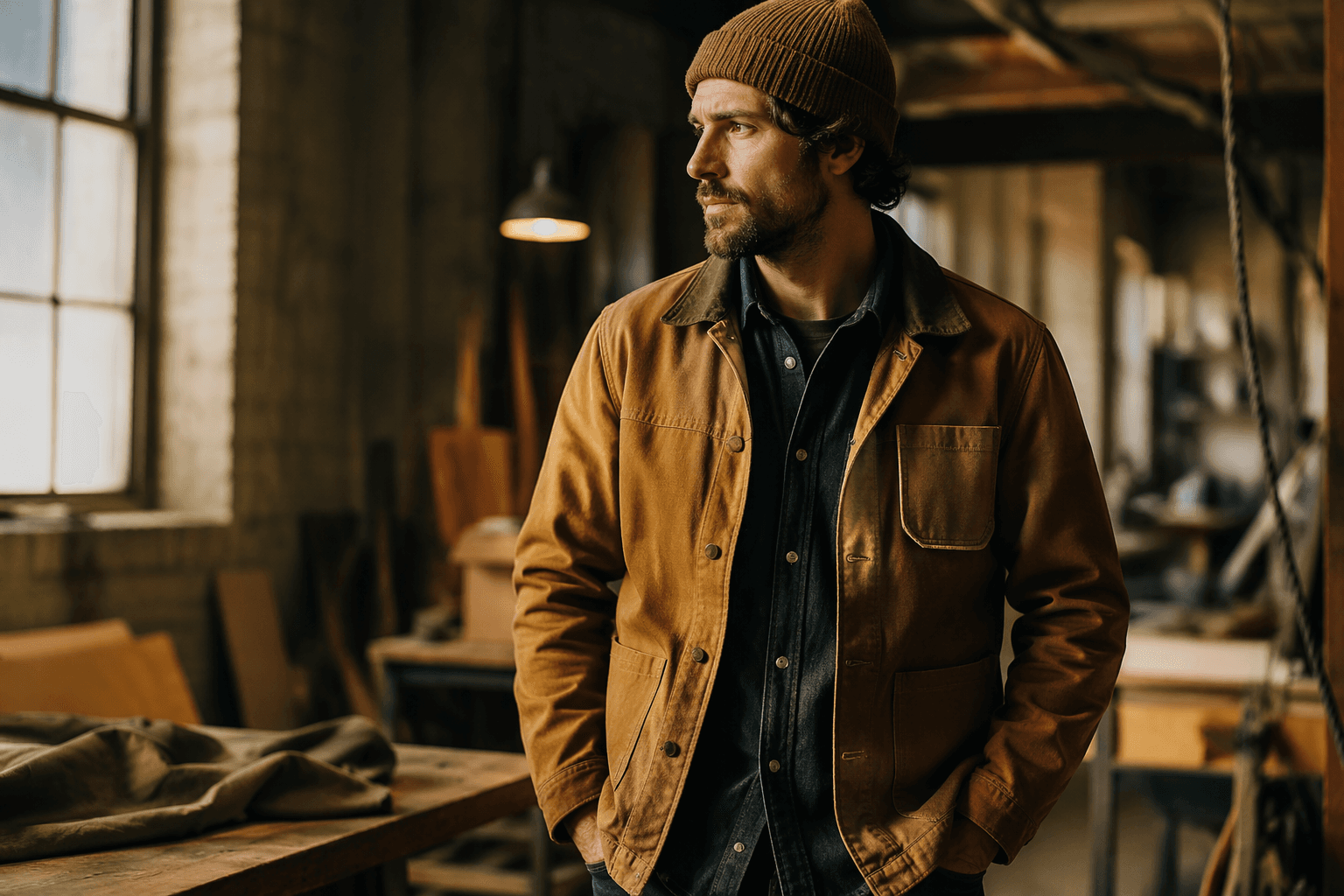
Five Practical Ways to Build a Durable, Office‑Ready Workwear Capsule
Nine pieces generate 12+ outfits and survive a wet commute. This is the capsule blueprint built on cost-per-wear math, not trend cycles.
Most office wardrobe purchases get worn fewer than ten times before they're retired or replaced. On a £180 blazer, that calculates to £18 per wear. Run the same piece through a properly maintained capsule wardrobe, three times a week for two years, and the cost-per-wear drops below 60p. The five steps below are not about style theory; they're about building a wardrobe that performs under real office pressure, survives the commute, and costs you less with every additional wear.
Start with three staples that survive a client meeting
*Scenario: 9am presentation, 35-minute commute behind you, coffee queue made you five minutes late.*
The blazer, the crease-resistant trouser, and the structured dark denim are the load-bearing walls of a working wardrobe, and the specifications matter far more than the label sewn into the collar.
For the blazer, look for a wool-elastane or wool-polyester blend in the 200–260g/m² weight range. This sits usefully between a summer jacket and a winter layer, appropriate in most office climates year-round without reading as either over-dressed or under-engineered. A 2–4% elastane content allows the jacket to move with you through a morning of back-to-back meetings without distorting at the shoulders or pulling across the back. Half-canvas or unstructured construction, rather than full-canvas, keeps the weight down while retaining enough shape to carry a presentation.
The trousers should be cut in a techno-crepe, Hopsack-weave wool, or bi-stretch twill. Hopsack's open weave is specifically why it resists creasing: the reduced surface tension in the structure means you stand up after 90 minutes in a boardroom chair without the wrinkled aftermath. Look for a minimum 3% elastane content; push to 4–5% if your commute involves cycling or standing on packed public transport. These are not marginal differences. They are the difference between trousers that look pressed at 3pm and trousers that look slept-in by noon.
The dark denim is the trio's most versatile piece. Aim for a 10–12oz weight in a rigid or semi-rigid construction, with under 2% elastane so the fabric holds its silhouette through a full day rather than bagging at the knee by lunchtime. A slim-straight or tapered cut in deep indigo or charcoal reads as deliberate in a client-facing context and migrates without effort to a site visit or an evening dinner.
Prioritize technical fabrics for the commute
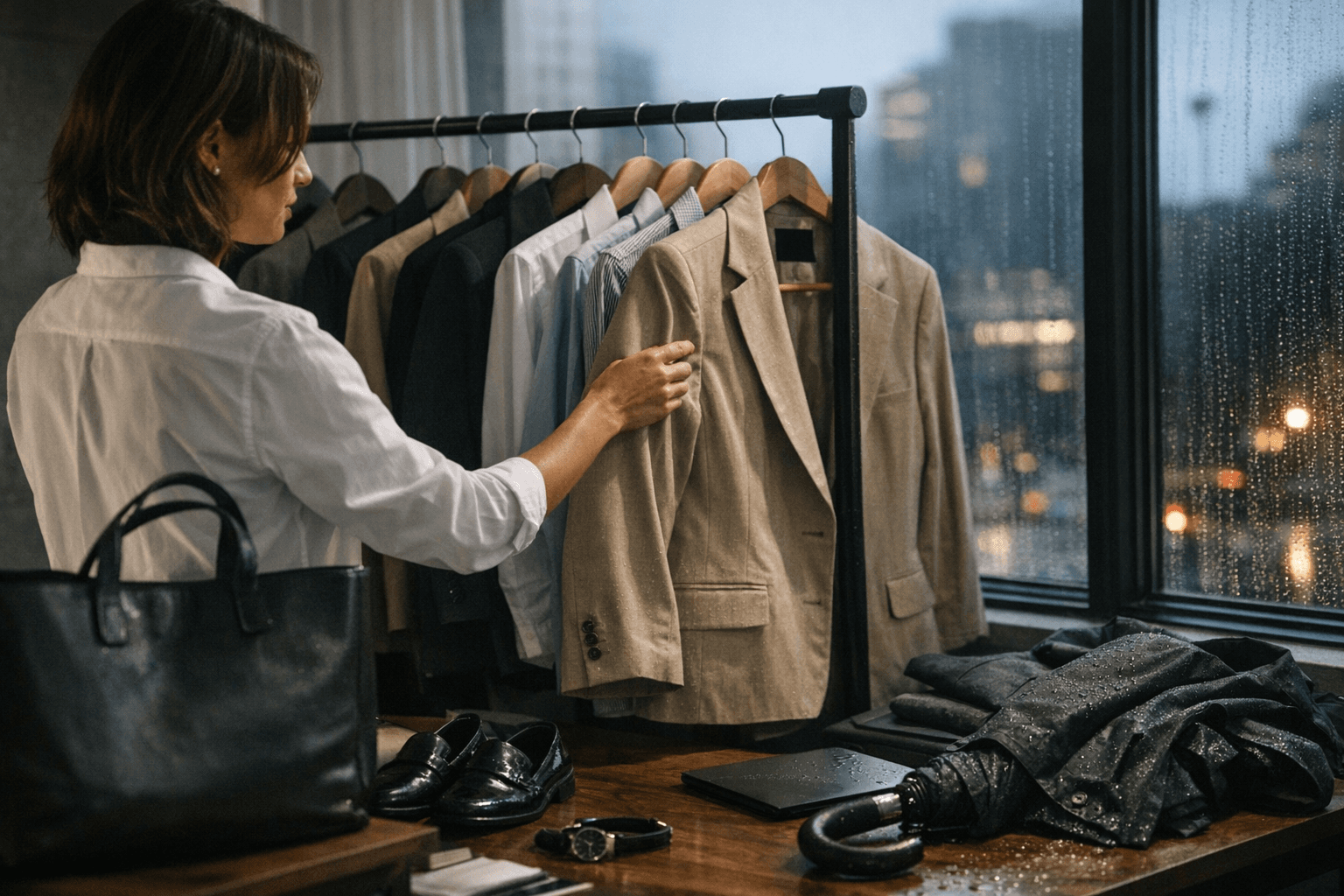
*Scenario: February, 7:50am, horizontal rain, 20 minutes on foot between the station and the office.*
This is where capsule wardrobes fail in practice. Pieces that looked sharp in a changing room become liabilities the moment real weather arrives, and the solution is not a dedicated rain outfit sitting unused for 300 dry days per year. It's building weather resilience into the core pieces themselves.
A DWR (Durable Water Repellent) finish applied to outer layers repels surface moisture without the stiff hand of a waterproof fabric. Many performance suiting brands now apply DWR to their outer shells as standard; the field test is simple: pour a small amount of water on the sleeve. It should bead and roll off within three to four seconds. If it absorbs immediately, the coating has degraded and needs refreshing with a spray-on DWR product, available for under £10 and applied in under three minutes.
For linings, moisture-wicking polyester microfiber draws perspiration away from the skin during a rushed commute and releases it quickly, so you arrive composed rather than damp. A half-lined blazer or trouser also dries faster than a fully lined version, which becomes relevant when layers are compressed in a bag. The one overlooked fabric in office dressing is mid-weight ponte knit for tops and simple dresses. Ponte holds its structure like a woven, wicks like a synthetic, and recovers from compression without creasing. Compositions around 60% viscose, 35% nylon, and 5% elastane give the best balance of drape and shape recovery. A ponte top balled up at the bottom of a bag for a four-hour journey hangs back out to wearable shape within minutes.
Build a modular set that covers a full travel week
*Scenario: Three nights in another city for a conference. One carry-on bag.*
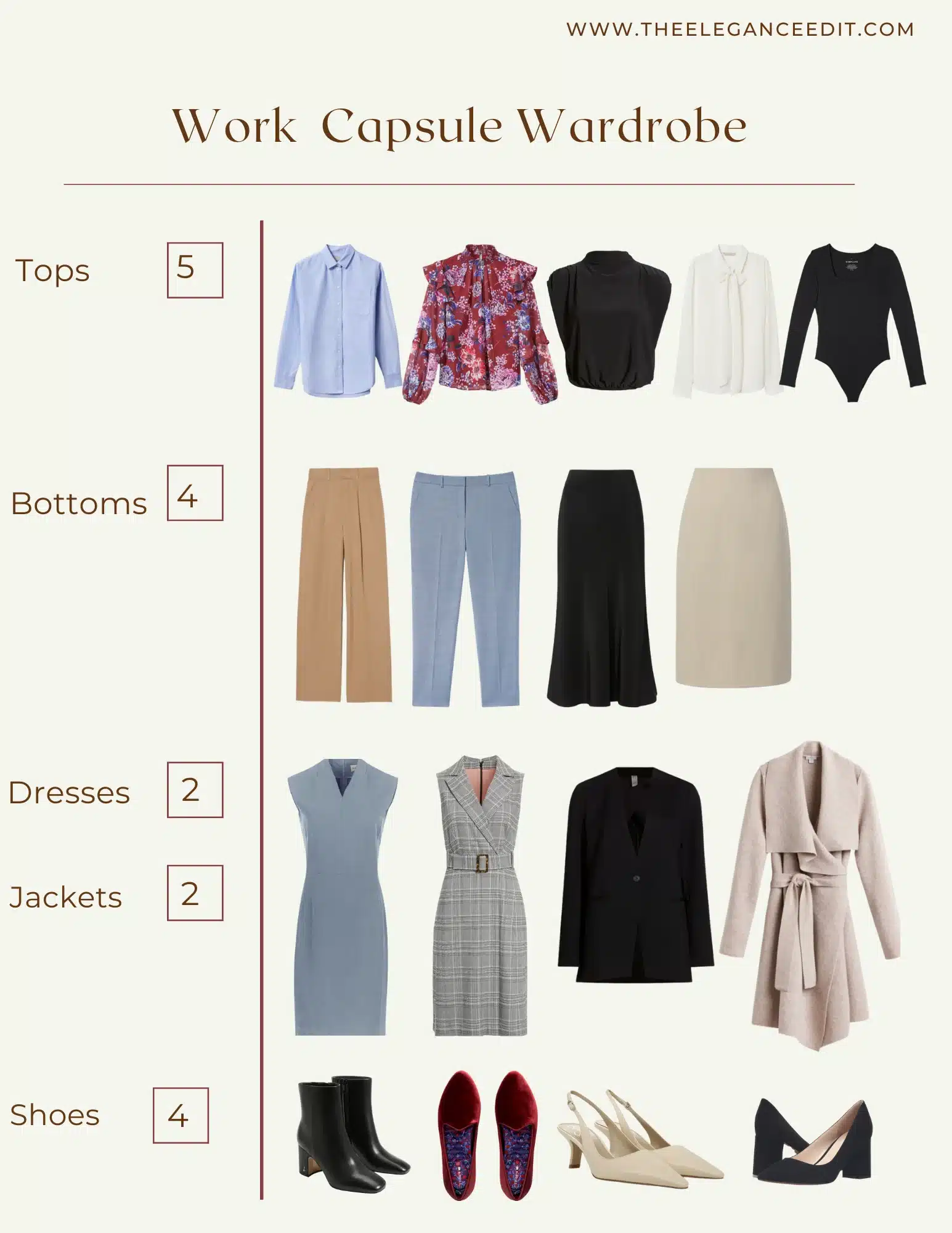
Four to five tops interchanged with three bottoms and a blazer generate more than 12 complete, distinct outfits from nine pieces. This is the arithmetic that makes a capsule wardrobe economically different from a conventional one, not a styling concept but a multiplication table. The reason it works is that neutrals share dominance across the whole set: a charcoal blazer, navy crease-resistant trousers, dark denim, a camel trouser, and five tops in white, pale blue, ecru, black, and a single seasonal accent (burgundy, forest green, or rust rotated quarterly) will not produce a single clash. Every combination resolves before you've opened your suitcase.
The economics compound at the individual piece level. A £120 top bought as part of 40 outfit combinations costs £3 per outfit. The same top worn in isolation twice before being retired costs £60. The capsule approach doesn't require spending less upfront; it requires spending differently, buying fewer pieces with greater intentionality and then extracting maximum use from each.
Packing with this set is also a practical skill. Choose tops in wrinkle-resistant fabrics (silk-touch polyester, jersey, or ponte) and roll them rather than fold for compression without creasing. Trousers travel better folded along their existing crease and placed flat against the bag's back panel. The blazer, rolled softly in tissue paper or laid flat, recovers from a four-hour bag with 15 minutes hanging in a steamy bathroom. No garment bag required.
Choose footwear that works across the whole day
*Scenario: Office at 9am, site visit at 1pm, client dinner at 7pm.*
The footwear brief for a functional capsule is simpler than most working wardrobes suggest: two pairs. One handles polish; the other handles terrain.
For the polish pair, a clean derby shoe (a lace-up with closed lacing, slightly less formal than an Oxford, more structured than a slip-on loafer) or a simple unlined loafer in leather or leather-finish synthetic covers the full range from a boardroom to a smart restaurant. The construction method is where durability economics become decisive: a Blake-stitched or Goodyear-welted sole can be replaced when it wears through, extending the life of the upper by years. A cemented or glued sole cannot be resoled, meaning the entire shoe is retired when the heel degrades. On a £180 shoe with a replaceable sole, three to four resole cycles over a decade drop the cost-per-wear to under 50p. The same quality upper on a glued sole is a five-year item at best.
For site visits or mixed terrain, a refined work sneaker in a clean silhouette, with no aggressive branding or exaggerated platform, in white, grey, or black reads as intentional office-casual rather than a wardrobe concession. Look for a leather or leather-finish upper for wipe-clean maintenance and a non-marking rubber sole for traction across wet floors, gravel, or uneven ground. This pair also functions as the travel sneaker, keeping the total footwear count at two pairs in a carry-on.
Invest in maintenance and repair
*Scenario: Sunday afternoon, 20 minutes, before the working week.*
A capsule wardrobe's durability economics only hold if the pieces are maintained. The standard repair kit belongs in every working wardrobe and costs under £25 in total: a needle and thread in three weights (black, white, grey), a card of spare buttons in metal and horn finishes, a seam ripper, a fabric shaver for pilling on knits and ponte, and a travel iron or compact steamer. The payoff is fixing a loose button at 8am rather than retiring a £160 shirt to the back of the wardrobe.
Basic tailoring knowledge extends the wardrobe further. Knowing how to take in a side seam by half an inch, let out a trouser waistband using fabric hidden in the seam allowance, or replace a trouser hem with iron-on hemming tape means pieces that have drifted from a perfect fit are corrected rather than replaced. A single session with a local tailor for alterations on the core three pieces typically costs £20–£40 and returns them to a precision fit that reads as significantly more expensive than it was.
Storage is the final, underrated maintenance variable. Hang blazers and structured trousers on wide, shaped wooden hangers rather than wire, which collapses shoulder seams over time. Cedar blocks in enclosed wardrobes protect wool and Hopsack from moth damage. Rotating pieces rather than reaching for the same blazer five consecutive days allows fibers to recover their shape, measurably slowing wear at pressure points like trouser seats and jacket elbows.
Your capsule build checklist and shopping order
The sequence matters: foundation pieces first, because they set the color palette and silhouette rules that every subsequent purchase must work within.
- Blazer: wool-elastane blend, 200–260g/m², 2–4% elastane, half or half-canvas construction; charcoal, navy, or mid-grey
- Trousers (×2): one Hopsack or techno-crepe, one bi-stretch twill; both in neutrals; minimum 3% elastane
- Dark denim: 10–12oz, slim-straight or tapered, under 2% elastane, deep indigo or charcoal
Phase 1: Foundation (buy first)
- Tops (×5): black, white, pale blue, ecru, one seasonal accent; mix of silk-touch polyester, ponte knit (60% viscose/35% nylon/5% elastane), and jersey
- Third trouser: camel, tan, or warm grey in a different fabric weight to the first two for visual and textural contrast
Phase 2: Tops and third bottom (buy after foundation to confirm palette)
- Polish pair: derby or loafer with Goodyear-welt or Blake-stitch construction, leather upper; resole-compatible
- Terrain pair: refined work sneaker, leather or leather-finish upper, non-marking rubber sole; white, grey, or black
Phase 3: Footwear (buy after full outfit assessment)
- Repair kit: needle, thread in black/white/grey, spare buttons (metal and horn), seam ripper, fabric shaver
- Wide wooden hangers (minimum six), cedar blocks for enclosed storage
- DWR spray for outer layers; compact steamer or travel iron
Phase 4: Maintenance and care (buy last, but do not skip)
Buy the tops before the footwear so you can assess the complete outfit against your own coloring and the palette you've built. Maintenance kit last because the pieces need to exist before they need protecting. The full build, executed over four weeks rather than one shopping trip, prevents the single most common capsule wardrobe mistake: buying everything in the same session and discovering only later that three of the pieces refuse to work together.
This article was produced by Prism’s automated news system from verified source data, official records, and press releases, then run through automated quality and moderation checks before publishing. The system is built and supervised by the people who set the standards it runs under. Read our full AI policy.
Did this article answer your question?