H&M backs utility details, barrel-leg silhouettes for spring 2026
H&M is turning utility into office-friendly polish, with barrel-leg cargos, khaki tones, and pockets that feel practical, not performative.
The new utility language at H&M
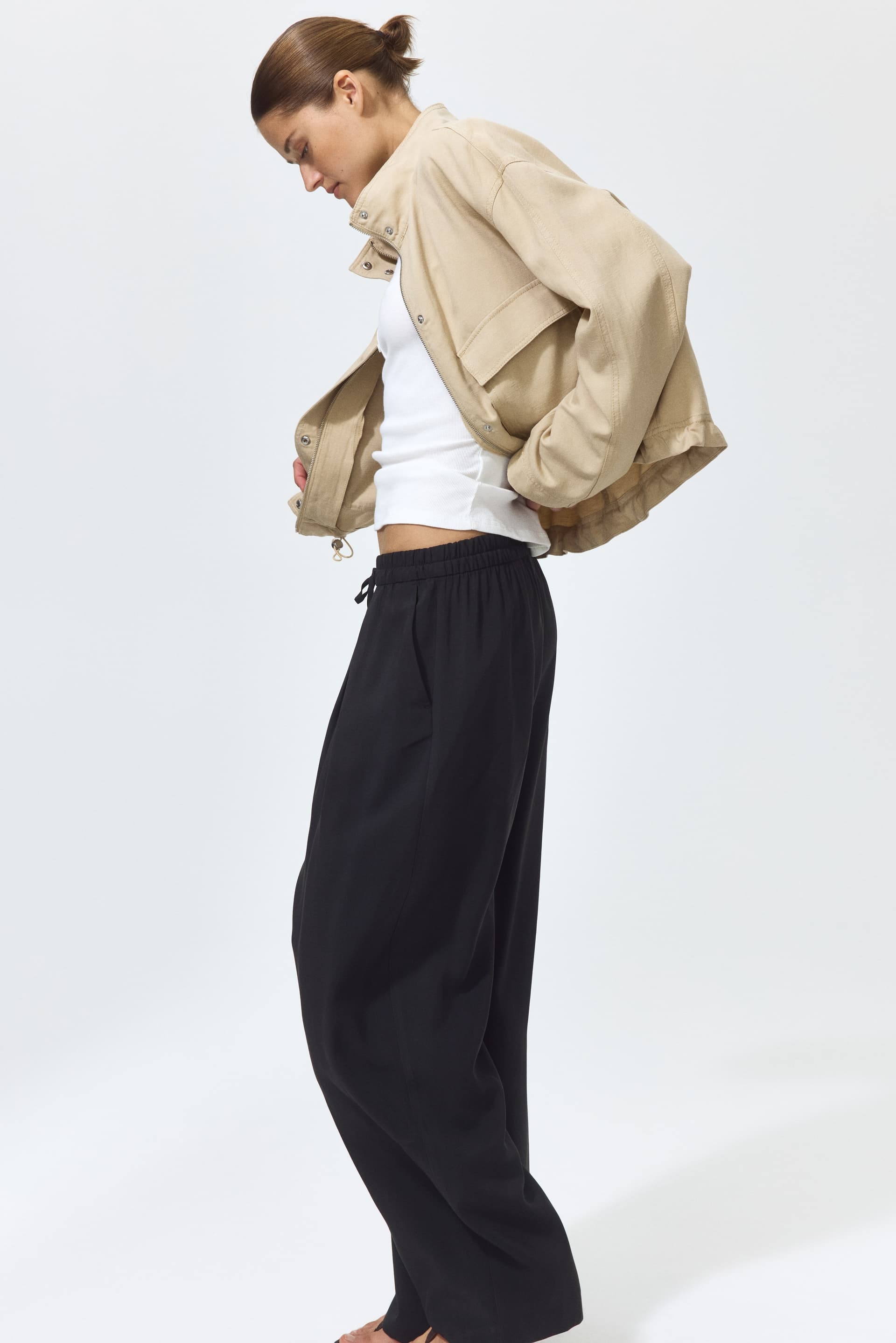
H&M is not treating utility as costume. Its spring 2026 direction takes the useful parts of workwear, the pockets, zips, ties, buttons, and grounded khaki and caramel tones, and smooths them into something you could plausibly wear from desk to dinner. That is the shift worth watching: the retailer is backing details that read as functional first, fashion second, which is usually how a trend earns a place in real wardrobes.
The scale matters. H&M Group counts about 4,100 stores across 81 markets and roughly 132,000 employees, so when it embraces barrel-leg silhouettes and practical fastenings, it is not just styling a runway mood. It is signaling which workwear codes can survive mass retail, where utility has to justify itself in the fitting room, not just on a mood board.
What H&M is actually backing
The clearest thread is a utilitarian one. Who What Wear identifies practical pockets, ties, buttons, zips, caramel beiges, creams, and khaki greens as the key details H&M is leaning into for spring 2026, along with accentuated waists and barrel-leg silhouettes. That combination tells you almost everything about the collection’s mood: soft enough to feel modern, structured enough to nod to workwear, and commercial enough to fit into everyday dressing.
What makes the mix distinctive is the balance between polish and function. The tones are muted and wearable rather than shouty, which helps the clothes feel at home in office wardrobes. The silhouette story is more directional: barrel legs introduce shape without the fuss of an extreme cut, giving trousers that curved, slightly architectural profile that feels current but still approachable.
The cargo pant is the clearest signal
The best proof of H&M’s direction sits in its khaki green barrel-leg cargo pants. The product page describes them in cotton twill with a high waist, zip fly, concealed button and hook-and-eye fastener, discreet side-seam pockets, welt back pockets, and barrel legs. Every detail is doing a specific job, and that is exactly why the piece feels relevant.
The concealed closure keeps the front clean, which helps the trousers look sharper than a pure utilitarian cargo. The side-seam pockets and welt back pockets bring function without adding bulk, and the cotton twill gives the fabric enough body to hold the barrel shape. That is the sweet spot for office dressing: a trouser that looks considered, not tactical.
What is practical for daily office wear
Some of H&M’s utility cues are genuinely office-ready because they solve a wardrobe problem rather than simply decorating it. Pockets are the obvious one. A well-placed side-seam pocket or welt back pocket is the difference between trousers that work for a commute, a coffee run, and a meeting day, and trousers that merely look the part.
The same goes for the high waist and zip fly on the barrel-leg cargo. Those details give the piece structure, make it easier to tuck in a shirt or fine knit, and keep the silhouette neat under a blazer. Khaki green, caramel beige, cream, and related neutrals are also smart choices for office dressing because they pair easily with navy, black, white, grey, and denim without looking forced.
- Practical for the office:
- discreet pockets
- clean zip fastenings
- high waists
- muted khaki, cream, and caramel shades
- barrel legs with enough structure to hold shape
What is trend packaging
Not every utility cue has the same staying power. Ties, for example, can be useful when they genuinely adjust the fit, but they also tend to read as styling shorthand if they are there mainly to signal that the garment has a workwear edge. The same is true of some button placements and decorative cargo references: they can make a piece look on-trend without necessarily making it more wearable.
The barrel leg itself sits in a similar middle ground. It is practical enough to feel new and forgiving, especially around the thigh and knee, but it is still a trend silhouette. If the cut is exaggerated, it can tip from office-friendly to fashion-forward very quickly. In other words, the barrel leg is the modern part of the equation; the pocketing and fastening details are what keep it grounded.
Why H&M Studio changes the reading
H&M is also framing the season through a more elevated design lens. H&M Studio S/S 2026 is described by the brand as a tactile and cleverly constructed collection that balances architectural structure with dreamlike softness. That matters because it shows utility is not being treated as a separate workwear revival. It is being folded into a broader language of shape, texture, and refinement.
That is a more persuasive direction than simply recycling cargo references. Architectural structure suggests sharp seams, deliberate volume, and pieces with presence. Dreamlike softness tempers that severity, making the clothes feel less industrial and more wearable. The result is a collection that borrows from workwear but tries to live in modern wardrobes, where one jacket or trouser has to do multiple jobs.
The office dressing angle is the real story
H&M’s own spring style guide pushes the same idea, framing the season around spring outfits, layering, work looks, and everyday dressing. That framing is important because it confirms the brand is not speaking only to trend followers. It is addressing the practical reality of how people dress now: layered, mixed, and often office-adjacent, even when the office dress code is loose.
This is where the collection feels commercially savvy. Instead of selling hard-edged utility, H&M is making it softer and more adaptable. Barrel-leg trousers in khaki twill, neutral color palettes, and tidy closures are exactly the kinds of details that can move from seasonal novelty to regular rotation. The clothes do not need to shout workwear to do the work of workwear.
By the time the season reaches stores, the message is clear: the utilitarian details with staying power are the ones that solve fit, carry things, and sharpen a silhouette. The rest is styling language. H&M is betting that the modern office wardrobe wants function first, with just enough fashion tension to keep it from feeling routine.
This article was produced by Prism’s automated news system from verified source data, official records, and press releases, then run through automated quality and moderation checks before publishing. The system is built and supervised by the people who set the standards it runs under. Read our full AI policy.
Did this article answer your question?