India's Workwear Shift: Cotton, Linen, and Handlooms Replace Synthetic Fabrics
Flipkart's search data confirms it: linen is India's fastest-growing workwear fabric as professionals ditch synthetics for cotton, handlooms, and heritage textiles.
Synthetic fabrics built the Indian office wardrobe for decades. Polyester shirts that held their press through a Mumbai monsoon commute, nylon blends that photographed well in fluorescent light. The trade-off, suffocating heat and the particular misery of a long day in fabric that doesn't breathe, was considered the cost of looking professional. That calculus is shifting, and the data from one of India's largest e-commerce platforms is making it impossible to ignore.
Anmol Sikka, Senior Director at Flipkart, puts it plainly: "Flipkart is observing a pragmatic shift in professional apparel as breathable handlooms are being preferred by customers over restrictive synthetics. We are tracking this change in user behaviour on our platform, with searches moving towards fabrics and styles that prioritise comfort." The specifics are telling. Cotton continues to dominate consumer preference in men's workwear on Flipkart's platform, while linen searches are growing the fastest of any fabric category. These are not aspirational numbers from a sustainability report. They reflect what Indian professionals are actually clicking on and buying.
What's Driving the Switch
The shift is happening at the intersection of three pressures: climate, culture, and the restructured workday. India's urban professionals are navigating a post-pandemic work rhythm that involves more commuting, more hybrid arrangements, and longer stretches spent moving between air-conditioned offices and outdoor heat. A fabric that performs in both environments is no longer a luxury preference; it's a functional requirement. News18's reporting frames the transition as being driven by climate conditions, hybrid work routines, and a clear desire for garments that read polished without sacrificing comfort. The way people want their clothes to fit is also evolving alongside fabric preferences, with the restrictive tailoring associated with synthetic suiting giving way to cleaner, less structured silhouettes in natural materials.
There is also a sustainability dimension gaining genuine traction. The conversation has moved beyond marketing language. Professionals choosing cotton and linen are increasingly aware that these choices carry environmental weight, and that awareness is shaping purchase decisions alongside comfort and aesthetics.
Cotton: The Foundation That Isn't Going Anywhere
Cotton's dominance in Indian workwear is not new, but its character is changing. The coarse, stiff cotton of a decade ago has given way to finer weaves, better finishing, and an expansion in the formal end of the category. In men's workwear specifically, Flipkart's platform observations confirm cotton's continued lead, which makes sense given how well a well-cut cotton shirt handles the demands of an Indian office day. It breathes, it softens with wear, and it takes dye in a way that keeps colours sharp through repeated washing.
The sustainability argument for cotton hinges on sourcing. Organic or ethically produced cotton reduces chemical use and supports healthier farming practices, and when chosen thoughtfully, cotton-based workwear becomes reliable across contexts: office, travel, and casual outings. That versatility matters in a wardrobe built around a hybrid schedule where the boundaries between professional and personal dressing are increasingly blurred.
Linen: The Fastest Mover
Linen is the story of this shift. Flipkart's fastest-growing fabric search category, linen carries a particular logic for India's climate: it is made from flax plants that require less water and fewer chemicals than many other natural fibers, it is exceptionally breathable, and its durability means a well-made linen shirt or trouser doesn't need replacing every season. The texture that makes linen divisive in Western markets, its tendency to wrinkle, reads differently in India's professional contexts, where a softly structured linen kurta or open-collar shirt sits comfortably within modern office dress codes.
Linen is one of the oldest natural fibers in documented use, and its current moment in Indian workwear isn't trend-chasing. It's a fabric genuinely suited to the environment and the lifestyle, which is exactly why search interest is outpacing every other fabric category on Flipkart's platform. The combination of low environmental impact, honest texture, and serious durability gives linen a strong case in a market where buyers are thinking longer-term about their wardrobe investments.
Handlooms: Heritage as a Professional Statement
The handloom category is where the cultural dimension of this shift becomes most visible. Breathable handlooms are being preferred over restrictive synthetics on Flipkart's platform, according to Sikka, and the appeal extends beyond fabric performance into something harder to quantify. Jhunjhunwaala, quoted in News18's reporting on this trend, describes what's happening among Indian consumers with precision: "At the same time, we are seeing a renewed appreciation for traditional textiles that were once passed down through generations, such as handloom sarees and pure silks. The new-age consumer is beginning to understand the value of these fabrics, not just as garments, but as pieces of heritage, craftsmanship and culture that deserve a place in modern wardrobes."
That framing captures something real. Handloom textiles are woven manually by skilled artisans, preserving techniques tied to specific regional traditions across Odisha, West Bengal, Tamil Nadu, Karnataka, and Andhra Pradesh. Wearing a handloom piece to the office is not nostalgia; it's a considered choice that signals an understanding of craft, supports local artisan communities, and produces a garment with a tactile quality that no machine-loomed synthetic can replicate. Sustainable clothing made from handloom fabrics carries cultural value alongside environmental benefits, and that combination is precisely what is resonating with professionals who want their wardrobe to reflect something beyond a dress code.
How Natural Fabrics Are Reshaping the Office Look
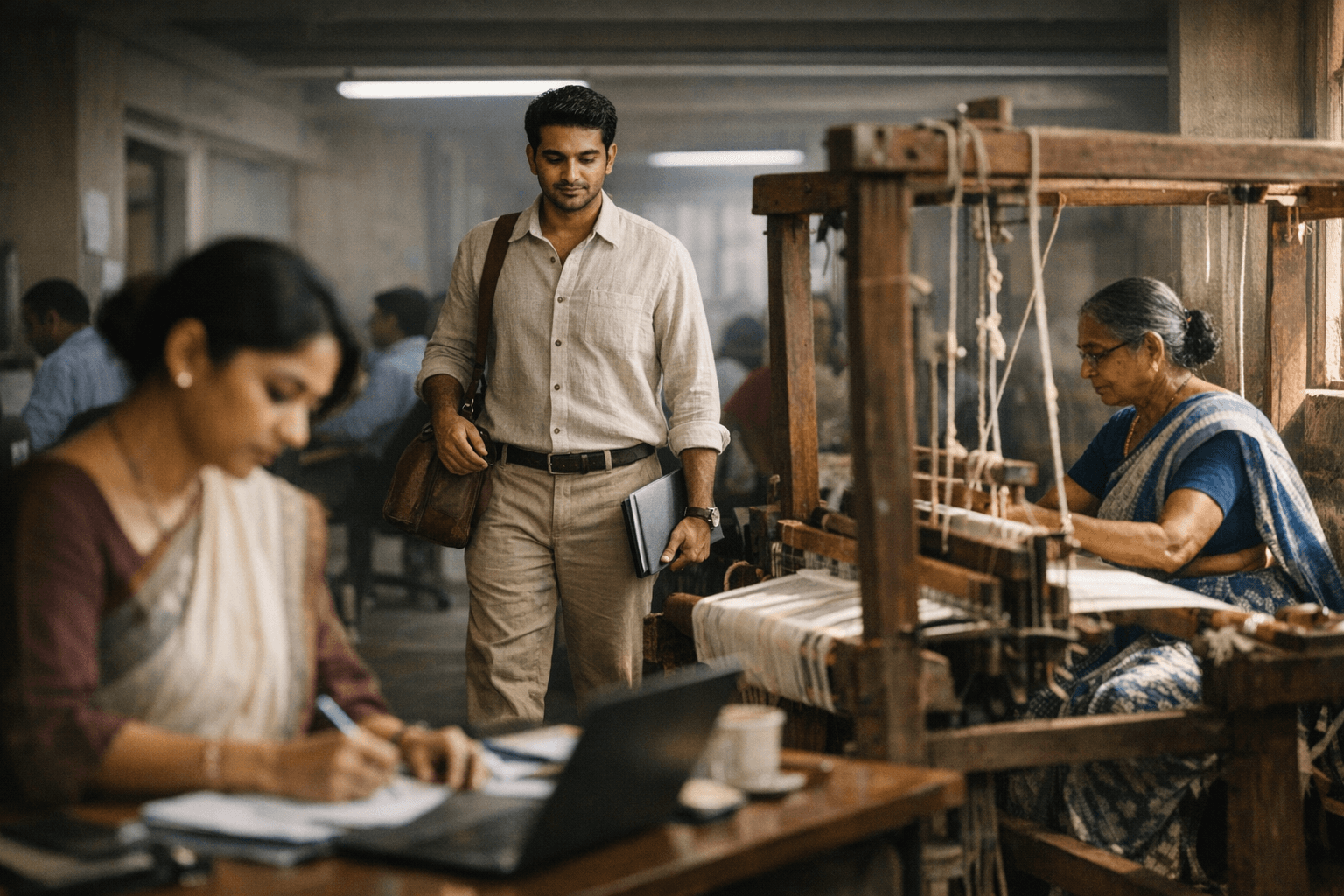
The practical question for anyone rebuilding a workwear wardrobe around these fabrics is how they translate into actual office-appropriate dressing. Natural fabrics form the backbone of the emerging Indian professional wardrobe, with linen, cotton, and handloom textiles each offering distinct qualities. A fine cotton poplin shirt in a structured cut reads as formally as any polyester-blend equivalent. A linen blazer in a neutral, slightly nubby weave brings texture and breathability without sacrificing authority. A handloom kurta in a restrained palette holds its own in a boardroom and communicates a visual sophistication that synthetic fabrics simply don't have.
The silhouettes associated with natural fabrics tend to be less rigid, which aligns with the broader shift in professional dress codes toward relaxed tailoring. The wrinkle and drape that characterise linen and handlooms are no longer read as signs of an underdressed appearance. They signal intentionality.
A Wardrobe Built for the Long Game
The momentum behind cotton, linen, and handlooms in Indian workwear is not a seasonal correction. It reflects a fundamental recalibration of what professional dressing should feel like, look like, and stand for. Flipkart's platform data captures the direction of travel in real-time search behaviour. The cultural and environmental arguments, articulated by voices ranging from industry observers to sustainable fashion advocates, provide the underlying logic. And the fabrics themselves deliver on both counts.
India's professional dress code is being rebuilt not by abandoning tradition but by rediscovering it, finding in cotton, linen, and handloom textiles a vocabulary that works for the climate, the conscience, and the contemporary office in equal measure.
This article was produced by Prism’s automated news system from verified source data, official records, and press releases, then run through automated quality and moderation checks before publishing. The system is built and supervised by the people who set the standards it runs under. Read our full AI policy.
Did this article answer your question?