Japanese Fan-Fitted Cooling Jackets Win Over Foreign Visitors This Summer
A Taiwanese Instagram influencer walked into a Tokyo workwear store last June — by autumn, sales had quadrupled year-on-year and 70% of shoppers were arriving from overseas.
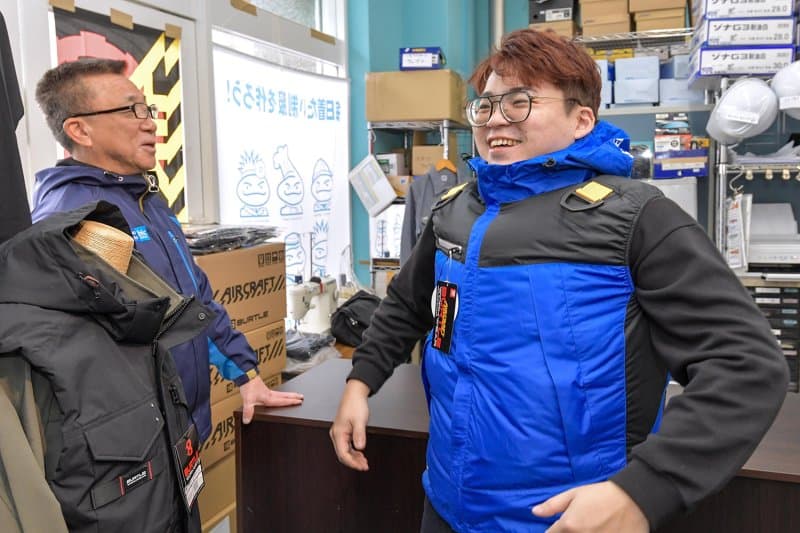
Lo Kuan-hsin, a 35-year-old pharmaceutical engineer from Taiwan, flew to Tokyo specifically to buy fan-fitted jackets, having discovered them through online searches and word of mouth. The full jacket sets retail for around 25,000 yen in Japan, including a fan and battery, and cost about twice that amount at home in Taiwan. The price gap alone justified the flight — and Lo was far from alone in making the calculation.
Jackets fitted with motorized fans have long been popular with laborers during Japan's sweltering summer months, but at Bic Uniform, the Ueno-district store operated by Sanko Hakui Co., it is foreign visitors driving sales. Staff say about 70% of customers have come from overseas since around June last year, with a line often forming when the store opens. About 60% of all customers are from Taiwan alone, with a further 10% coming from elsewhere abroad.
The inflection point was a single post. Hiroyasu Furuya of Sanko Hakui's store management department said a social media influencer from Taiwan arrived around June and spread the word via Instagram, and that many people started coming since then. The year-round warm climate in Taiwan, he added, means demand is likely to be sustained. According to Sanko Hakui, the Ueno store's fall sales last year were quadruple those of the same period the previous year.
The jacket itself is a piece of functional engineering that reads as alien to Western eyes: inflating as it circulates cool air around the wearer's body, it first went on the market in Japan in 2004. It was first developed by Tokyo-based company Kuchofuku Co. Ltd. The design began to gain wider traction only in recent years, as other companies released their own models and other varieties of cooling clothing. Today the category spans everything from construction-grade vests to lighter leisure cuts, all sharing the same puffed-out silhouette created by twin motorized fans drawing air across the body's core. The visual effect, somewhere between a life jacket and a spacesuit, is precisely what makes these pieces so shareable.
Furuya attributed the products' appeal to the high level of functionality prized by Japanese customers, including water resistance, wind proofing and warming effects, saying: "That is where I think Japanese craftsmanship and attention to detail really excels." The unusual shapes and bold colors also make these outfits stand out and look great on social media, giving them a dual value as both performance gear and visual souvenir.
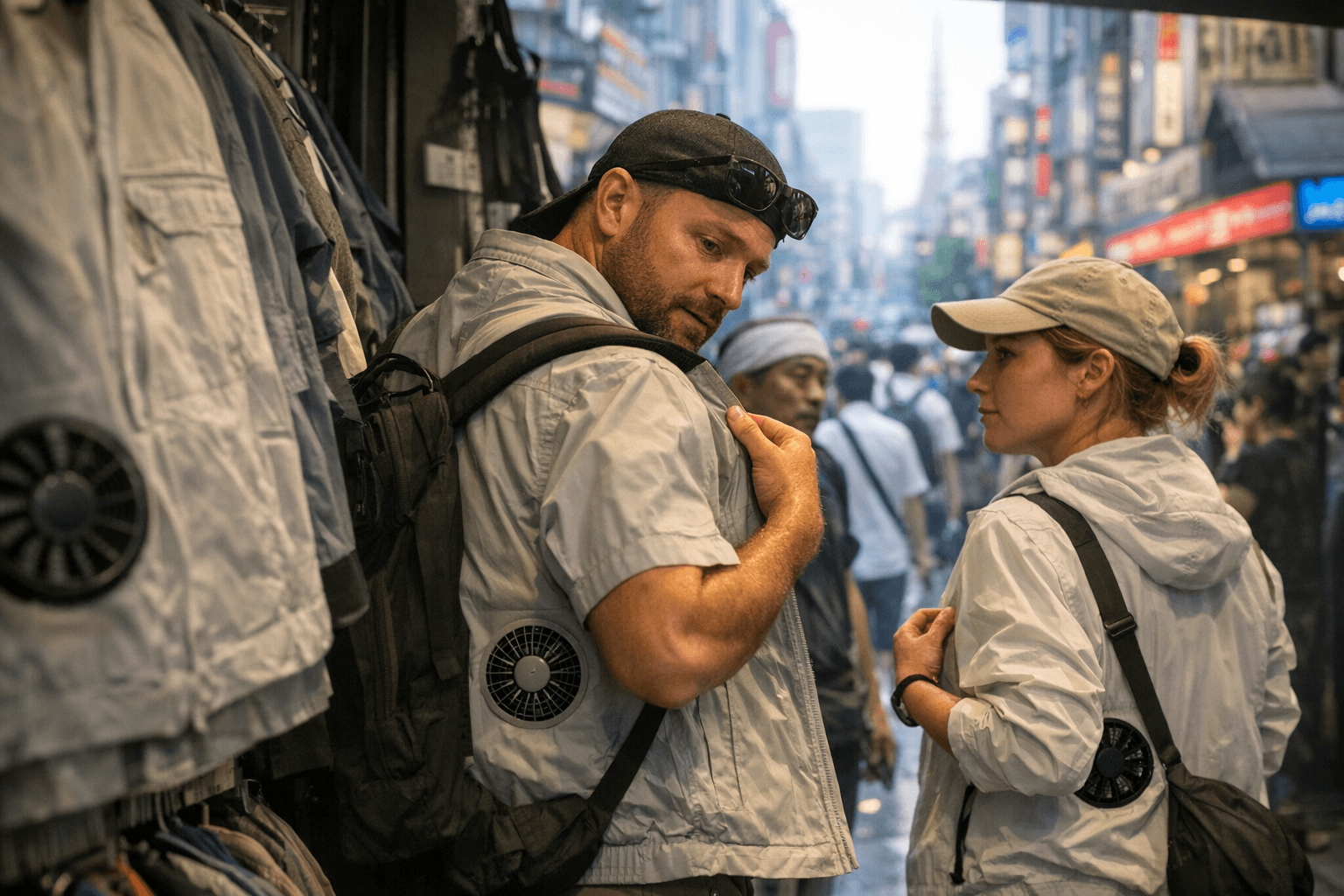
Geography is working in Bic Uniform's favor. Sanko Hakui operates five workwear shops in Tokyo, but the Ueno location has direct access by train to Narita airport, Japan's busiest international hub, making it a convenient stopover for visitors just arriving or about to depart. For a traveler with luggage already packed, it is effectively an airport shop with the depth of a specialty retailer.
The fan jacket is not the only workwear category catching tourists' attention. Nikka-bokka, or Tobi pants, the wide-legged trousers traditionally worn by construction workers, are now popular as "ninja-style" or "unique Japanese fashion" items. Heritage brand Toraichi, which has been outfitting Japan's construction workers since 1959, produces designs with an almost obsessive attention to functional detail, from reinforced sashiko-stitched waistlines to strategic pleating for movement. The workwear shopping circuit now extends beyond Ueno: long-established workwear brand shops operate in Shibuya and Shinjuku, and in Yokohama, Workshop Knuckle offers a wide selection of workwear and work gear.
While business is strong in Asian markets, Furuya said Sanko Hakui is actively trying to appeal to Western customers through social media and a strengthened e-commerce operation. The Instagram influencer who started the Taiwan rush showed precisely how quickly that can move. In workwear, as in fashion, the next wave rarely announces itself in advance.
This article was produced by Prism’s automated news system from verified source data, official records, and press releases, then run through automated quality and moderation checks before publishing. The system is built and supervised by the people who set the standards it runs under. Read our full AI policy.
Did this article answer your question?