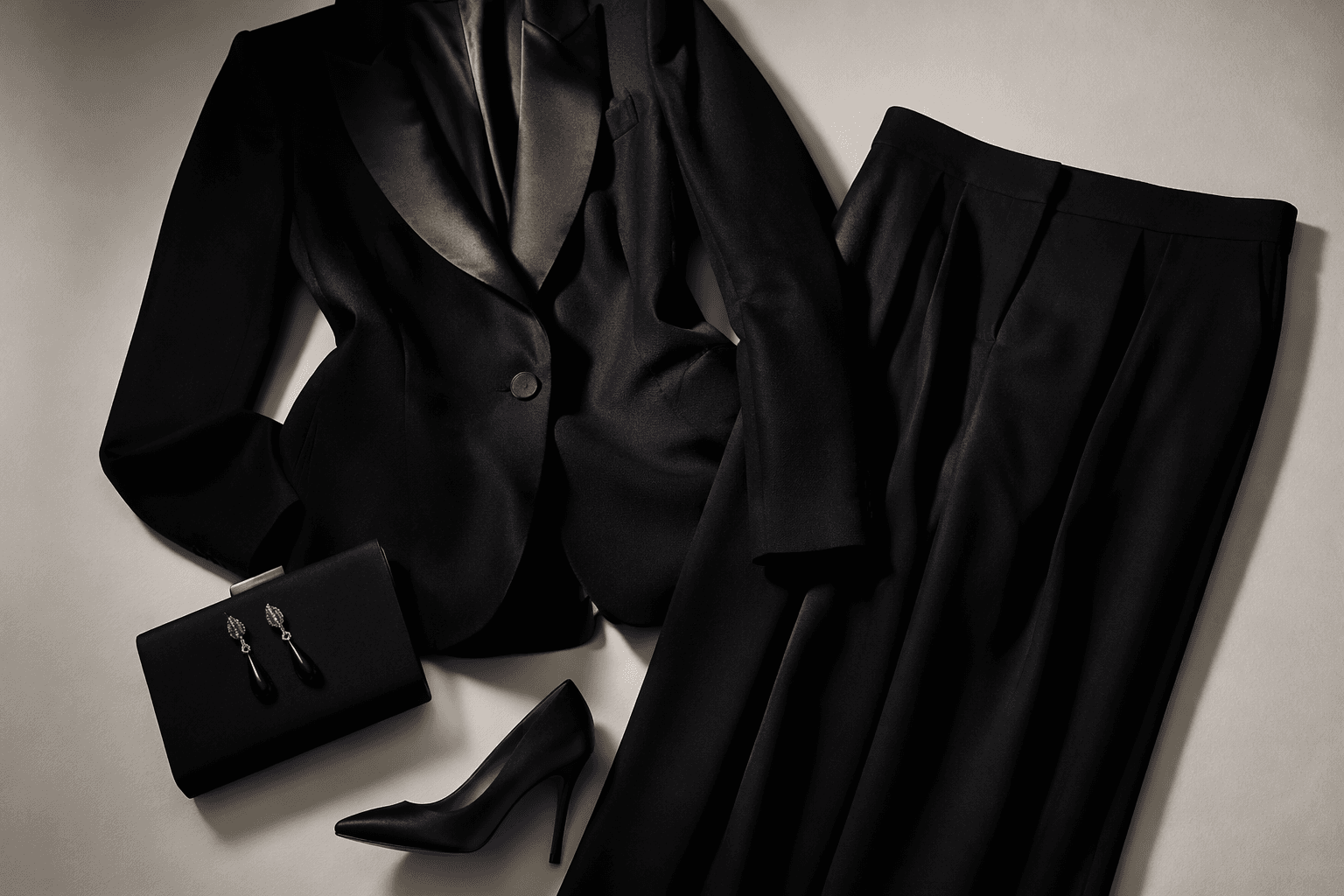
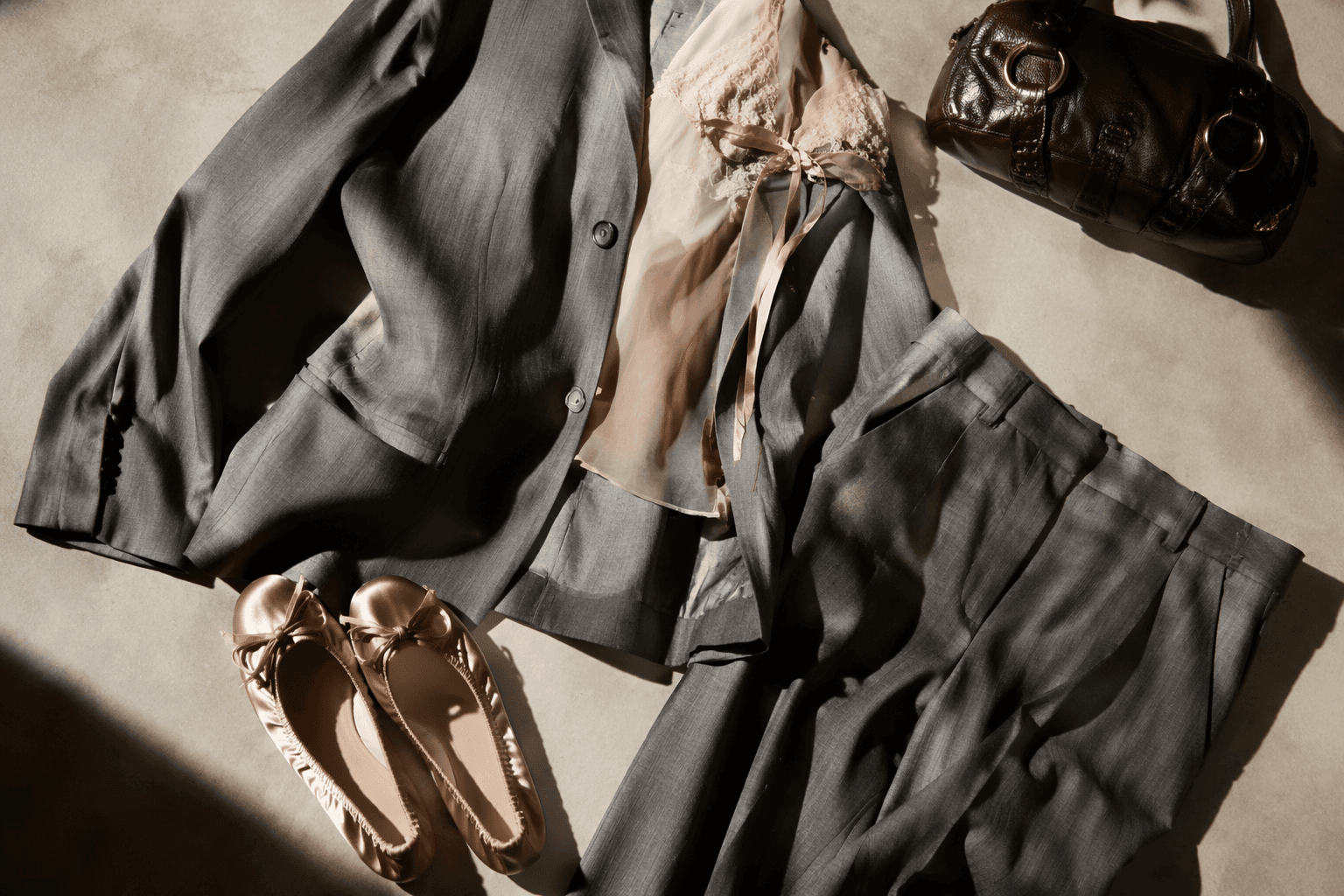
Jonathan Anderson makes Dior couture feel wearable for daylight
Anderson's Dior couture leans into handwork, then cuts it into daylight-ready shapes you could actually wear from desk to dinner.
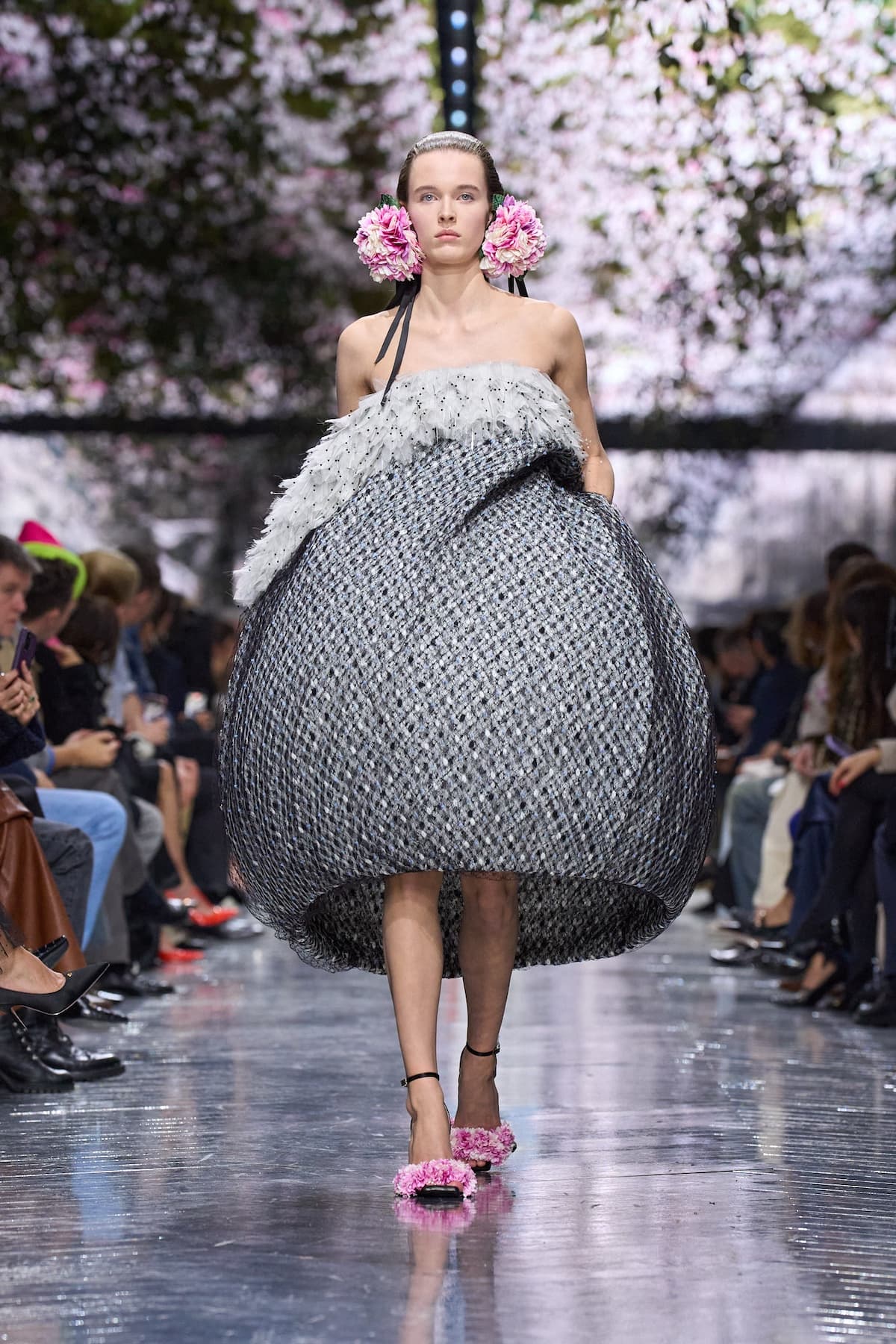
Jonathan Anderson is testing a deliciously difficult proposition at Dior: how much couture craft can a woman carry into real life without losing ease. The answer comes through in clothes that glitter, pleat and drape with serious technical ambition, then land in silhouettes that feel surprisingly usable, from robe coats to softened tailoring and trousers that behave more like daywear than display pieces.
Couture, stripped of its distance
The fall 2026 couture collection is built around a tension Anderson knows how to exploit: ornament that never quite tips into stiffness. Metallic pleats catch the light, sparkling tweeds sharpen the surface, and manipulated fabrics keep the house’s tailoring language from feeling sealed inside a salon. It is the sort of couture that still wants to move, which is precisely why it reads as relevant to workwear now.
Dior’s own framing gives the collection a more exacting backbone. The house says the season responds to American sculptor Lynda Benglis, and the techniques at the center are hand-plissé, knotting and draping. Those are not decorative afterthoughts, they are structural decisions, turning fabric into shape without relying on heavy construction. That matters if you are looking for the workwear lesson: clothes can carry craft and still behave like clothes you live in.
The tailoring ideas worth borrowing now
What makes this collection distinctive is the way Anderson turns ceremonial gesture into wardrobe logic. The lines are sinuous rather than severe, which softens the authority of the tailoring and makes the clothes feel easier to inhabit. That is the useful trick here for elevated office dressing: a piece can look formally considered and still keep its movement.
You can see the idea most clearly in the pieces already being pushed through Dior’s broader ready-to-wear universe. Pre-fall 2026 introduced jeans, robe coats and multiple takes on the Bar jacket, while the fall 2026 ready-to-wear line included ivory hammered silk track pants, jeans with ribbon embroidery and robe coats worn as dresses. Those are not boardroom basics in the strict sense, but they sketch a new code for polished day dressing: less uniform, more fluid, and always aware of how the body actually moves.
Why the collection feels like daylight, not fantasy
Anderson put the thesis in plain language when he said, "You’re trying to show transitional wardrobes" and "I wanted clothing that worked in daylight." That is the key to reading the collection properly. The glamour is still there, but it has been calibrated for hours beyond the red carpet, which is why the garments feel less like event pieces and more like elevated working clothes with a ceremonial edge.
Dior said the clothes would begin arriving in stores in June, which sharpens the sense that this is not couture sealed off from the market. The move is part of a wider shift across Anderson’s tenure, with the house repeatedly signaling that wearability is not the enemy of luxury. In this context, daylight means more than natural light. It means clothes that can survive a calendar, not just a camera.
The craft references are doing more than decorating
Dior’s couture description ties the collection to Ahmedabad, Gujarat, and to Indian craft traditions, especially 18th-century chintz. Antique fragments of chintz and indiennes were sourced from a specialist dealer for some accessories, a detail that gives the collection a quietly archival richness. The floral and chromatic choices also echo Ahmedabad and Santa Fe, New Mexico, so the palette carries geography as well as mood.
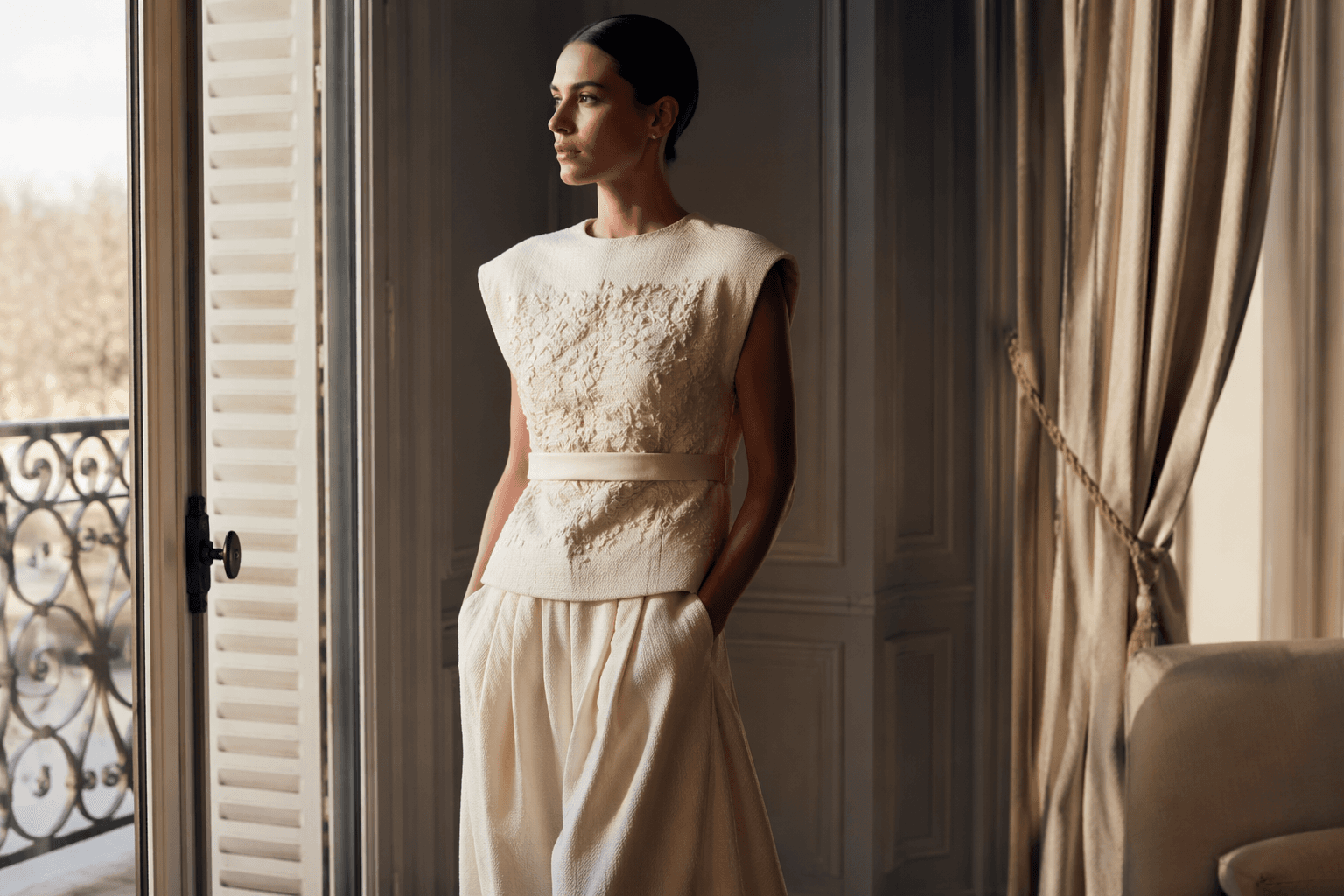
Those references matter because they keep the collection from becoming generic “global inspiration.” Instead, Anderson is building surface interest from materials with histories, then translating them into shapes that can still be worn outside the context of a couture salon. The result is a rare balance: the clothes feel researched, but not academic; luxurious, but not precious.
The house memory underneath the new mood
There is also a deeper Dior logic at work. The couture house’s headquarters at 30 Avenue Montaigne are the site of Christian Dior’s 1947 debut, and that debut centered on the Corolle and 8 silhouettes, later christened the New Look by Carmel Snow. Anderson is working inside that legacy, but he is not restoring it as a costume. Instead, he is asking how a house famous for sculpted femininity can speak to the looseness and practicality modern wardrobes demand.
That tension between monument and motion has been visible since his first couture show for Dior in January 2026. The presentation was planned in three chapters: a runway show, a private client event and a public exhibition. That structure matters because it mirrors the way couture now has to operate, not only as fantasy, but as an ecosystem of spectacle, client intimacy and cultural display.
The front row signaled the scale of the moment
Anderson’s couture debut also arrived with a front row that made the house’s ambitions obvious. Rihanna, Jennifer Lawrence, Anya Taylor-Joy, Greta Lee, Taylor Russell, Parker Posey and Josh O’Connor were all there, and John Galliano attended too, his first Dior show since leaving the house in 2011. That mix of old house memory and new celebrity power placed Anderson in a familiar Dior position: managing heritage, attention and renewal at once.
The show itself took place in the Tuileries Garden, where Dior has held its shows since 2020 after partnering with the adjoining Louvre Museum to help restore the garden. Set against that backdrop, Anderson’s cloth-forward approach felt less like a break with Dior than a recalibration of its scale. The garden setting lends air and ceremony; the clothes answer with movement and daylight.
What this means for workwear style
For anyone reading Dior as a workwear guide, the useful signals are clear. Look for tailoring that slips rather than clamps. Favor jacket shapes that have the confidence of couture but the ease of a robe coat. Let surface detail live on fabrics that already move well, such as silk, tweed and lightened suiting, so the embellishment does not overpower the body.
The Anderson version of Dior suggests a wardrobe where polish no longer depends on hardness. A sparkly tweed can still read professional if the cut is relaxed enough, and a ceremonial coat can still feel practical if it hangs with enough air. That is the new Dior idea in daylight: clothes that know how to impress, then get on with the day.
This article was produced by Prism’s automated news system from verified source data, official records, and press releases, then run through automated quality and moderation checks before publishing. The system is built and supervised by the people who set the standards it runs under. Read our full AI policy.
Did this article answer your question?