KEEN Utility's KS86 Work Sneaker Blends Trail-Runner DNA With Jobsite Safety
KEEN Utility's KS86 pulls trail-runner tech onto the jobsite with a featherweight carbon toe and a midsole that claims 50% energy return per step.
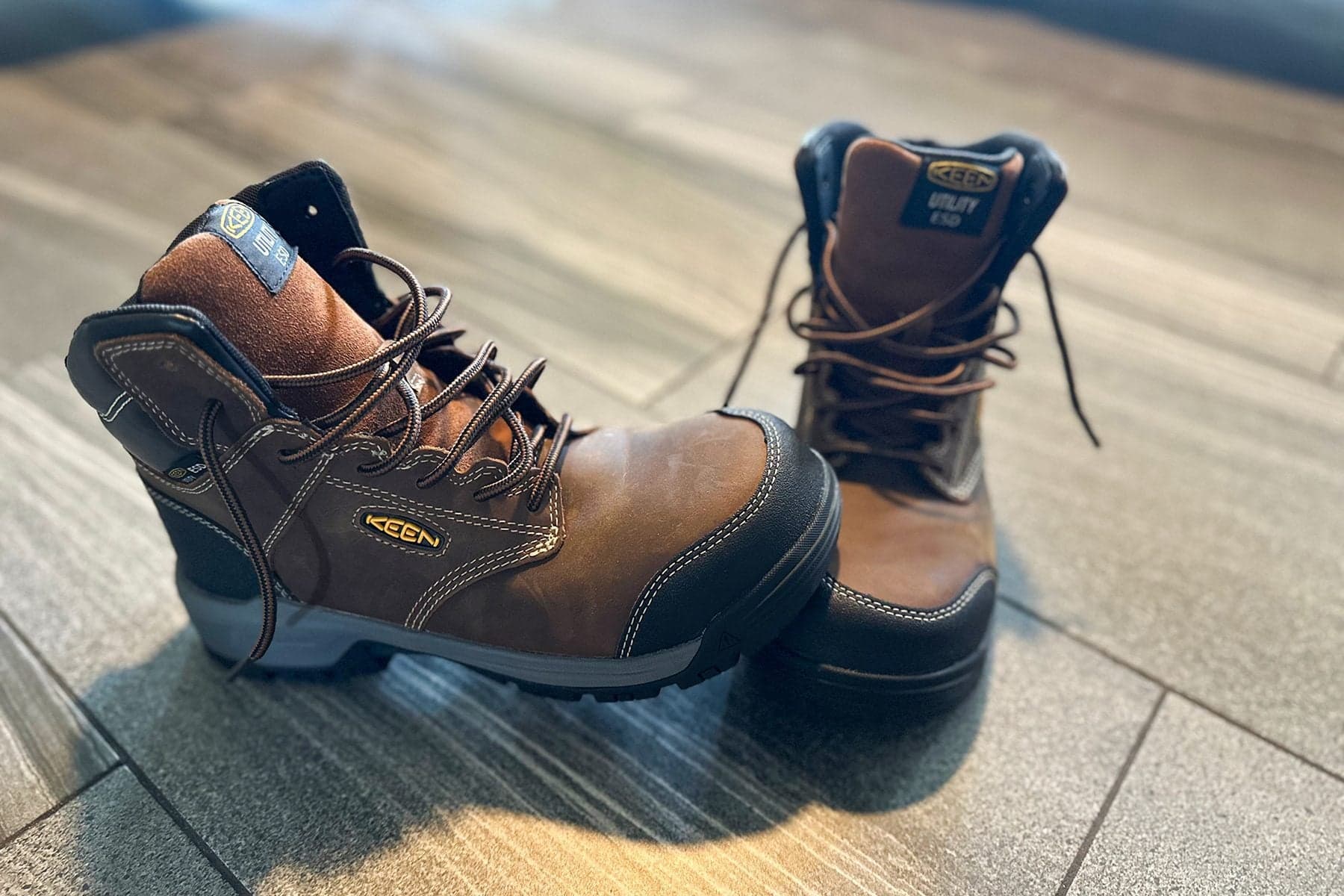
KEEN Utility built the KS86 by raiding its trail-running archive and asking a simple question: why should a construction worker's foot feel worse at 5 p.m. than a distance runner's does at mile 10? The answer, arriving for Spring 2026, is a work sneaker that borrows the lightweight platform and energy-return engineering of performance trail footwear and wraps it around a carbon safety toe rated for jobsite impact protection.
The result sits in an interesting space in the work footwear market. Traditional steel-toed work boots prioritize durability and protection, often at the cost of weight and mobility. Trail runners optimize for ground feel, propulsion, and long-distance comfort, but they're not built for oil-slicked concrete or falling rebar. The KS86 is KEEN Utility's argument that those two design philosophies don't have to be mutually exclusive.
The Carbon Toe Advantage
The most consequential spec on the KS86 is the carbon safety toe, described by KEEN as a "featherweight" alternative to traditional steel. Carbon fiber toe caps have become increasingly common in premium work footwear precisely because they deliver comparable impact resistance at a fraction of the weight. The KS86's carbon toe is specifically positioned to reduce fatigue compared to steel while maintaining impact protection, a distinction that matters across a full shift. Steel toes concentrate weight at the front of the shoe; over eight or ten hours of walking concrete, that front-loading accumulates as fatigue in the foot, ankle, and knee. Carbon eliminates much of that penalty without compromising the protection that safety footwear standards require.
What's worth noting is that KEEN hasn't published specific safety certification details (such as ASTM F2413 compliance ratings) in available product information. For workers whose employers require certified PPE, confirming the toe protection rating with KEEN directly before purchase is a reasonable step.
KEEN.ReGEN Midsole: The Energy Return Claim
The midsole technology is where the trail-runner DNA shows most clearly. KEEN's proprietary KEEN.ReGEN compound is engineered to return up to 50 percent of energy per step, a manufacturer-claimed figure that positions it alongside performance running midsoles rather than the compressed EVA foam found in most budget work boots. KEEN frames this spec as a feature aimed at minimizing cumulative strain during repetitive movement across large commercial interiors, which is a different kind of stress than the impact-absorption demands of trail running but still benefits from the same energy-return engineering.
To put that 50 percent figure in context: high-performance running shoes from brands like ASICS (their FlyteFoam Blast) and New Balance (FreshFoam) make similar claims in the 50-60 percent energy return range. The difference is that those shoes aren't clearing construction sites. KEEN.ReGEN applying comparable technology to a safety-rated work shoe is a genuine differentiator, though as with any manufacturer-claimed performance metric, independent lab testing would be needed to verify real-world results. No third-party test data has been published for the KS86 as of its Spring 2026 introduction.
Outsole Construction and Traction
The outsole addresses the most immediate physical hazard on any active jobsite: slip and fall risk. The KS86 uses an oil- and slip-resistant rubber compound with a lugged tread pattern, the same architectural approach trail runners use to grip loose terrain, adapted here for dusty floors, wet surfaces, and debris-prone areas typical of active buildouts. The lugged geometry creates multiple edges that bite into irregular surfaces rather than skating across them.
KEEN specifically connects the traction design to fall-risk mitigation during material handling and ceiling grid installation, two tasks where workers are moving under load or working overhead, situations where a slip carries heightened consequences. An oil-resistant rubber compound is a separate technical requirement from general slip resistance: jobsites with hydraulic fluids, cutting oils, or industrial lubricants need footwear that maintains grip when petroleum products are present, and the KS86's outsole is formulated to address that condition.
Who This Shoe Is Built For
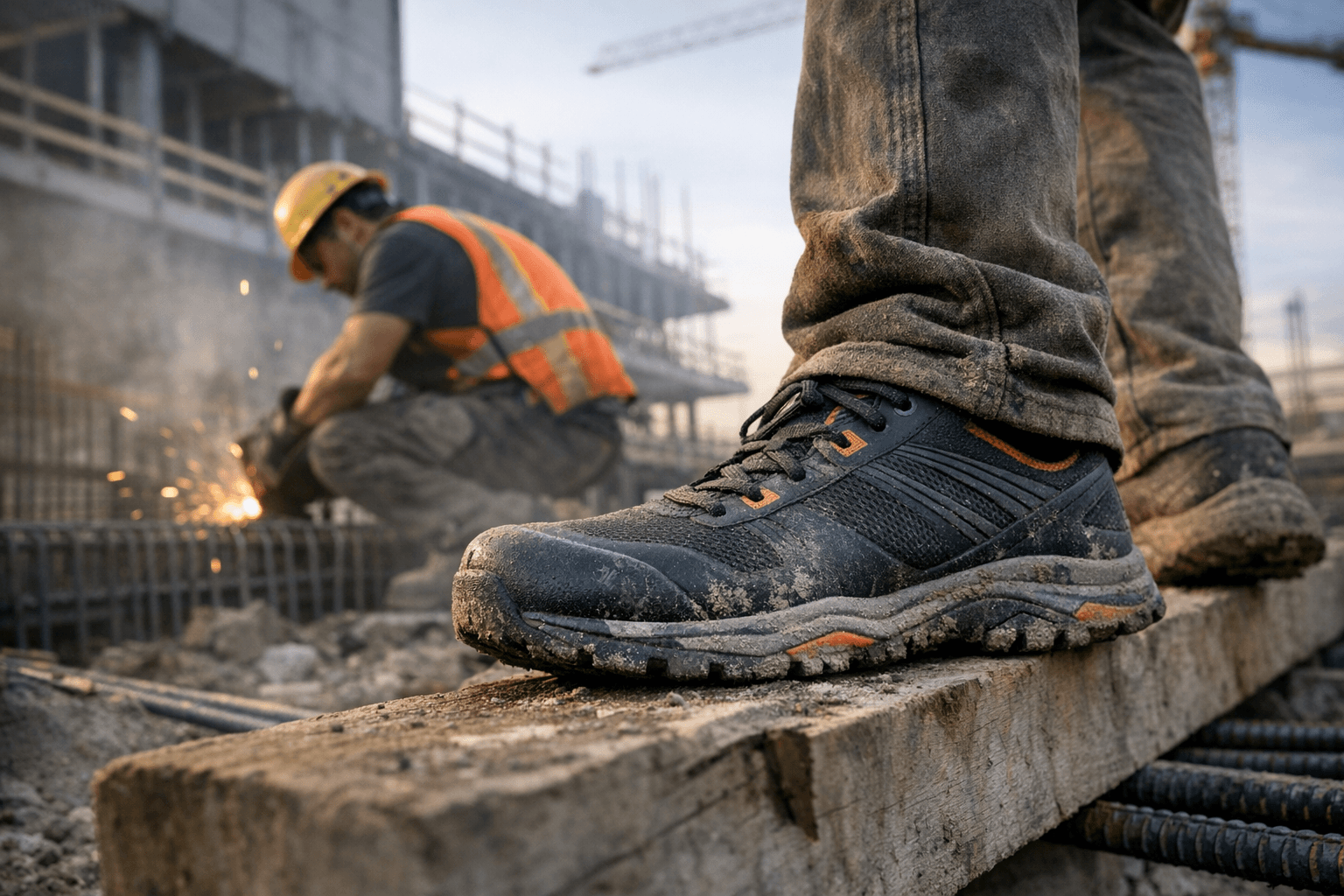
The KS86's design profile makes the most sense for workers who cover significant ground rather than staying stationary. KEEN points to drywall finishers, ceiling installers, and foremen who walk extensive square footage daily as the primary audience. These workers need protection (the carbon toe, the slip-resistant outsole) but spend their shifts moving through large commercial interiors rather than operating heavy machinery or working in highly concentrated hazard zones where a heavier, more protective boot might be warranted.
The sneaker construction, borrowed from the trail-runner silhouette, means the KS86 prioritizes mobility and all-day support over the ankle stability that lace-up work boots provide. For workers on scaffolding or uneven substrates where lateral stability matters, the trade-off between sneaker-style construction and a higher-cut boot is worth evaluating. The KS86 is designed for sustained horizontal movement on construction sites, not necessarily for the vertical demands of ladder work or heavy structural environments.
Sizing and Availability
The KS86 is offered in both men's and women's sizing with multiple color options, a detail worth noting because women's-specific safety footwear remains underrepresented in the work boot market. KEEN Utility's decision to launch with a full men's and women's range from the start, rather than treating women's sizing as a secondary SKU, aligns with growing industry recognition that female tradespeople make up an increasing share of the construction workforce.
No MSRP has been publicly confirmed for the KS86, which is notable given that the positioning between performance trail runners and traditional work boots suggests a premium price point. KEEN's existing safety footwear ranges from approximately $130 to $200, and the combination of carbon fiber toe technology and proprietary energy-return midsole compound would logically sit toward the upper end of that range or beyond it. An exact launch price and retail availability list have not been published in available product information.
The Broader KEEN Utility Picture
The KS86 is part of a broader Spring 2026 push from KEEN Utility that also includes the Targhee Blur Work Hiker, suggesting the brand is investing in expanding the upper end of its performance work footwear lineup. KEEN has been methodically building out its Utility line with distinct silhouettes: the Skokie, the Stronglite, the Synchro, the Targhee IV, and now the KS86, each targeting a different worker profile and use case. The KS86 represents the furthest KEEN has pushed into sneaker-category design language for a safety shoe, and it arrives at a moment when the broader market is seeing increased crossover between athletic footwear technology and occupational safety requirements.
The missing piece for now is pricing and independent performance verification. The manufacturer-claimed 50 percent energy return and the fatigue-reduction case for carbon over steel are plausible and technically grounded claims, but they haven't been tested by a third-party lab in published results. For construction workers evaluating whether the KS86 justifies its price against established competitors like Timberland PRO, Red Wing, or Carhartt's own trail-inspired work shoes, hands-on wear testing across a full shift will ultimately tell more than any spec sheet. The architecture is compelling. The proof is in the concrete.
Know something we missed? Have a correction or additional information?
Submit a Tip