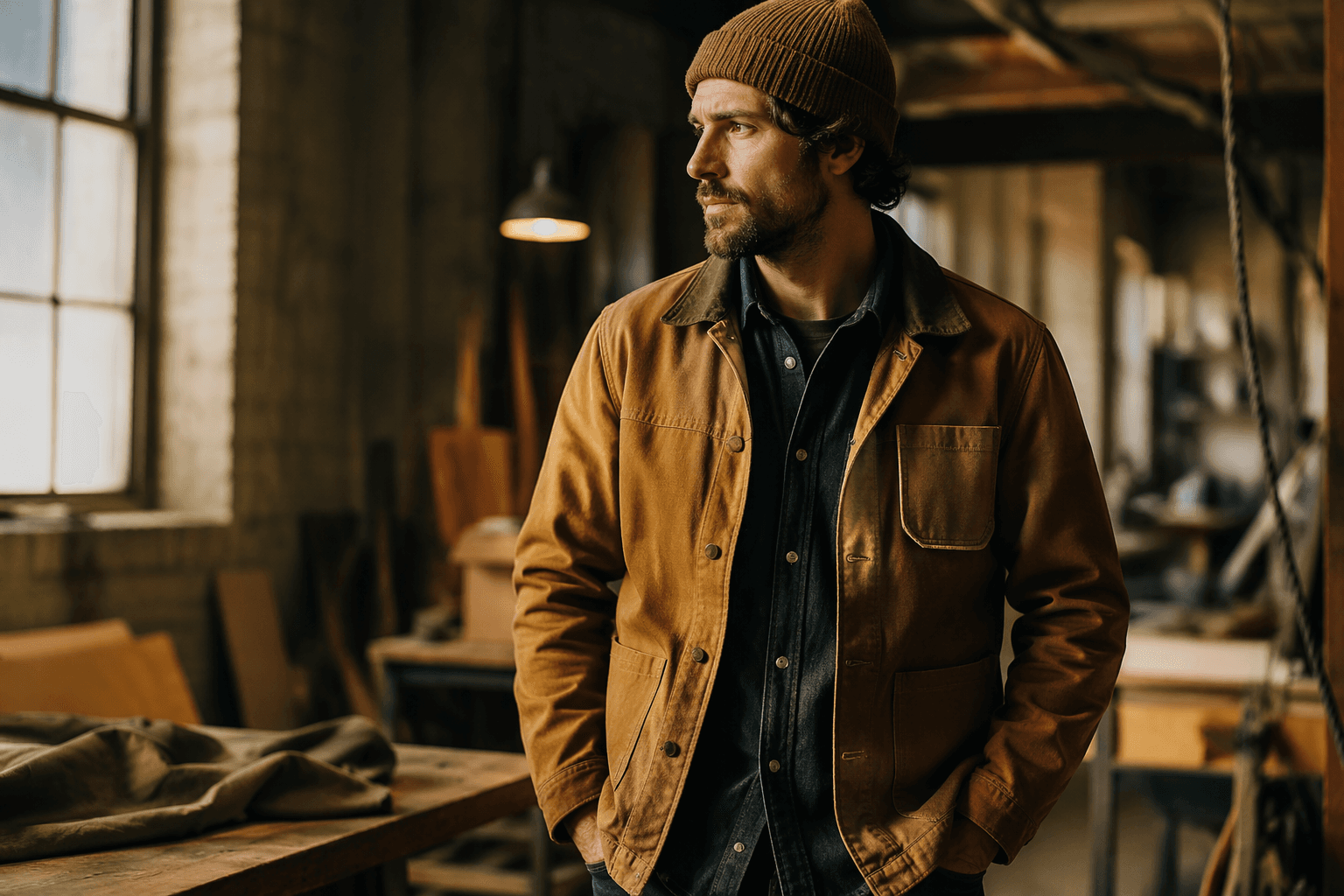
Menswear Embraces Workwear, Relaxed Tailoring, and Practical Polished Dressing
Menswear has traded flash for function. Quarter-zips, relaxed tailoring and softer suiting are now the sharper way to dress for real work.
The menswear reset is about usefulness, not nostalgia
FashionBeans is reading the room correctly: menswear is moving toward pieces that earn their place in a working wardrobe. The appeal is obvious, and it is not just about looking polished. It is about clothes that layer cleanly, hold up over time, and still feel considered when the office dress code is looser than it used to be.
That shift fits the larger mood across menswear. The Business of Fashion described Milan’s January men’s shows as a study in “classic clothes” that offered comfort and connection across eras, generations and cultures. In Paris, Angelo Flaccavento saw labels from Vuitton and Dior to Lemaire and Auralee presenting both “clothes for life” and “clothes as costume.” The difference matters. One category gets worn. The other gets photographed.
Quarter-zips are back because they solve a real problem
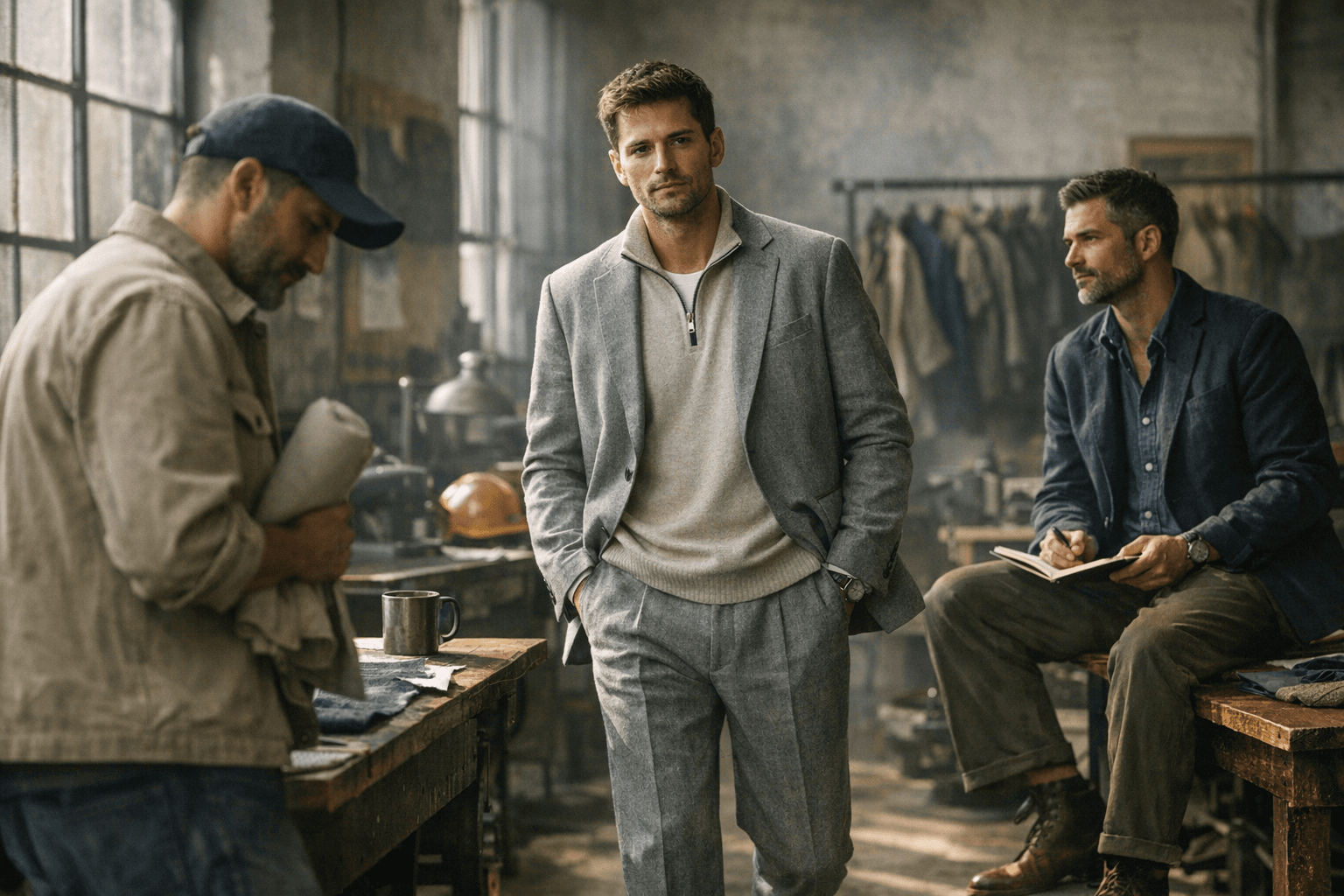
The quarter-zip comeback makes sense precisely because it is so unspectacular. It sits between knitwear and sportswear, which is exactly where many modern work wardrobes live now. Under a blazer, it softens tailoring without making you look overly casual; over a shirt, it adds structure without the stiffness of a tie.
The key is restraint. A quarter-zip in a fine knit, in navy, charcoal, stone or deep brown, looks far more enduring than one treated as a statement piece. This is one of the clearest long-term bets in the current reset because it is practical first and fashionable second. If the shape is neat and the zip is subtle, it will still make sense after the trend cycle cools.
Relaxed tailoring is the backbone of the new office wardrobe
The Financial Times’ menswear coverage called out “fresh smart-casual menswear for spring” and “modern professional” dressing built around shirts, knits and relaxed tailoring. That is the center of gravity right now: suits that breathe, trousers that fall with ease, jackets that skim rather than constrict. The overall effect is less boardroom armor, more controlled ease.
This is also where the smartest dressing looks expensive without trying too hard. A relaxed suit in wool or a wool-blend drapes better than the rigid, skinny tailoring that dominated earlier cycles. The shoulder stays clean, the trouser leg moves, and the whole thing works with loafers, derbies or sleek minimal sneakers, depending on how formal your office actually is. Of all the current shifts, this is the one most likely to endure.
The softer power suit is replacing loud authority dressing
Washingtonian captured the silhouette change neatly: menswear is getting fuller pants, broader shoulders and wider lapels. That sounds like a power move, but the modern version is gentler than the old one. The new suit is not about looking aggressive; it is about looking composed. The broadened shoulder gives shape, the wider lapel adds presence, and the fuller trouser keeps the line fluid rather than pinched.
This is where some readers should be selective. A broader shoulder and a fuller pant are useful corrections to years of over-trimmed tailoring. But the more exaggerated the proportion becomes, the faster it tips from wardrobe staple into trend costume. The durable version is moderated and wearable; the noisy version is all volume, no purpose.
What feels lasting, and what still reads as fashion chatter
The strongest thread running through all of this is longevity. BoF reported in November 2025 that a “new transatlantic approach to minimalist tailoring and workwear” had swept menswear, buoyed by buzzy upstarts from Japan, Scandinavia and the United States. That matters because it suggests this is not a single-season whim. It is a broader recalibration toward clothes that feel modern without being disposable.
Derek Guy’s history is useful context here. His blog, Die, Workwear!, began in 2010 as a playful jab at a friend’s preference for workwear, and he later became known online as the “menswear guy.” That arc says a lot about where the conversation has landed. Workwear is no longer niche irony or insider code. It has become part of the mainstream menswear vocabulary, and now it is being folded into polished everyday dressing.
Accessories and styling should stay quiet, not theatrical
Barnette Holston’s suggestion of brooches as an update shows how quickly a practical silhouette can be nudged into fashion territory. A brooch can absolutely sharpen a jacket or break up a monochrome look, but it is not the foundation of the trend. Think of it as seasoning, not the meal.
The real styling win is cleaner: a quarter-zip under a tailored jacket, a soft-shouldered blazer with a relaxed trouser, a polished shoe that pulls the look back to work. Smart footwear still matters because it keeps all this from sliding into weekend casual. The clothes are looser, but the impression should stay precise.
What to buy if you want the longest runway
If you are editing your wardrobe with intention, prioritize the pieces that will survive beyond the current mood:
- A fine-gauge quarter-zip in a neutral shade, worn under tailoring or with wool trousers
- A relaxed suit in a subdued fabric, cut with ease but not excess
- Trousers with a fuller leg and clean front, not puddling volume
- Jackets with softer structure, especially in navy, grey or brown
- Polished shoes that can ground the looseness, from loafers to clean derbies
The pieces most likely to date fastest are the ones leaning hardest into novelty: oversized lapels pushed to excess, accessories used as costume, and tailoring so loose it stops looking intentional. The new menswear mood is wiser than that. It favors clothes that make sense in daylight, in a meeting, on a commute, and still look good at the end of the day. That is the real return of power dressing: not dominance, but credibility.
This article was produced by Prism’s automated news system from verified source data, official records, and press releases, then run through automated quality and moderation checks before publishing. The system is built and supervised by the people who set the standards it runs under. Read our full AI policy.
Did this article answer your question?