NICENESS Elevates Workwear Staples With Playful Japanese Craftsmanship
A 10-person Tokyo label turns field jackets, chambray pants, and engineer sandals into utility pieces with real texture, not workwear cosplay.

A small Japanese label with a very specific idea of utility
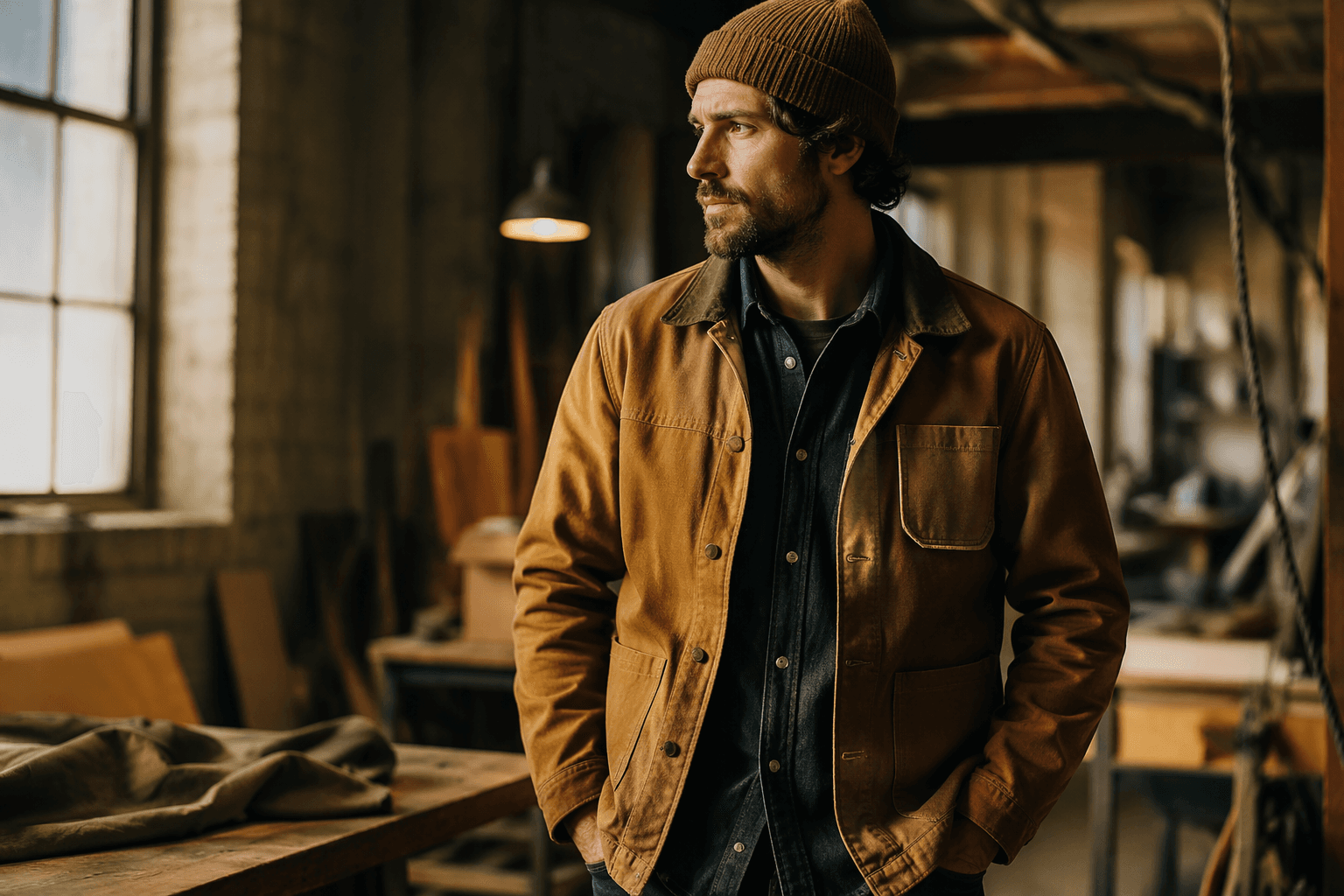
NICENESS makes workwear feel less like a uniform and more like an object of affection. The Tokyo-based label, founded in 2017 by Yuichi Goh, keeps returning to the same clean, almost stubborn thesis: “JUST GOOD IS GOOD.” That sounds simple until you see how much thought sits underneath it, from Japanese and global materials to references that run from 1970s America and Woodstock to psychedelic imagery and historic craftsmanship.
That mix gives the brand its charm. NICENESS does not treat workwear as a blunt category or a trend-led costume. Even at its most functional, the clothes feel a little off-center, a little poetic, and far more considered than the mass-market utility pieces crowding the market right now. That is exactly why a small label with a tightly edited point of view can matter so much.
What SS26 gets right about workwear
The SS26 collection is where NICENESS’s language becomes easiest to read. The lineup includes the LYNELL 3-Layer Field Jacket, BURDEN 3-Layer Work Jacket, GEZ Jacquard Check Coveralls, MOLINA Chambray Work Shirt, COOGAN Chambray Work Pants, and NEWELL Horsebutt Engineer Sandals. On paper, those names sound utilitarian and straightforward. In practice, they suggest a wardrobe built around touch, structure, and durability rather than obvious branding or flashy novelty.
The two 3-layer jackets are the clearest signal. A field jacket already carries the language of hard use, and a work jacket should feel ready for the day’s friction. Giving both a 3-layer construction immediately raises the stakes: you expect more weather protection, more architectural shape, and a fabric hand that feels technical without losing refinement. NICENESS is not dressing up utility. It is making utility feel precise.
Then there are the GEZ Jacquard Check Coveralls, which do something smarter than simply leaning into worker nostalgia. Jacquard gives the check pattern depth and texture, so the surface reads as woven and dimensional rather than printed or flat. That matters in a collection like this, because it keeps the coveralls from feeling too literal. They still carry the clean, decisive silhouette of workwear, but the fabric does the soft-spoken editorial work.
The MOLINA Chambray Work Shirt and COOGAN Chambray Work Pants push that same idea in a more wearable direction. Chambray has long been one of the most useful fabrics in the workwear vocabulary because it brings a washed, lived-in feeling without the heaviness of denim. On a shirt, it suggests ease. On pants, it suggests movement and softness around a silhouette that still needs enough structure to hold its shape. Together, these pieces read like the kind of set you can break apart endlessly, which is often the difference between a wardrobe piece and a costume piece.
And then there are the NEWELL Horsebutt Engineer Sandals, which may be the most NICENESS thing in the group. Engineer sandals already borrow from the sturdiness of industrial footwear, but horsebutt leather shifts the tone again. It implies density, grain, and a tougher, more tactile finish than the usual smooth sandal leather. The result is the kind of shoe that anchors the collection’s more fluid garments and keeps the whole look grounded in real materiality.
Why this brand stands out in a crowded utility market
NICENESS is selective, and that restraint is part of the appeal. In a category that often slips into generic minimalism, the brand’s clothes feel unusually specific, as if each piece has been argued into existence. Coverage of the label describes garments meant to be lived in and built to become useful, beautiful heirlooms, which is exactly the right lens for understanding the brand’s workwear pieces. They are not disposable interpretations of utility. They are objects intended to gain character over time.
That heirloom quality comes from the way NICENESS thinks about research. The brand’s collections are often rooted in cultural and historical references rather than trend chasing, and the effect is visible in the details. The silhouettes are familiar enough to feel usable, but the textures, fabric choices, and proportion shifts stop them from disappearing into the background. That balance is difficult to pull off. Too much reference and the clothes become academic. Too little and they become generic. NICENESS sits in the narrow, more interesting middle.
The label’s scale also matters. As a relatively small Japanese brand, NICENESS can still make choices that feel intimate rather than industrial. A ten-person operation does not need to chase breadth. It can focus on the quality of one jacket, one chambray shirt, one pair of pants, and one pair of sandals at a time. In a market flooded with utility fashion, that smaller footprint becomes a competitive advantage because it allows the brand to obsess over finish, handfeel, and proportion.
The flagship store makes the message even clearer
NICENESS’s first flagship, NICENESS EBISU, opened on June 20, 2025 at 3-3-8 Ebisu, Shibuya-ku, Tokyo. The store rollout included special products tied to the brand’s archive and local context, which is exactly the kind of move that makes sense for a label built on memory, craft, and specificity. A brand like this should not feel detached from place. It should feel as if the store itself carries the same discipline as the clothes on the rack.
That matters because NICENESS is not trying to win by scale. It is building depth. The flagship gives the brand a physical vocabulary for the same ideas that shape the clothes: careful materials, archival thinking, and a belief that good design should age into usefulness rather than novelty. For readers who care about utility-first style, that is the real attraction. NICENESS makes workwear feel collected, not manufactured, and that distinction is what keeps the label worth following.
This article was produced by Prism’s automated news system from verified source data, official records, and press releases, then run through automated quality and moderation checks before publishing. The system is built and supervised by the people who set the standards it runs under. Read our full AI policy.
Did this article answer your question?