Nigo brings Kenzo home to Place des Victoires with workwear twist
Nigo took Kenzo back to Place des Victoires and made Ivy feel useful again, from ribbon-built tailoring to Paraboot and Converse.

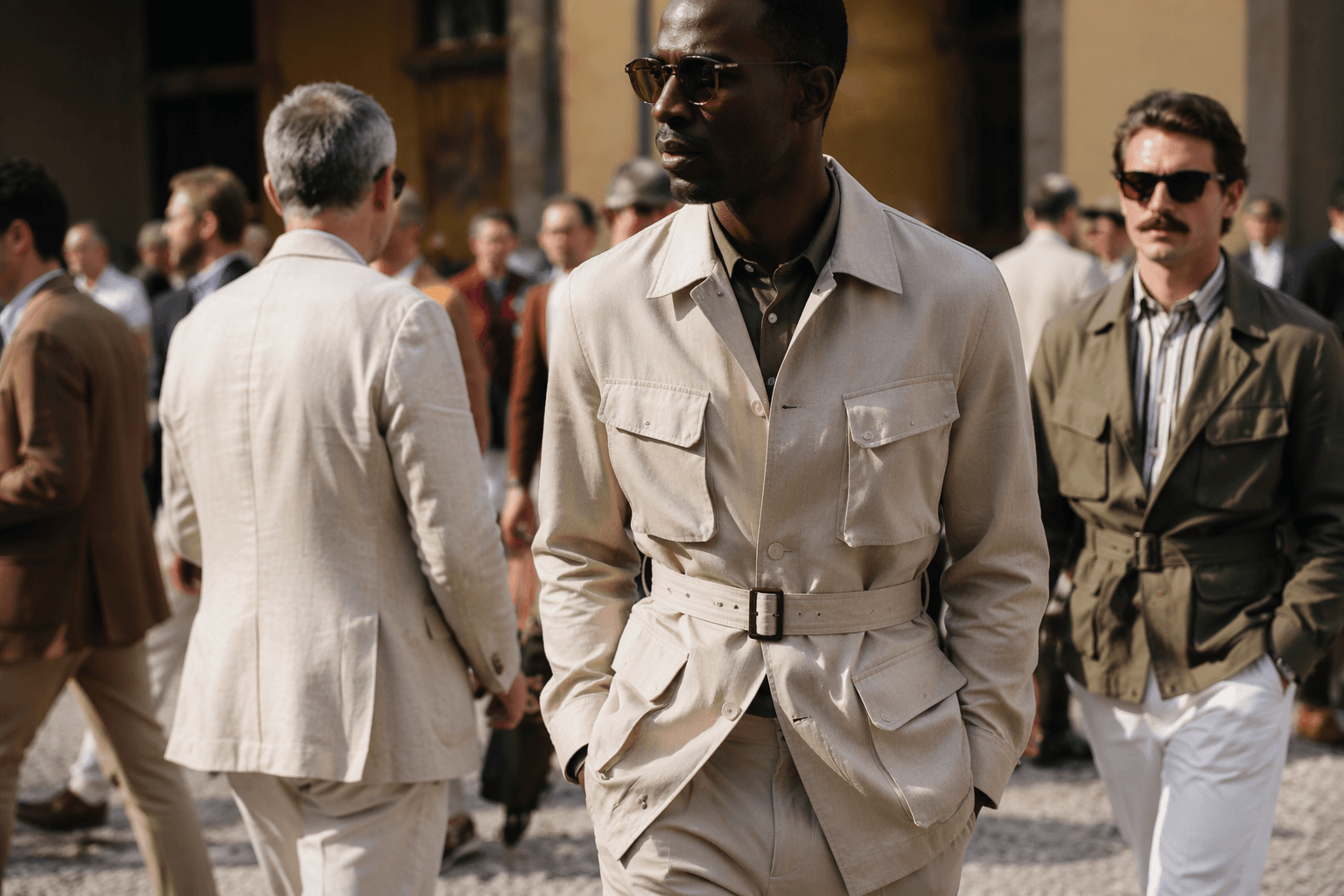
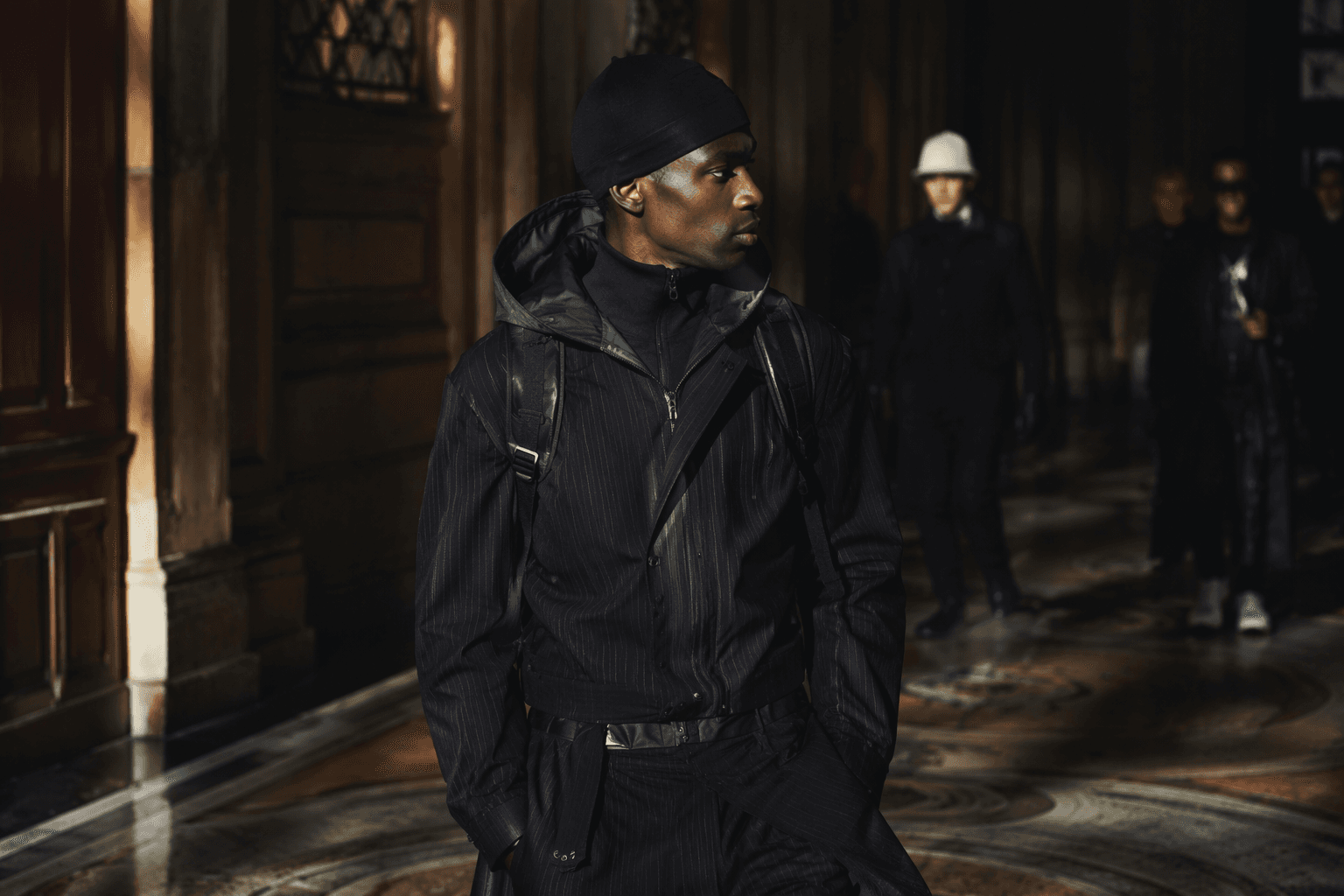
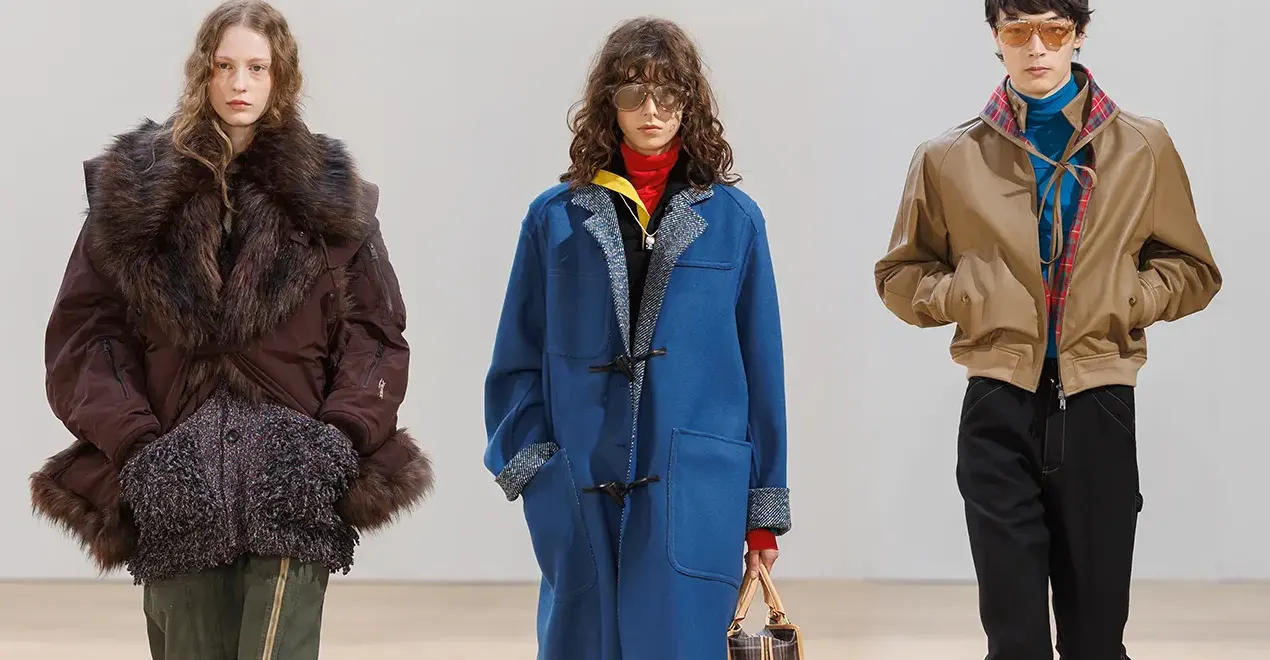
Nigo sent Kenzo back to 3 Place des Victoires and made the old square do the heavy lifting. The spring-summer 2027 collection leans on Ivy League polish and workwear grit, but the smartest looks are the ones where those codes actually fuse instead of just sharing a rack.
Back where the house started
Place des Victoires is not just a pretty Paris backdrop. Kenzo Takada opened his flagship boutique there in 1976, inside a 3,000 m² building that became offices, design studios, and a store, then turned the whole square into fashion mythology with a tented 1981 show. That history matters because Nigo is not using the address as decoration. He is pulling the collection back into the exact place where Kenzo first made the idea of relaxed, graphic, globally minded dressing feel alive.
The return also gives the season a sharper frame. Kenzo describes spring-summer 2027 as a meeting point where sportswear and romance, hard and soft, archival and innovative elements converge, and that is exactly the tension running through the clothes. The founder’s spirit is there, but so are 1970s references like Miles Davis, which keeps the tailoring loose enough to feel lived-in rather than over-starched.
Ivy gets roughened up
The clearest signal is how Nigo handles preppy language. Varsity jackets and rugby shirts bring the collegiate read, but they do not stay pristine for long. They sit inside a broader Kenzo vocabulary that still knows how to work utilitarian shapes, which is why this does not feel like prep cosplay dressed up for a mood board.
That is where the workwear angle becomes interesting. The collection keeps asking whether Ivy can still mean something when it is stripped of polish and pushed toward function. Here, the answer is yes, but only when the references are made to do actual work. The archival Kenzo Work & Play label hangs over the season like a thesis statement: campus codes only matter if they can survive contact with utility.
The pieces that actually bridge the gap
The strongest garments are the ones that convert decoration into structure. Jackets and skirts built entirely from custom ribbons are the clearest example, because the ribbon is no longer trim. It becomes the fabric of the piece itself, pulling from Takada’s personal ribbon collection and his Fall/Winter 1982 ribbon dress, and that shift from surface to construction is what makes the idea feel current.
The same logic runs through the bonsai motifs, which come from one of Takada’s poems. They add a softer, almost handwritten note to the lineup, but they never tip the collection into prettiness for prettiness’s sake. That balance is important. Nigo is not softening workwear until it loses its edge. He is making room for romance without letting it cancel out the utility.
Accessories push the same point further. The Victoire bag returns in an archival postman silhouette, which is the right move for this collection because it reads like a real carryall, not a logo prop. A postman shape has weight, pockets, and purpose built into it, so it naturally sits closer to the workwear side of the story than a polished top-handle ever could.
Paraboot and Converse keep it grounded
Footwear is where the collection gets most legible as a workwear trend watch. Nigo’s first Kenzo collaboration with Paraboot reworks the Michael shoe with workwear-inspired accents and bold varsity lettering, and that combination is stronger than it sounds. Paraboot already carries that sturdy, practical, slightly old-world confidence, so the move to add collegiate lettering makes the shoe feel like a campus shoe with a job to do, not a novelty sneaker pretending to know the meaning of labor.
Converse adds another useful layer. Updated Chuck 70 and Jack Purcell styles keep the footwear story in motion and in the everyday lane, which matters because this collection is not trying to build a museum of precious objects. It wants wearability, but it wants it with edge. That is where the workwear trend gets sharper: not in bulky nostalgia, but in familiar shapes recut with enough precision to feel intentional.

La Fête de Kenzo turns the square into a lifestyle test
The brand did not stop at the runway. La Fête de Kenzo turned the Place des Victoires moment into a week-long activation with a showroom, pop-up, café, Konbini-inspired market, and florist. That matters because it shifts the collection from runway language into daily life, where the strongest lifestyle brands are built.
The market concept is the most revealing part. Inspired by the Japanese konbini, Kenzo Market serves snacks in playful Kenzo packaging, magazines curated by Nigo, and a T-shirt tied to Fall-Winter 2026. That mix of grab-and-go food, reading material, and product is exactly the kind of real-world spillover that makes a fashion house feel present outside the show space. It is also the most convincing proof that Nigo understands how to turn heritage into something you can actually move through, hold, and use.
What campus workwear looks like now
This is not workwear in the old, rigid sense, and it is not Ivy done as a nostalgia exercise either. The collection is strongest when collegiate codes and functional details stop merely coexisting and start reshaping each other. Ribbon-built jackets, postman bags, Paraboot derbies with varsity heat, and Chuck 70s with a sharper point of view all suggest the same thing: campus workwear is becoming a real direction, not just a styling trick.
That is the move worth watching. Nigo is proving that preppy utility can be more than a softened aesthetic, and when the construction is this specific, the clothes stop looking like references and start looking like a new language.
This article was produced by Prism’s automated news system from verified source data, official records, and press releases, then run through automated quality and moderation checks before publishing. The system is built and supervised by the people who set the standards it runs under. Read our full AI policy.
Know something we missed? Have a correction or additional information?
Submit a Tip