Power Casual Dressing Bridges the Gap Between Formal and Relaxed Workwear
Power casual has a name now, and it's solving the real problem of hybrid workwear: dressing for an office day, a Zoom call, and after-work drinks without changing once.
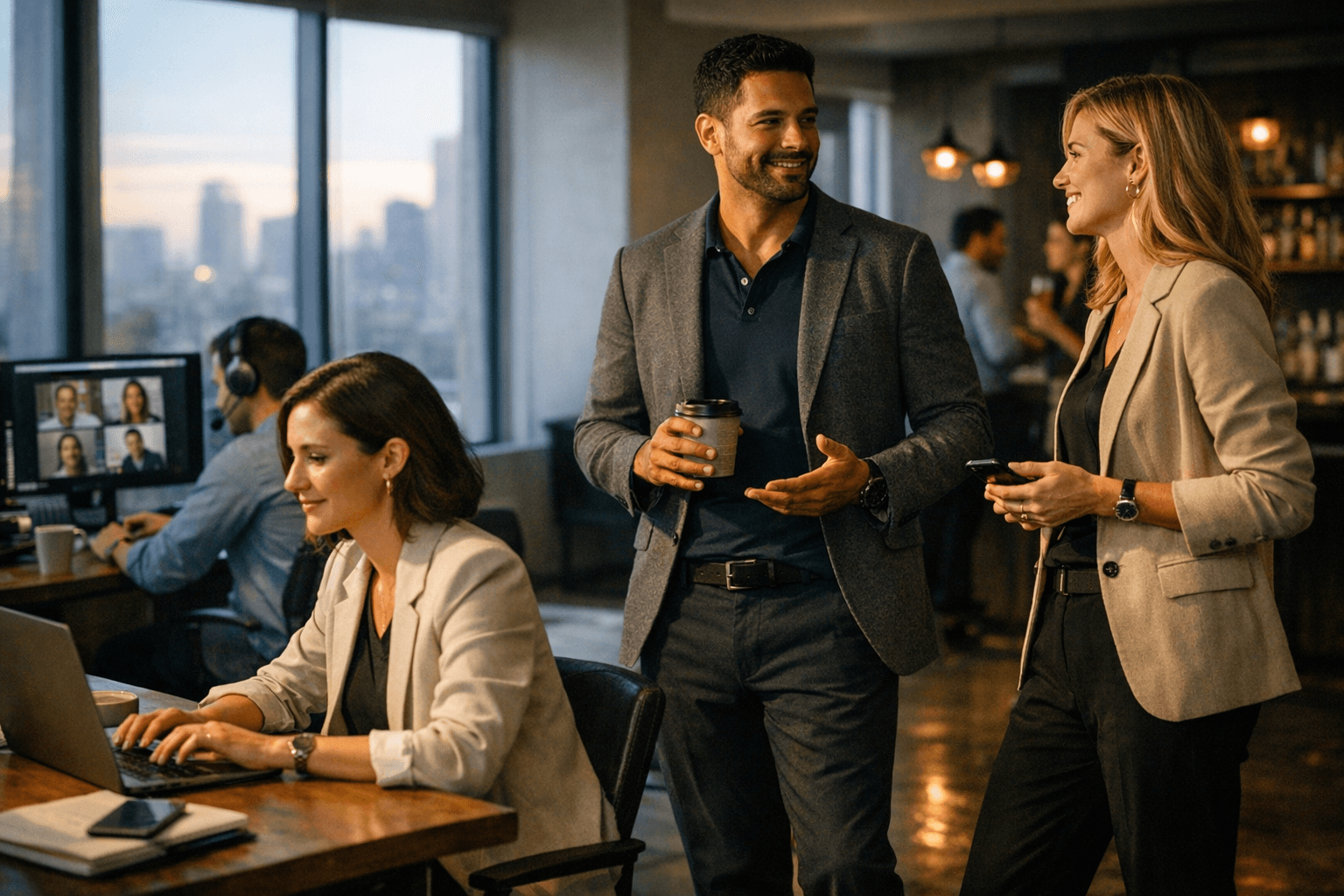
The hybrid schedule creates a specific, daily friction: you're in the office Tuesday, home Wednesday, then back in for a client meeting Thursday afternoon. Office dress codes have changed significantly over the past decade. What was once defined by strict tailoring and formal rules has shifted toward flexibility, comfort, and practicality, reflecting changes in workplace culture including remote work, hybrid schedules, and evolving expectations around professionalism. Power casual is the dressing strategy built to navigate exactly that tension — a deliberate middle ground between boardroom formality and the comfortable ease that hybrid work normalized.
What Power Casual Actually Is
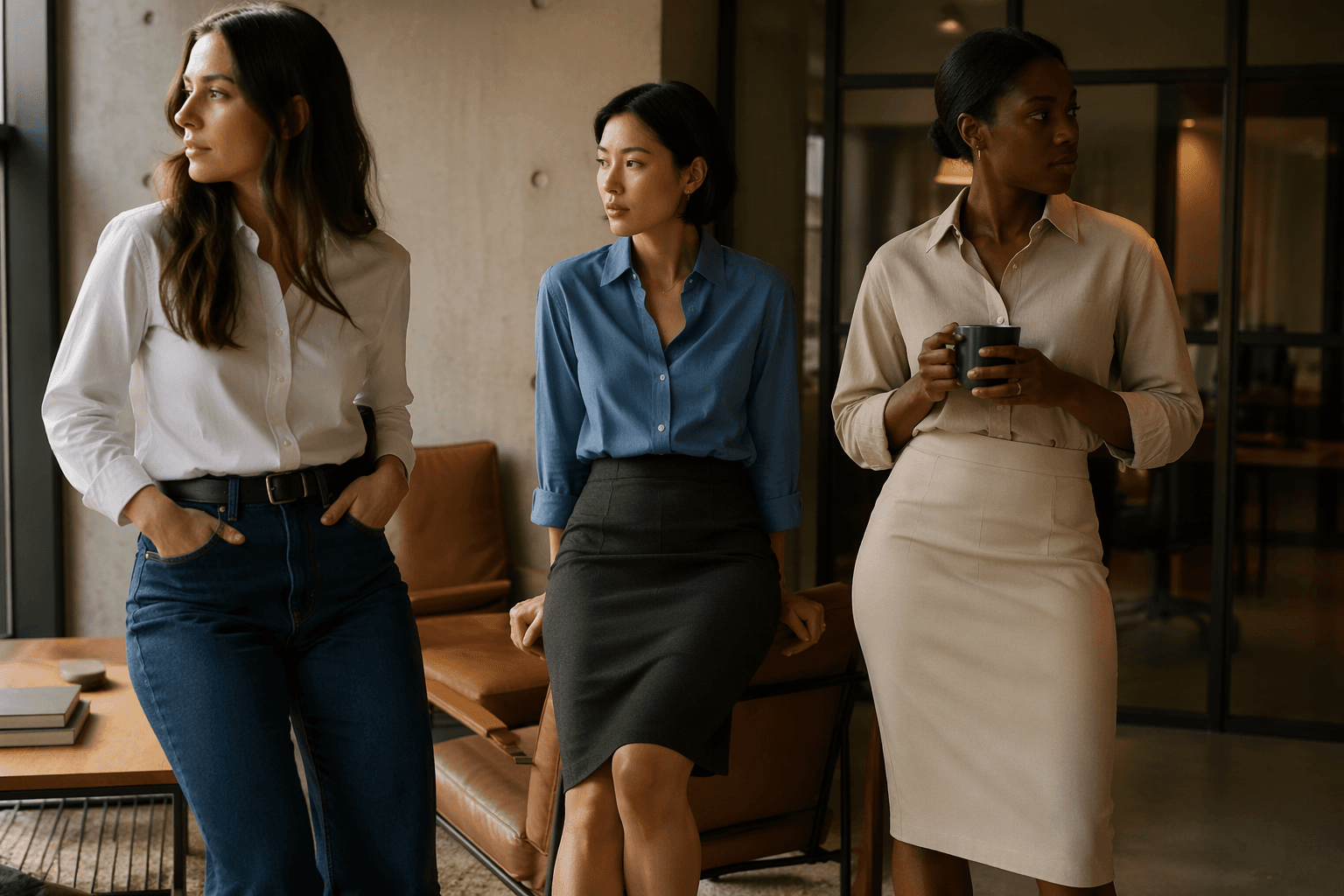
Power casual isn't just "business casual with better taste," though that's a start. Think of it as intentional dressing for a world where your outfit needs to hold authority in a conference room at 10am and still feel human at a coffee shop by 3pm. The rise of business meets leisure is being called the new power dressing: relaxed tailoring, versatile workwear, and elevated casual outfits that transition seamlessly from desk to dinner. The formal side stays — structure, tailoring, a silhouette with presence. But the rigid fabrics, the stiff collars, the performative dressing of decades past? Gone.
Industry voices note that the workwear landscape is "leaving behind the ultra formal and overly polished office looks that made corporate life feel like a drag," while also rejecting anything too casual for professional settings. Power casual lands exactly in that gap: polished enough to command a room, relaxed enough to survive a nine-hour hybrid day.
The Decision Fatigue Factor
The practical argument for power casual is compelling on its own. Micro-decisions — even small daily choices — contribute to decision fatigue, the gradual depletion of mental energy from constant small choices. Work still gets done, but it often feels fragmented and harder to sustain. What you wear is one of those daily micro-decisions, and the hybrid schedule multiplies the complexity: different days carry different dress expectations, sometimes within the same week.
A wardrobe strategy with consistent outfit formulas reduces decision fatigue, ensures professional presentation, and creates a sense of boundary between work and home life, something many have struggled with during the shift to hybrid arrangements. Power casual functions as that formula: a repeatable structure adaptable enough to cover every scenario in the weekly rotation without starting from scratch each morning.
The Architecture of a Power Casual Look
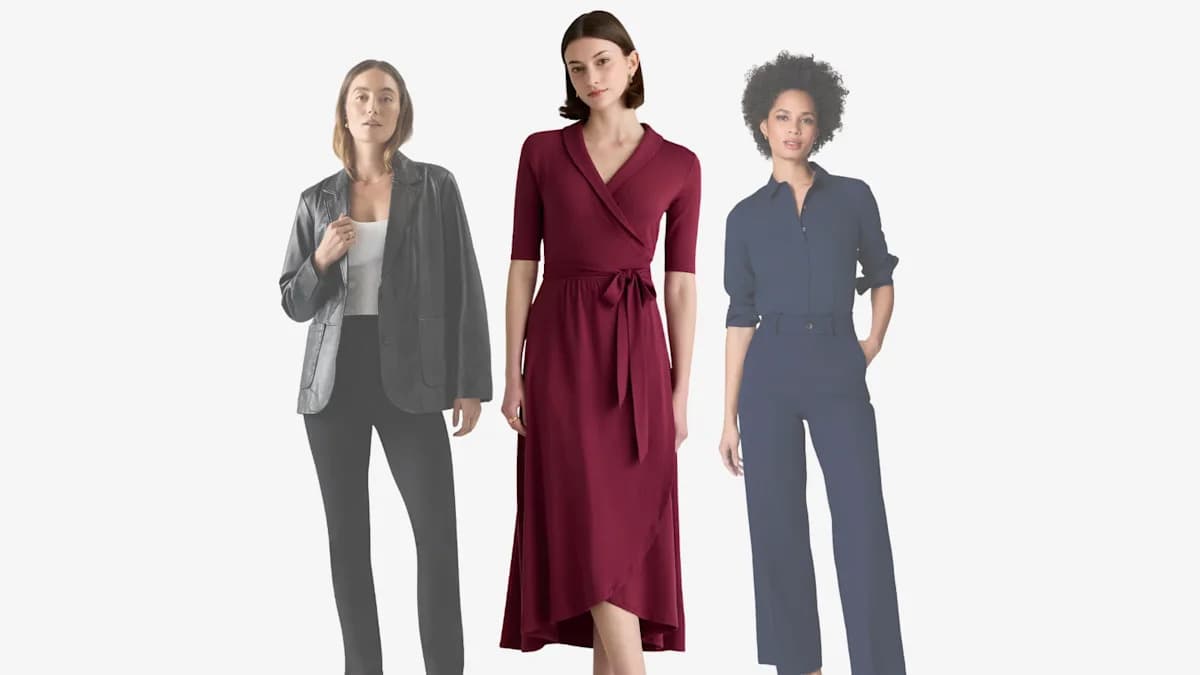
The building blocks are specific and learnable. Structured pieces such as blazers and tailored pants are paired with more relaxed elements, creating looks that feel polished without being overly formal. That pairing logic is the whole game.
Quality knitwear has emerged as perhaps the most essential category for hybrid work. Merino wool or fine cotton sweaters, cardigans, and knit blazers offer a polished appearance with significantly more comfort than traditional structured jackets. Well-cut knitwear in solid colors creates a streamlined silhouette that reads as intentional and professional while providing practical comfort for long hours at a desk.
Key pieces that anchor a power casual wardrobe:
- A knit or unstructured blazer — carries the authority of tailoring without the rigidity of traditional suiting
- Wide-leg or tailored-relaxed trousers in neutral tones (stone, warm beige, charcoal, navy)
- Quality denim in clean, dark washes when the environment allows
- Structured knitwear in mid-tone colors: blues, burgundies, forest greens
- Footwear that does double duty — a clean leather loafer, a low-profile sneaker in white or black, or ankle boots with a modest heel
Soft tailoring continues to dominate, offering fluid fabrics, relaxed fits, and understated patterns. This approach feels modern, wearable, and versatile, working equally for professional and off-duty styling.
Color and Fabric Logic
Power casual has a visual signature: quiet, confident, deliberate. Earth tones, muted colors, and minimalistic patterns dominate workwear trends in 2026, offering versatility across seasons and environments. This isn't about playing it safe — it's about building a palette that works hard without requiring constant recalibration. A full look in warm beige reads authoritative and modern. Charcoal trousers with a burgundy knit blazer hits that same chord.
There's been a shift in color strategy away from traditional power dressing's reliance on dark neutrals like navy and charcoal. Mid-tone blues, greens, and burgundies tend to register better in digital contexts while still maintaining professional gravitas — a relevant consideration when at least part of any hybrid worker's week runs through a screen.
How Younger Workers Are Reshaping the Code
Gen Z accounts for around 27% of the global workforce in 2026, per Zurich Insurance data, and their approach to professional dressing has pushed the whole conversation forward. According to Fast Company, Gen Z is in the middle of a wardrobe identity crisis. Business casual has been replaced by the comfortable chaos of hybrid workwear, and the youngest members of the workforce are still figuring out what office attire looks like in a post-pandemic world, now that they are the age group working in person the most.
Power casual gives that generation a functional framework. Oversize silhouettes, exaggerated hemlines, and more casual foundations like bustier tops, tanks, and jeans have become the uniform du jour among Gen Z and Millennial workers, while pieces must simultaneously feel timeless but trendy, personalized but affordable. The best power casual dressing reconciles those competing demands: it's structured enough to hold credibility, relaxed enough to hold personality.
"It's always been about elevating functional clothes," says Gaëlle Drevet of The Frankie Shop, "and we do that by twisting basic separates with bold volumes and proportions, muted colors and interesting textures." That ethos is exactly the power casual mindset — function as the starting point, identity as the finish.
Making It Work Across the Week
The real utility of power casual is its flexibility across context. Designers are responding to buyer signals: people needing polished baseline pieces that flex between presentations, coffee runs, and client meetings, as well as after-work drinks. Hybrid work means that clothing must juggle dual lives: the Zoom meeting, the after-hours catch-up, the commute. Corporate-coded pieces, when reimagined cleverly, provide a versatile anchor in that juggling act.
On an in-office day: a structured knit blazer, tailored trousers with a relaxed leg, leather loafers. For a home-office day with afternoon video calls: the same trousers, a clean merino crewneck, sharp enough from the waist up to hold presence on screen. A hybrid Friday with a casual afternoon: the blazer off, a crisp tee or fine-gauge knit underneath, the trousers carrying all the structure needed.
Pairing a midi-length knit dress with a tailored blazer and ankle boots creates an outfit flexible enough that removing the blazer at home makes it instantly comfortable, while keeping it on makes it meeting-ready. That kind of adaptability isn't an accident — it's the whole point.
The Bigger Shift
Power casual represents a genuine recalibration, not a trend cycle. The Spring/Summer 2026 collections signal not a wholesale rejection of ease, but a hybrid evolution — which is a precise description of what the best power casual dressing achieves. Structure has returned to workwear, but it's wearing it differently now: softer in construction, looser in silhouette, more honest about the actual lives being lived in these clothes.
The most important shift is how we think about workwear itself. Modern office attire is no longer a rigid set of rules; it's about guidelines that balance professionalism, comfort, and personal style. Power casual is just the clearest, most wearable expression of that shift — clothing that takes the workday seriously without taking itself too seriously.
This article was produced by Prism’s automated news system from verified source data, official records, and press releases, then run through automated quality and moderation checks before publishing. The system is built and supervised by the people who set the standards it runs under. Read our full AI policy.
Did this article answer your question?