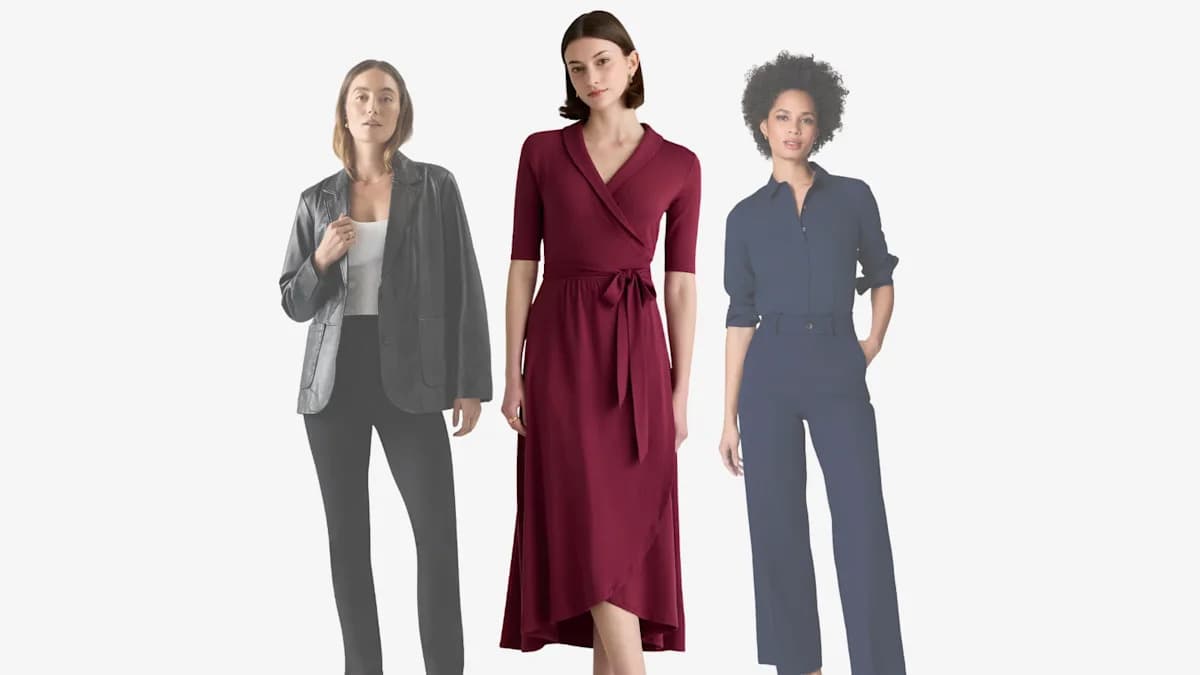
Stretch Suiting and Technical Tailoring Keep You Sharp All Day
Your suit shouldn't fight you. Stretch suiting and technical tailoring finally let workwear keep up with how you actually move through the day.

The old bargain with tailoring went something like this: look polished, sacrifice comfort. A structured blazer held its shape through a morning of meetings but turned punishing by the time you were rushing across a parking lot or folding yourself into a rideshare. That tradeoff is no longer necessary, and the best-dressed people in any office know it.
Stretch suiting and technical tailoring have quietly become the most intelligent category in workwear. Not because they look revolutionary, which they often don't, but because they solve a real problem: the modern workday asks your clothes to do too many things at once. You commute, you sit through back-to-back presentations, you duck out for a site visit or a lunch across town. Fabric that can't move with you will betray you by noon, pulling at the shoulders, creasing at the knees, or simply losing the clean line that made it worth wearing in the first place.
Why the modern workday demands a new kind of fabric
The shift isn't about casualization, despite what five years of pandemic dressing might suggest. Plenty of workplaces have swung back toward formality, and even those that haven't tend to reward a pulled-together appearance. The problem isn't that people want to dress down; it's that they need their formal clothes to function across a longer, more physically varied day.
A traditional wool suit, cut from a tightly woven cloth with no elastane content, is engineered for one kind of day: one where you arrive, sit, and leave in roughly the same physical configuration. The moment you're hauling a laptop bag onto a packed train, reaching overhead to load a carry-on, or simply walking briskly for twenty minutes, that suit starts working against you. Stretch suiting, by contrast, incorporates a small percentage of elastane or a performance fiber blend into the weave, giving the fabric two-way or four-way stretch without sacrificing the visual weight and drape of traditional tailoring.
Technical tailoring goes a step further. Where stretch suiting focuses primarily on fiber content and weave, technical tailoring draws from performance apparel construction: bonded seams, moisture-wicking linings, wrinkle-resistant finishes, and sometimes water-repellent treatments applied to the outer cloth. The result is a blazer or trouser that reads as boardroom-appropriate but functions closer to technical outerwear in terms of resilience.
What to look for when you shop
Not all stretch suiting is created equal, and the difference between a suit that feels effortlessly comfortable and one that looks vaguely athletic comes down to a few specific details.
- Fiber composition: Look for wool or wool-blend fabrics with a small elastane content, typically between two and four percent. Anything higher and the fabric can start to look synthetic under office lighting. Some brands are working with stretch-woven wool that achieves movement through the construction of the weave itself rather than added elastane, which produces a more refined finish.
- Linings: A suit's lining is where comfort is frequently lost. A half-lining, or a lining made from a breathable technical fabric rather than traditional acetate, allows the garment to breathe and move more freely. Acetate linings, while historically standard, don't stretch with the outer cloth and can create resistance when you move.
- Seam construction: Technical tailoring often features flatter seams or bonded construction at stress points, particularly across the back yoke of a jacket and at the seat of trousers. These details reduce bulk and prevent the fabric from pulling or bunching under pressure.
- Wrinkle resistance: A finish that resists creasing is worth paying attention to if your day involves significant time in transit. Some performance-fabric trousers can be packed into a bag and emerge looking presentable, a genuinely useful quality for anyone who travels for work.
- Silhouette integrity: The whole point of technical tailoring is that it looks like tailoring. A well-executed stretch suit should have the same clean lapel roll, the same precise trouser break, the same structured shoulder as its traditional equivalent. If the stretch or technical construction is visible in the finished garment, that's a failure of execution.
How to build a technical tailoring wardrobe
Start with trousers. They're the piece that suffers most from a non-stretch construction because the demands placed on them are the most dynamic: sitting, walking, climbing stairs. A pair of stretch wool trousers in a mid-grey or navy will work harder than almost any other single investment in your work wardrobe.
Add a stretch blazer in the same or complementary cloth. Worn together, they read as a suit. Worn separately, each piece extends into casual-leaning combinations with knits, roll-necks, or even clean white T-shirts at the right company. The versatility of technical tailoring makes the price-per-wear calculation significantly more favorable than it might initially appear.
From there, consider a shirt with performance construction. Several brands now produce dress shirts with a stretch poplin or performance twill that moves with the body and resists creasing through a long day. These aren't the same category as moisture-wicking athletic shirts; they look like proper dress shirts and behave like them, but they don't trap heat or restrict movement at the shoulders and arms.
The aesthetic question
One concern that comes up often is whether technical tailoring looks "too sporty" for formal contexts. The honest answer is: it can, if you buy the wrong version. Suits with visible textural contrast, obvious bonded seams on the outside, or fabrics that have a synthetic sheen in natural light will read as athletic even when they're not intended to. The goal is technical performance that is entirely invisible in the finished garment.
The most convincing stretch suits look indistinguishable from traditional tailoring at a glance and reveal their intelligence only when you're moving in them. That's the benchmark worth holding any purchase to. A jacket that passes in a meeting and still passes after a cross-city commute is doing its job exactly right.
The evolution of workwear isn't about abandoning formality; it's about refusing to let physical discomfort be the price of looking sharp. Technical tailoring has finally closed the gap between the suit you want to wear and the day you actually have to get through.
This article was produced by Prism’s automated news system from verified source data, official records, and press releases, then run through automated quality and moderation checks before publishing. The system is built and supervised by the people who set the standards it runs under. Read our full AI policy.
Did this article answer your question?