Tag Heuer Debuts Experiential SoHo Flagship at 99 Prince Street, New York
Ryan Gosling's private watchmaking session at TAG Heuer's new 57.2 m² SoHo flagship makes the case for the Swiss watch over the smartphone.
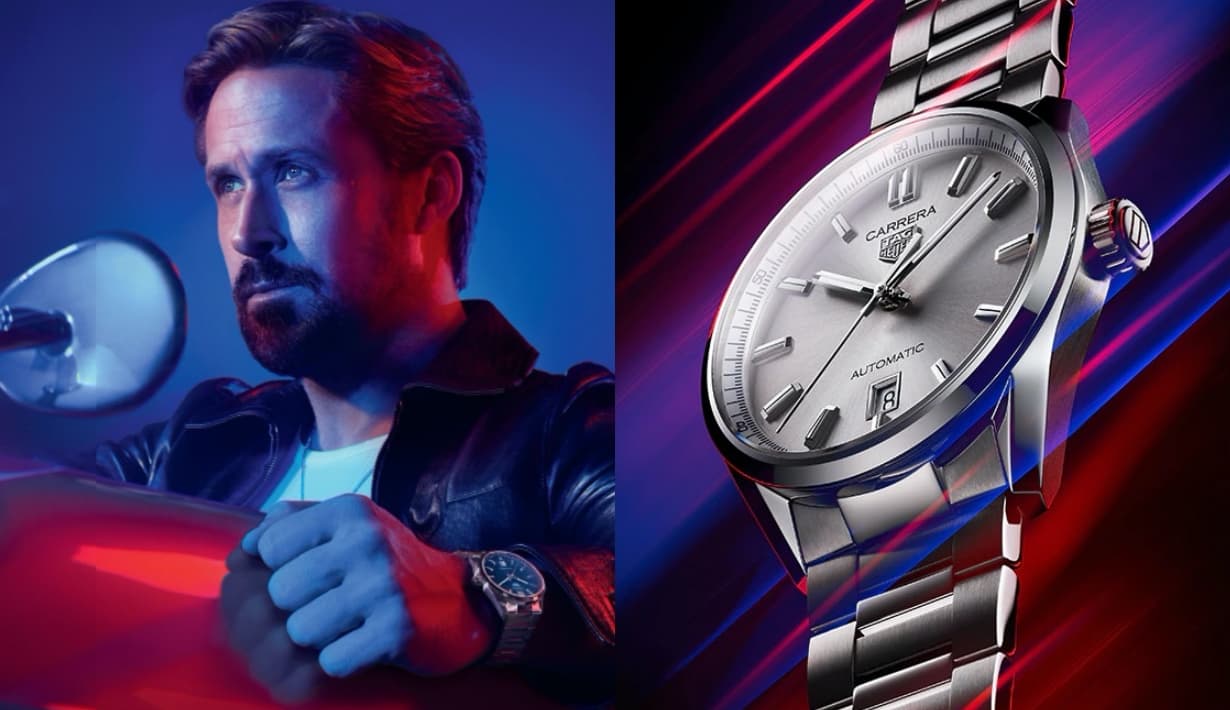
TAG Heuer's decision to plant a 57.2-square-meter flagship at 99 Prince Street, SoHo's creative corridor, is a calculated bet on a long-running tension in professional dressing: when your phone already tells the time, what exactly is a watch for? The Swiss brand answered that question in late March with a retail concept that opened to quiet celebrity heat, a private visit from brand ambassador Ryan Gosling, and a design philosophy built around the conviction that the watch is not a timekeeping device. It is a language. The only question is which dialect your office speaks.
That dialect varies more than most people realize. In finance, a TAG Heuer Carrera Chronograph on a steel bracelet signals precision and earned ambition without the chest-thumping of a Rolex Daytona. It says you studied the category and made a deliberate choice. In a creative agency or editorial environment, the brand's square-cased Monaco carries a different charge: its Gulf colorway and Le Mans mythology read as deep connoisseurship, a reference that only the initiated decode. In tech, where analog watches spent a decade losing ground to the Apple Watch, the Formula 1 collection's sporty geometry and accessible entry pricing positions TAG Heuer as the most plausible on-ramp from the smartwatch tier back into mechanical watchmaking. The boutique at 99 Prince Street, at roughly 615 square feet, was built to speak all three of those languages at once.
The space blends contemporary architectural elements with references to TAG Heuer's Swiss watchmaking legacy, and Flaunt described the result as something that "blends the heritage of Swiss watchmaking with the cosmopolitan cool of downtown Manhattan." The boutique's intentional design, per Flaunt's coverage, "embodies TAG Heuer's vision of uniting product, storytelling, and culture in one dynamic space," language that aligns with FashionNetwork's characterization of the retail concept as "tailored to city professionals and collectors." Those two audiences rarely overlap in the same square footage, which is what makes the SoHo address a meaningful choice. Downtown Manhattan delivers both on the same afternoon.
The three core collections on the floor, Carrera, Monaco, and Formula 1, anchor a price ladder that stretches from the accessible to the aspirational, supplemented by exclusive limited editions and classic timepieces. A new Formula 1 Quartz enters at roughly $1,200 to $1,500 at retail, making it one of the few entry points into Swiss watchmaking that doesn't require a significant lifestyle justification. The Carrera family occupies the middle tier, with date and three-hands references starting around $3,000 and chronograph models climbing well past $4,500 depending on the movement and configuration. The Monaco, averaging around $5,000 for its core automatic references and considerably more for limited editions, sits at the top of the everyday professional register.
What the 99 Prince Street boutique offers beyond merchandise is the education to understand why those price differences exist. The experiential design incorporates what Flaunt called "in-depth explorations of movement construction and technical innovation" alongside hands-on watchmaking opportunities and a dedicated VIP area for private appointments. Personalized consultations guide visitors through the technical distinctions between collections, a service architecture FashionNetwork framed as central to the brand's broader direct-to-consumer strategy: deepen the relationship, build the enthusiast, and reduce the customer's dependence on the secondary market or a third-party retailer for context.
That strategic logic matters more now than it did a decade ago. The Swiss watch industry's failure to treat the Apple Watch as a serious competitor cost it real market share in the entry and mid-range segments, and rebuilding that ground requires more than a well-designed product. It requires a retail theater that a phone screen cannot replicate. TAG Heuer understood this earlier than most traditional watchmakers, having launched its own Connected smartwatch line years before the category acquired mainstream legitimacy. The SoHo flagship extends that pragmatism into physical retail: if the product competes with a device that lives in every pocket, the store needs to justify the decision to go analog. An afternoon at 99 Prince Street, with a trained consultant walking through movement architecture, makes that case more effectively than any advertisement.
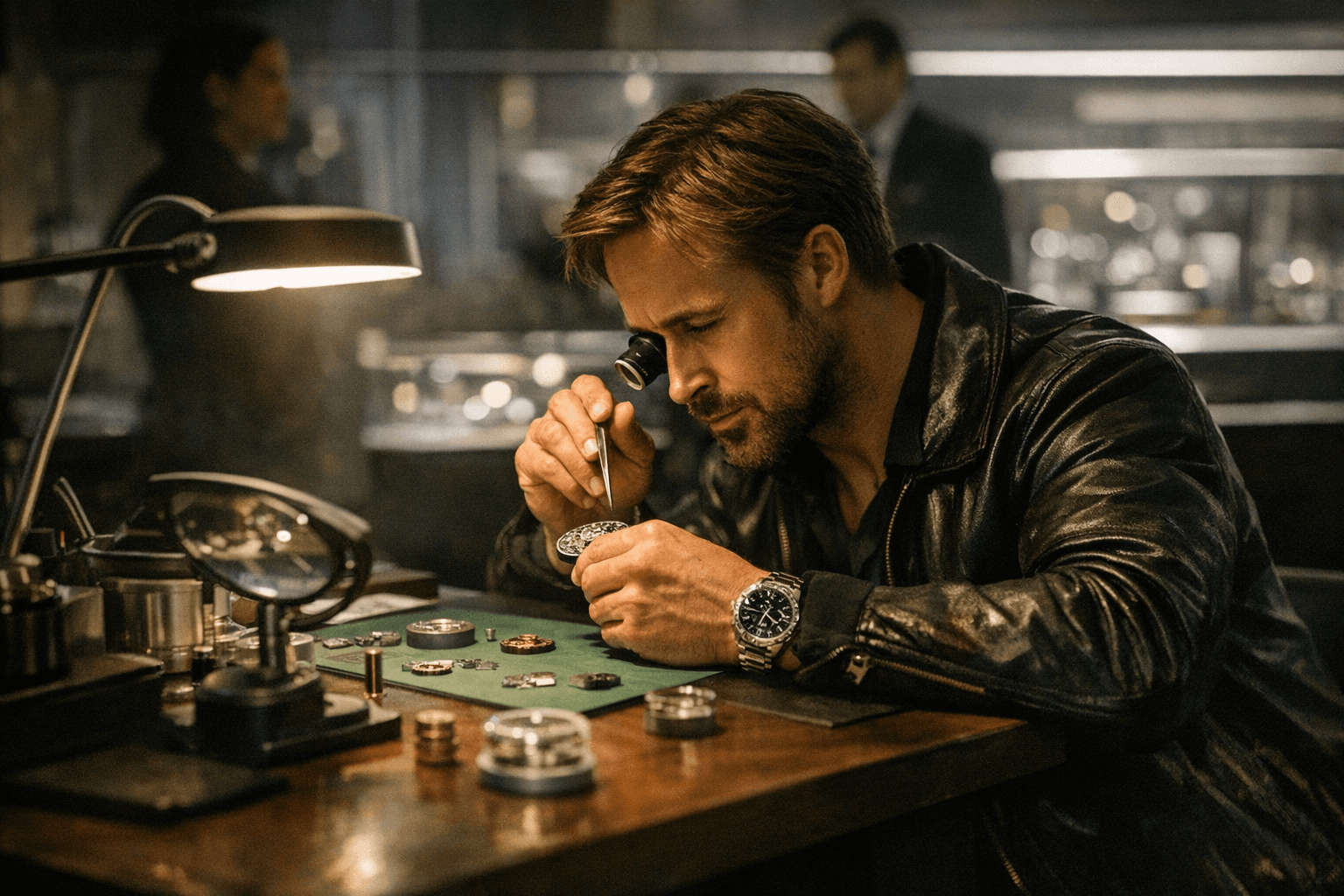
The visit from Ryan Gosling, while private rather than a ribbon-cutting moment, generated its own evidence for that argument. During his private tour, Gosling wore a Carrera Chronograph, spent time in the VIP area, engaged with the educational touchpoints, and, according to Flaunt's coverage, tried his hand at watchmaking. The choice of the Carrera rather than the flashier Monaco is telling: it reinforces the collection's positioning as the professional's daily carry, not a collector's trophy. Gosling's particular celebrity gravity helps here too. His cultural identity is built around characters who take craft seriously, and his association with TAG Heuer says something specific about the brand's aspirational register that a different kind of ambassador would not.
The boutique's cultural anchoring extends to a hand-painted, custom Formula 1 sculpture commissioned from New York-based artist Arianna Margulis. The piece does what localized art commissions are supposed to do when they work: it connects the space to its specific neighborhood rather than positioning the boutique as an interchangeable luxury outpost. SoHo has enough of those already.
For anyone assembling a professional wardrobe with a watch budget and the boutique's collections as a starting point, three references warrant serious consideration. The Formula 1 Quartz in steel, at roughly $1,200 to $1,500, is the cleanest entry-level professional choice: Swiss-made, legible, and versatile enough to move from a standing desk in a tech company to a client lunch without attracting the wrong kind of attention. It reads as intentional without inviting questions. At the midrange, the Carrera Date Automatic in the $3,000 to $4,500 range is the collection's true workhorse for professional environments: mechanically substantive enough to hold up in a conversation with a serious collector, understated enough to wear daily in finance or legal without broadcasting the price tag. At the upper register, the Monaco Automatic in its 39mm square case, starting around $5,000, is the piece that earns its keep in the rooms where watches actually get noticed. The square case is the point: it signals research, opinion, and a specific historical awareness that separates the wearer from someone who simply bought the most recognizable name on the shelf.
TAG Heuer's SoHo debut is a real estate argument that analog watchmaking is not dying but differentiating, building a sharper case for the wrist over the phone in the specific environments where that argument carries weight. At 99 Prince Street, it is well made.
This article was produced by Prism’s automated news system from verified source data, official records, and press releases, then run through automated quality and moderation checks before publishing. The system is built and supervised by the people who set the standards it runs under. Read our full AI policy.
Did this article answer your question?