The Ultimate Guide to More Sustainable Office Workwear
Your work wardrobe costs the planet more than your office budget suggests. Here's how fabric choice, certifications, and capsule thinking actually change that math.
Why Sustainable Workwear Is a Procurement Problem, Not Just a Style One
Most conversations about sustainable fashion stop at aesthetics: wear more linen, buy less. But sustainable office dressing is equally a purchasing decision, one with real cost-per-wear math and supply chain consequences that compound across thousands of workers and billions of garments. Good On You, the brand-rating platform co-founded by Sandra Capponi and Gordon Renouf, laid this out directly in its updated guide to sustainable office workwear, evaluating brands through the lens of "quality, longevity, and trend-transcendence" rather than seasonal newness. That framing matters for anyone who makes wardrobe decisions with intention, whether they're dressing themselves or influencing a company uniform policy.
The Fabrics That Earn Their Place
Not all sustainable fabrics are created equal, and the differences are specific enough to affect what you buy and why.
*Organic cotton* is the most recognisable entry point: grown with significantly less water and little to no pesticides compared to conventional cotton, it's a known quantity for tailored shirts, trousers, and structured blazers. The caveat is that even organic cotton is still water-intensive relative to alternatives. For buyers who want to go further, that's where the next tier of materials earns attention.
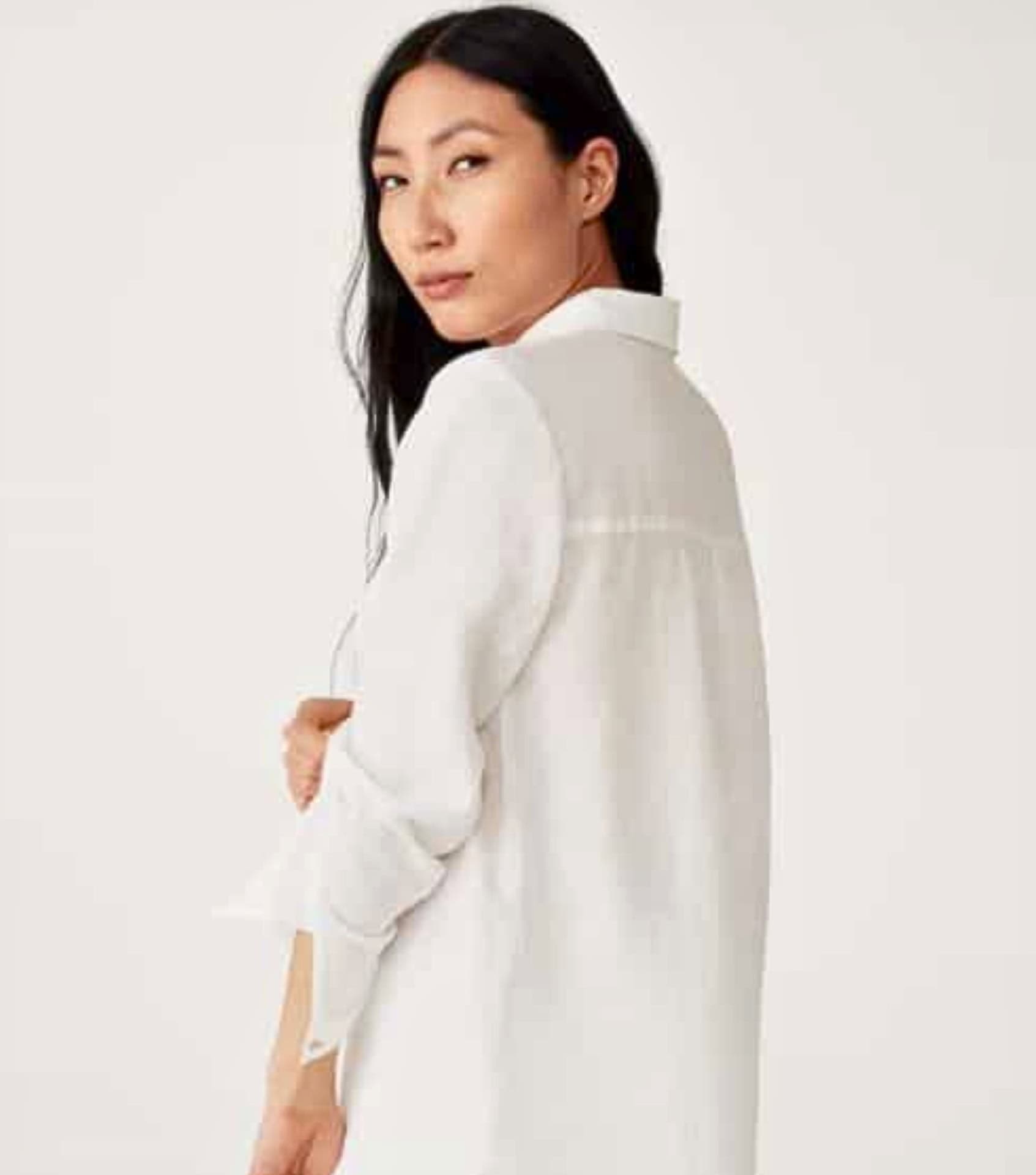
*Linen*, made from flax that requires very little water and uses the whole plant with minimal waste, is among the most defensible fabrics environmentally. It's also inherently professional: the fabric's natural texture and breathability make it the right call for warmer months, and its durability improves with washing, which is a rare quality in workwear. Longevity and repairability are among its biggest advantages.
*Tencel (lyocell)*, produced in a closed-loop manufacturing process, uses an estimated 95% less water than conventional cotton and yields ten times more fibre per acre. It absorbs 50% more moisture than cotton, resists odour-causing bacteria, and doesn't pill or lose shape with regular wear. High-quality Tencel garments can last three to five years or longer with proper care, making the per-wear cost considerably lower than cheaper alternatives. It isn't the most low-impact choice on the market (organic linen and recycled cotton rank above it by most measures), but for office-ready drape and texture, it punches hard.
*Recycled fibres*, particularly recycled polyester made from post-consumer plastic and recycled cotton, round out the priority list. They address the problem of existing material waste rather than demanding new agricultural land, which makes them a logical choice for technical suiting, linings, and workwear that needs stretch or structure.
Built to Last: The Case for Longevity and Repairability
A garment's sustainability rating doesn't end at the fibre. Construction quality is the other half of the equation. Pieces designed for repairability, with sturdy seams, accessible hems, and spare buttons included, extend useful life significantly. A well-cut linen trouser with reinforced seams and a care label that honestly communicates low-heat washing will outlast a cheaply stitched organic-cotton equivalent by years.
The practical translation for workwear buying: check for seam allowances deep enough to let out or take in, fabrics with enough weight to survive dry cleaning or regular machine washing, and a brand willing to be transparent about its construction standards. ISTO, for instance, is explicit about showing customers the true cost breakdown of each garment, a signal that the margins aren't being cut at the expense of build quality. Citizen Wolf in Sydney takes the approach further, offering custom-fit tees hand-made from certified sustainable fabrics including cotton, hemp, and Melbourne-milled Merino wool, and stands behind them with a best-ever guarantee.
Decoding the Label: Certifications Worth Trusting
There are now enough sustainability certifications on the market to feel genuinely confusing. Here's a practical shortlist of the ones with real teeth:
- GOTS (Global Organic Textile Standard): The benchmark for organic textiles. It covers organic farming through processing and finishing, making it the most comprehensive single certification for cotton and linen garments.
- OEKO-TEX Standard 100: Screens finished garments for harmful chemical substances. It doesn't verify organic fibre sourcing, but it confirms that what's touching your skin all day at the office isn't laced with problematic residues.
- GRS (Global Recycled Standard): Verifies recycled content and chain of custody for brands using recycled polyester, recycled cotton, or other post-consumer materials.
- B Corp: A broader business certification requiring verified standards of transparency and social accountability. Brands that hold B Corp status alongside material certifications are making commitments well beyond the garment itself.
- Fair Trade Textile Standard: Specifically addresses worker rights and fair wages throughout the supply chain, essential context for any brand claiming ethical credentials.
When evaluating a brand, the most useful check is whether the certification covers the finished garment or just the raw fibre. A shirt can be labelled "organic cotton" if its fabric is GOTS-certified, even if the dyeing, finishing, and manufacturing processes weren't held to the same standard. Ask for scope certificates, not just logos.
Building Your Sustainable Work Capsule
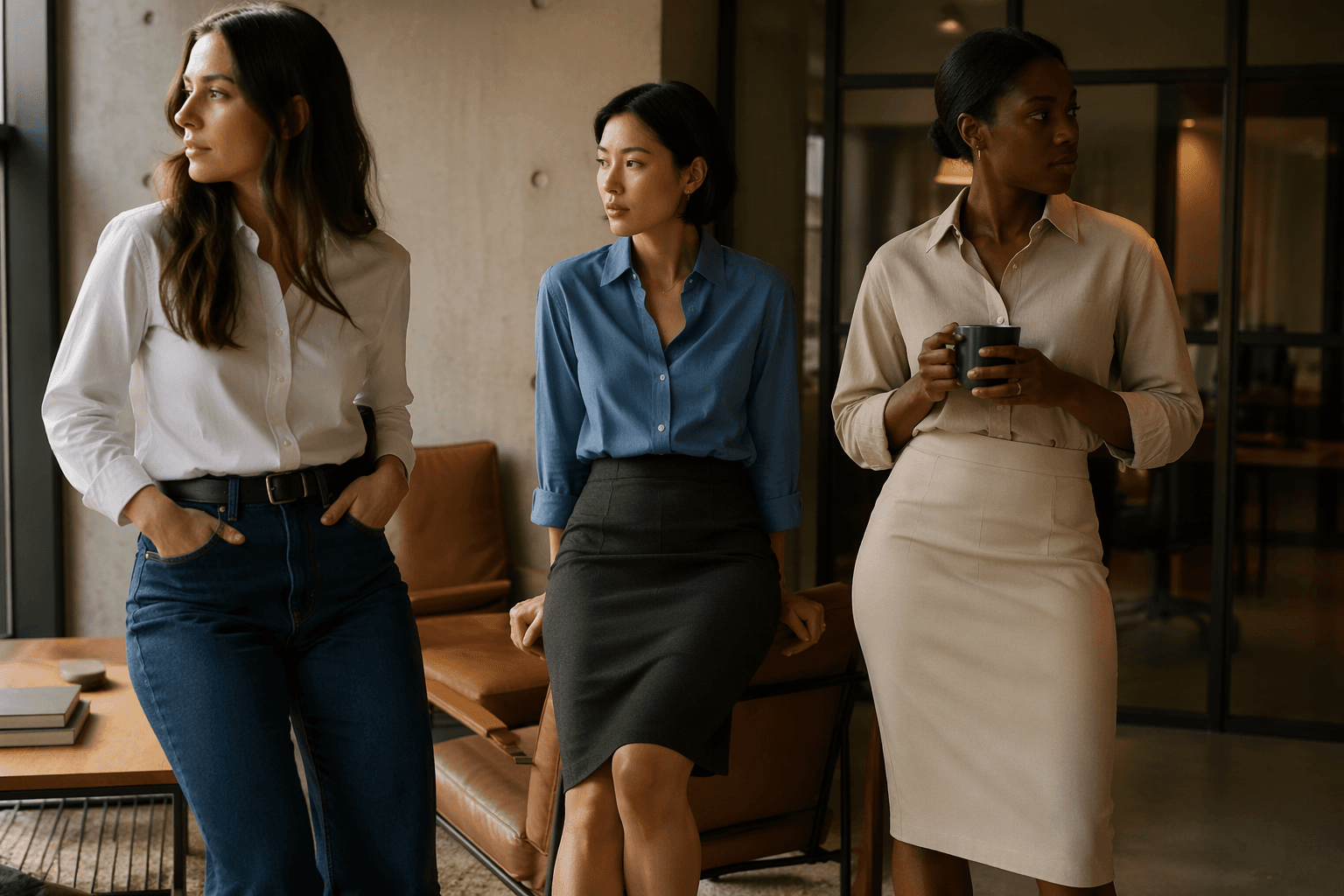
The capsule approach is the most practical framework for sustainable workwear because it forces prioritisation: fewer pieces, more wear per item, higher justifiable spend per garment. A functional sustainable work capsule sits in the 15-to-30-piece range, weighted toward a 70% neutral palette (ivory, soft black, warm beige, olive) with one or two accent colours that keep combinations coherent across seasons.
The core categories for an office capsule are:
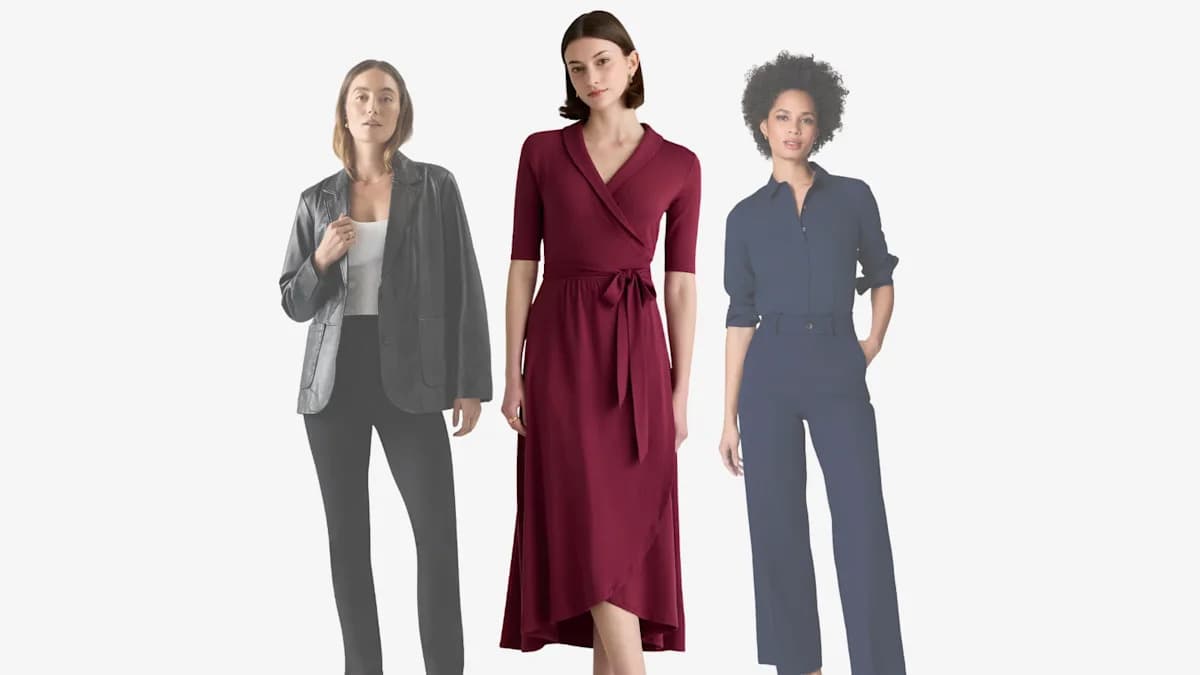
- A structured organic-cotton or linen blazer that reads formal enough for presentations but relaxed enough for daily wear
- Two to three versatile trousers in neutral weights (linen for warmer months, a heavier organic cotton or recycled wool blend for winter)
- Shirts and tops in Tencel or organic cotton that layer cleanly and wash without drama
- One capsule dress or tailored jumpsuit that eliminates the co-ordination decision entirely
- A transitional layer (knit or unstructured jacket) in a material that travels without wrinkling
Good On You's editorial position is that each of these pieces should be chosen for "trend-transcendence," meaning the cut and colour earn consistent wear across three to five years, not one season. Sandra Capponi, who co-founded the platform, described her own approach as "minimalist comfort with a touch of luxury in the fabrics and detailing," pointing to textured tees, premium denim from Outland Denim, and classic shirts as the anchors of a wardrobe that doesn't need constant refreshing.
The Brand Landscape: Cost Versus Lifecycle
The most honest framing for sustainable workwear pricing is that higher upfront cost typically reflects better construction, certified materials, and fair wages, and translates to a lower cost per wear over time. The trade-off is real but less dramatic than it appears at first.
At the accessible end of the verified spectrum, Everlane offers tailored trousers, crisp shirts, and blazers in certified organic cotton, recycled polyester, and Tencel at price points competitive with mid-market conventional workwear. Tuckerman & Co produces premium dress shirts from the finest organic cotton with Italian fabric and New England craftsmanship, in sizes 15 to 17, for buyers who want to invest in a shirt that performs for years. People Tree, a Fair Trade pioneer with GOTS certification and a large workwear collection, sits at the more ethical end of accessibility. For those willing to spend for longevity, Eileen Fisher's organic linen and cotton pieces come with a take-back and resale programme that extends the garment's useful life beyond a single owner.
The single most useful calculation is simple: divide the purchase price by the number of times you realistically expect to wear a piece in a year, then multiply by the number of years it will last. A $280 certified organic linen blazer worn 80 times a year for four years costs $0.88 per wear. A $95 conventional blazer worn 40 times a year for two years costs $1.19 per wear. The sustainable choice, in most cases, is the better investment. The work of sustainable office dressing is mostly upfront: getting the fabric right, reading the certifications honestly, and building the capsule with enough clarity that each piece earns consistent rotation. The wardrobe that follows doesn't need to be replaced every season, and that is the whole point.
This article was produced by Prism’s automated news system from verified source data, official records, and press releases, then run through automated quality and moderation checks before publishing. The system is built and supervised by the people who set the standards it runs under. Read our full AI policy.
Did this article answer your question?