Top Workwear Brands for Men in 2026, From Heritage to Modern Labels
Ben Davis was founded in the 1930s and still outflanks Carhartt for workwear credibility — here's every brand worth knowing in 2026.
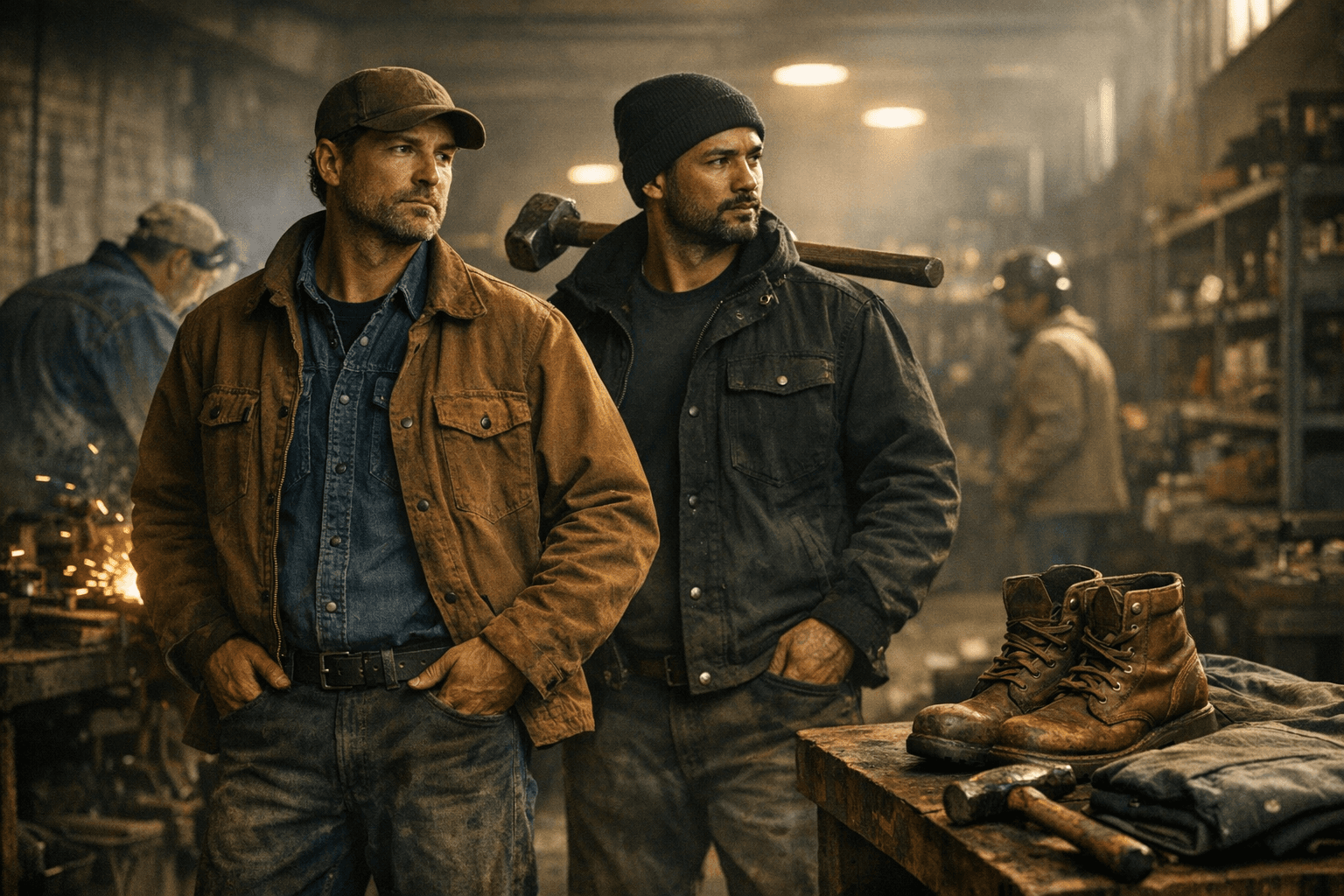
Everyone wears Carhartt these days." That single line, sharp and a little arch, cuts to the heart of what makes workwear interesting right now. The category has never been more crowded, and the brands that matter most are the ones that balance durability, craft, and style without dressing up as something they're not. From century-old denim houses to French labels selling chore coats in boutiques, the strongest workwear brands of 2026 share one thing: clothes that were built to function and happened to look good doing it.
What Makes a Brand Workwear-Worthy
The question isn't whether a brand has heritage. It's whether the clothes can hold up. The best workwear labels earn their place through materials and construction that would survive actual use, not just an editorial shoot. That means sturdy fabrics, reinforced seams, and silhouettes that move. Heritage matters when it's legible in the product itself, whether that's Red Wing's Goodyear-welted soles or Filson's oil-finish tin cloth. Niche Japanese denim makers have built entire reputations on the integrity of their selvedge weaves and their refusal to compromise on weight. The brands below are the ones where the craft shows.
Levi's
Jeans were originally conceived as hard-wearing work pants. Levi's was the brand that not only invented blue jeans but took the idea and made it the fashion staple that denim is today, defining the denim industry for over a century. That longevity isn't nostalgia; it's evidence that the product works. The 501® Original Fit Jean remains the clearest proof: a straight-leg, button-fly silhouette that has crossed every decade without needing reinvention. Men across generations have worn 501s, and the design's refusal to chase trends is exactly why it remains a workwear cornerstone.
Beyond the 501®, Levi's extends its workwear logic into shirts and outerwear. The Sunrise Trucker Jacket carries the same honest construction as the jeans, and the brand's men's shirts hold to that same legacy of quality craftsmanship. Levi's represents durability, comfort, and timeless style, which is a rare combination to sustain at mass scale. For a first workwear wardrobe or a reliable foundation to build on, Levi's remains the most logical starting point.
Timberland
Timberland's reputation begins with boots, but reducing the brand to footwear misses the point. Timberland's designs are practical yet stylish, with a distinct aesthetic that combines earthy colours and durable materials. The brand occupies a specific visual register: ochres, olives, deep browns, and waxed surfaces that suggest outdoor readiness without veering into performance-wear territory. It's working clothes that photograph well in natural light.
Beyond the boots, the brand's jackets, jeans, and shirts all reflect the same commitment to quality and gear made to get stuck in. That last phrase is useful shorthand for what Timberland does better than most: it makes clothes that invite actual use. The aesthetic is coherent across categories, which means you can build a full outfit from the range without anything looking out of place.
Carhartt
Carhartt deserves its ubiquity, even if that ubiquity has become a punchline. The brand built its reputation outfitting American tradespeople and has spent decades refining the double-knee duck canvas pant, the blanket-lined chore coat, and the thermal-lined hoodie into near-perfect utilitarian objects. The fact that it crossed into streetwear without losing credibility in the trades is a testament to how honest the product is. When a garment works on a construction site and in a skate video, the construction is doing something right.
Red Wing and Filson
Red Wing and Filson occupy a similar register: American-made heritage goods where the craft is the point. Red Wing's boots are Goodyear-welted and resoleable, designed with the expectation that a good pair will outlast several cheap alternatives. The brand's iron rangers and moc-toe silhouettes have become the template for serious workwear footwear globally. Filson, rooted in Seattle's logging and hunting traditions, brings the same philosophy to outerwear and bags. The tin cloth is stiff when new and softens with wear, aging into something that records use rather than hiding it. Both brands ask you to invest upfront, and both repay that investment over years of use.
Japanese Denim and Niche Heritage Labels
The Japanese denim world operates on a different set of values: obsessive fidelity to historical construction methods, selvage denim woven on vintage shuttle looms, and the kind of fading that takes months of honest wear to develop. Labels in this space treat the American workwear tradition as a source text to be studied rather than simply referenced. The results are jeans that feel heavier, stiffer, and more intentional than anything mass-produced. They are not the most practical entry point, but for anyone serious about the category, they represent its highest expression.
Ben Davis
Ben Davis is the answer to Carhartt fatigue. The American label was founded in the 1930s and is known for robust, straightforward designs that are popular with trades and streetwear enthusiasts alike. It occupies the same functional territory as Carhartt without the cultural saturation, which is precisely its appeal right now. If you want to show some workwear knowledge, Ben Davis is the move.
The product line is genuinely useful. The Original Ben's Pants are the kind of wide-set, no-nonsense trouser that trades workers have relied on for decades, and they carry that utilitarian honesty into contemporary styling without any visible effort. The Original Style Jacket brings the same blunt functionality to outerwear, and the Heavy Duty Long Sleeve Pocket T-Shirt is exactly what its name promises: a substantial, useful garment that earns its place without decoration. These are not fashion objects; they are clothes that happen to be having a fashion moment.
Arpenteur
Arpenteur is the outlier in this list, and deliberately so. The French workwear brand combines traditional French craftsmanship and modern design with classic workwear staples, drawing inspiration from utility and nautical clothing traditions. It is, as its own positioning makes clear, "the kind of workwear you can sell in a boutique, not a construction supplies store." That's a candid description of its market position, and it's accurate.
The brand's aesthetic is built on clean lines, sturdy fabrics, and understated details that give a knowing nod to vintage workwear without reproducing it wholesale. The collection, which includes chore jackets, sturdy trousers, and fleece jackets, is made with high-quality materials and crafted in France. Specific pieces like the Contour and the Fox P carry that minimalist, elegant sensibility that reads as very Gallic: practical without being spartan, considered without being fussy. For anyone who wants the workwear vocabulary without the construction-site weight, Arpenteur is the most sophisticated option on this list.
How to Think About the Category in 2026
Workwear's appeal has always been rooted in honesty. The best pieces in the category make no promises they can't keep: the canvas is heavy, the stitching is reinforced, the silhouette is generous enough to move in. What's shifted in 2026 is the range of entry points. You can spend selvedge-denim money on a Japanese label's first-edition drop, or you can pick up a Ben Davis jacket and get the same utilitarian logic at a fraction of the cost. Levi's sits in the middle, holding its ground across generations. Arpenteur angles the whole conversation toward Europe and away from the worksite entirely.
The most durable investment is understanding what you actually need the clothes to do. The brands on this list have each solved that question in a specific way; the work is figuring out which answer fits your life.
This article was produced by Prism’s automated news system from verified source data, official records, and press releases, then run through automated quality and moderation checks before publishing. The system is built and supervised by the people who set the standards it runs under. Read our full AI policy.
Did this article answer your question?