What to wear to work this spring: 2026 workwear trends (editor’s guide)
Nearly 30% of companies are mandating five days in-office by 2026, and SS26's soft-power tailoring finally gives you something worth dressing up for.
Here is the full article:
By 2026, 30% of companies will require employees to be in the office five days a week, up from 28% the previous year. That number matters to your wardrobe in a very direct way: the pandemic-era truce over sweatpants and Zoom-friendly blazers is officially over, and dress codes are tightening just as runways are delivering their most wearable, intelligent workwear in years. The timing is, for once, fortuitous.
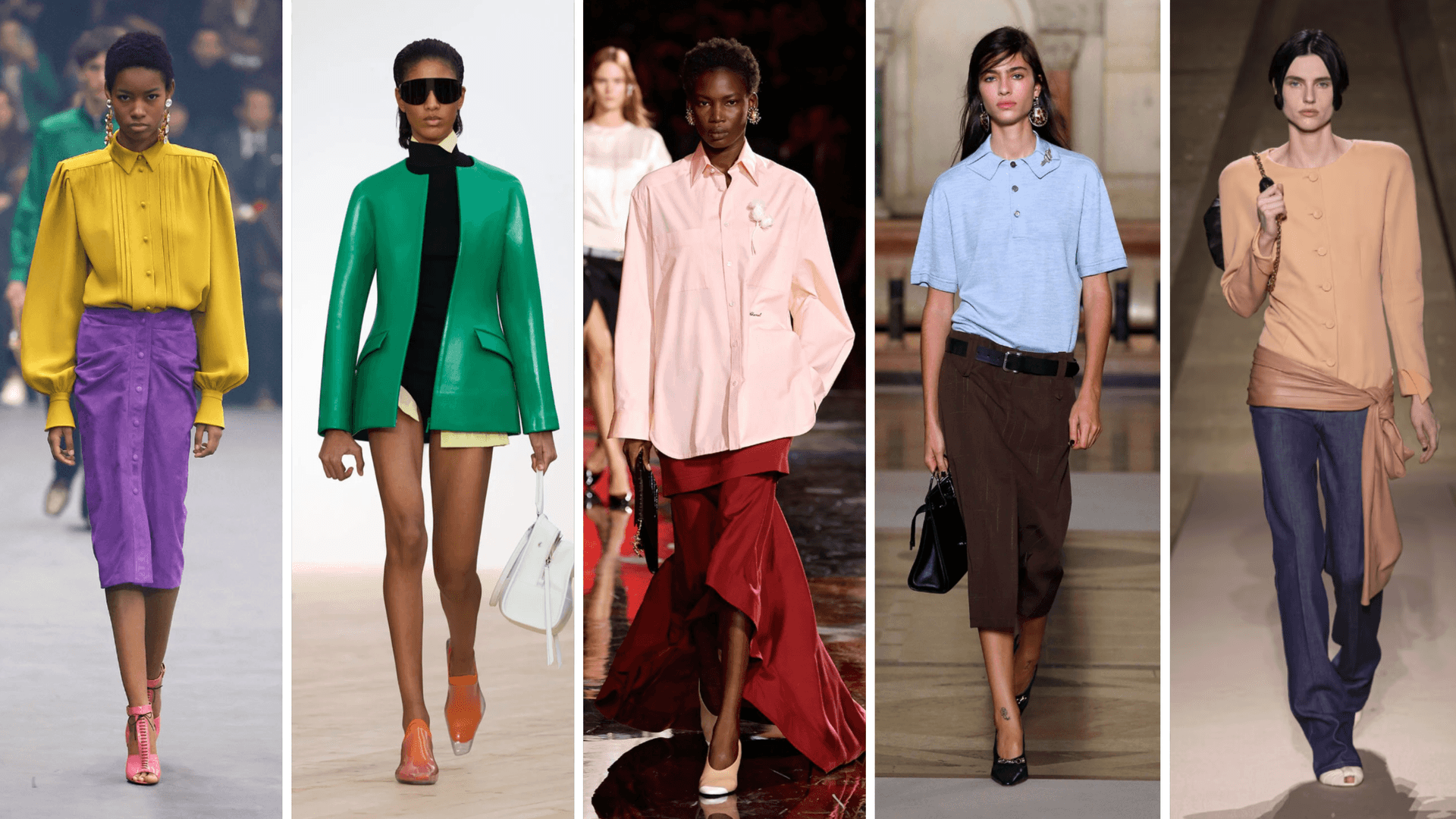
Marie Claire UK's SS26 workwear guide lands on four key directions: collarless and soft-collar blazers, standout shirts built around bows, volume, and color, elevated utility details including considered pockets and subtle tool references, and a broader shift toward what the guide calls "soft power" dressing. None of this requires a wardrobe overhaul. That's precisely the point.
What changed from last spring
The double-breasted blazer remains the anchor of the seasonal capsule, but its context has shifted. Last spring's silhouette was sharp, structured, and deliberately masculine-coded. SS26 softens the formula without surrendering the authority. For 2026, the focus is on traditional menswear tailoring rendered in lighter, summer-weight wools and linens, fabrics that move with you through an eight-hour day rather than gradually constricting around hour three. The collar, too, has evolved: designers including Chloé, The Row, and Loewe have stripped the blazer of its traditional collar entirely, offering a cleaner, less corporate neckline.
The checklist from SS25 to SS26 looks something like this:
- Out: Power-shouldered single-breasted blazer in heavy suiting wool
- In: Collarless or soft-collar blazer in linen or summer-weight crepe
- Out: Understated blouses as background dressing
- In: Statement shirts as the focal point, with exaggerated bows at Saint Laurent and punchy peplums at Stella McCartney, Dries Van Noten, and Khaite
- Out: Skinny or cigarette trousers as the default tailored leg
- In: Wide-leg trousers as the proportional counterweight to the cropped blazer, with the cropped silhouette now considered essential for balancing the wide-leg shape
- Out: Utility as purely casual, streetwear-adjacent dressing
- In: Utility chic rendered in luxurious fabrics with unexpected tailoring, including cargo pants reimagined in silk twill or crisp linen paired with sculptural blouses or sharply tailored vests
The hero trends, decoded by dress code
Corporate
In a traditional five-day office environment with a strict dress code, the collarless blazer is your most useful SS26 acquisition. It reads as polished and intentional rather than casual, particularly when cut close to the body and worn over a streamlined trouser. Pair it with a high-neck, structured blouse rather than a dramatic bow shirt for board-level meetings: the volume trend is real, but a floaty sleeve in a client presentation can read as costume rather than confidence. Stick to ivory, chalk, camel, and slate for the blazer; reserve the season's bolder color story for accessories.
The utility detail trend requires careful editing in corporate environments. A blazer with well-placed patch pockets or a refined flap detail is entirely office-appropriate; exposed D-rings, contrast stitching, or anything that reads as workwear-literal crosses into territory most HR dress code policies would flag. The distinction is intent: are the utility references subtle enough to read as design detail, or do they overpower the silhouette?
Business-casual
This is where SS26 gives you the most room to move. The guide frames its outfit suggestions, including blazers paired with wide-leg trousers and statement shirts, as accessible updates rather than radical wardrobe overhauls, which maps directly onto the business-casual brief: dressed enough to signal professionalism, relaxed enough to not feel performative. The bow blouse earns its place here. Wear it tucked into wide-leg trousers in a complementary tone, let the bow do the work, and skip the blazer entirely if the office temperature allows. The outfit communicates effort without aggression.

Summer-weight linen trousers in taupe or warm white are the business-casual hero item for SS26. They hit the proportion brief, breathe in real office conditions, and translate from desk to lunch without the stiffness of traditional suiting. Budget entry point: M&S and Arket offer credible versions from around £45 to £90. Mid-tier, COS and Reiss are reliable at £110 to £200. At investment level, The Row and Loewe set the benchmark in terms of construction and drape, though their price tags start well above £500.
Creative
The creative office has the most latitude but also the most temptation to over-index on trend. SS26's peplum blouse, bold-print shirt, and utility cargo in silk twill are all legitimate creative-office choices, but the risk is wearing all three simultaneously. The edit matters. One statement piece per outfit is the rule that separates intentional dressing from trend aggregation. A silk-twill wide-leg cargo trouser with a plain, finely knitted top and a collarless blazer reads as fashion-aware and considered. The same trouser with a bow blouse, oversized blazer, and statement shoe reads as a runway mood board, not a Monday morning.
Where the trends collide with actual HR rules
Several SS26 directions are genuinely beautiful and genuinely problematic in workplaces with written dress codes.
Skirts and dresses in professional settings should generally fall at or near the knee, with hemlines extending no more than a few inches above the knee considered appropriate when styled in a polished manner. The season's volume-led midi skirt is perfectly positioned; the micro-hemline direction that coexists on the same runway is not. Know which version you're buying before it arrives.
Sheer layering, another SS26 moment, almost always conflicts with corporate and many business-casual policies. A chiffon blouse worn over a camisole at the right opacity can work; anything where the undergarment is the obvious point of the outfit will not. The test: if you need to explain the layering to HR, it has failed.
Sleeveless tops remain a flashpoint. Many corporate dress codes still prohibit them as standalone workwear, even in summer. The SS26 solution is clean and practical: a sleeveless structured vest or blouse worn under a collarless blazer satisfies both the trend direction and the policy. Remove the blazer at your desk, replace it before a meeting.
Price reality
The most-asked question about any trend guide is what it actually costs to engage with it. The honest answer for SS26 is that the core shift, softened tailoring in lighter fabrics, is available at every price point without significant compromise.
At the budget end (under £80), M&S's spring tailoring drops have consistently overperformed on fabric weight and cut, and Arket's linen basics remain among the most wearable on the high street.
At mid-tier (£100-£350), Reiss and COS are the obvious entry points for the collarless blazer specifically, with construction quality that holds through regular wear and dry-cleaning cycles.
At investment level (£500 and above), Chloé, The Row, and Loewe define the collarless blazer's visual language for SS26. These are pieces that will not date quickly precisely because their appeal is in proportion and fabric rather than a novelty detail.
The return-to-office mandate is not a fashion trend; it is a policy reality that 30% of the workforce is now navigating without the wardrobe buffer of pandemic-era informality. The Marie Claire UK guide positions SS26 workwear as a set of tools for translating runway cues into office-ready purchases, and that framing is accurate. The collarless blazer, the statement shirt, the wide-leg trouser, and the elevated utility detail are not aspirational gestures. They are practical answers to the question of how to dress with authority and intelligence when the office is, once again, watching.
This article was produced by Prism’s automated news system from verified source data, official records, and press releases, then run through automated quality and moderation checks before publishing. The system is built and supervised by the people who set the standards it runs under. Read our full AI policy.
Did this article answer your question?