Why Carhartt, Dickies and Red Wings still define workwear style
Carhartt, Dickies and Red Wings endure because they are real utility brands, not costume pieces. Their history and silhouettes still give workwear its authority.
The names that still mean something
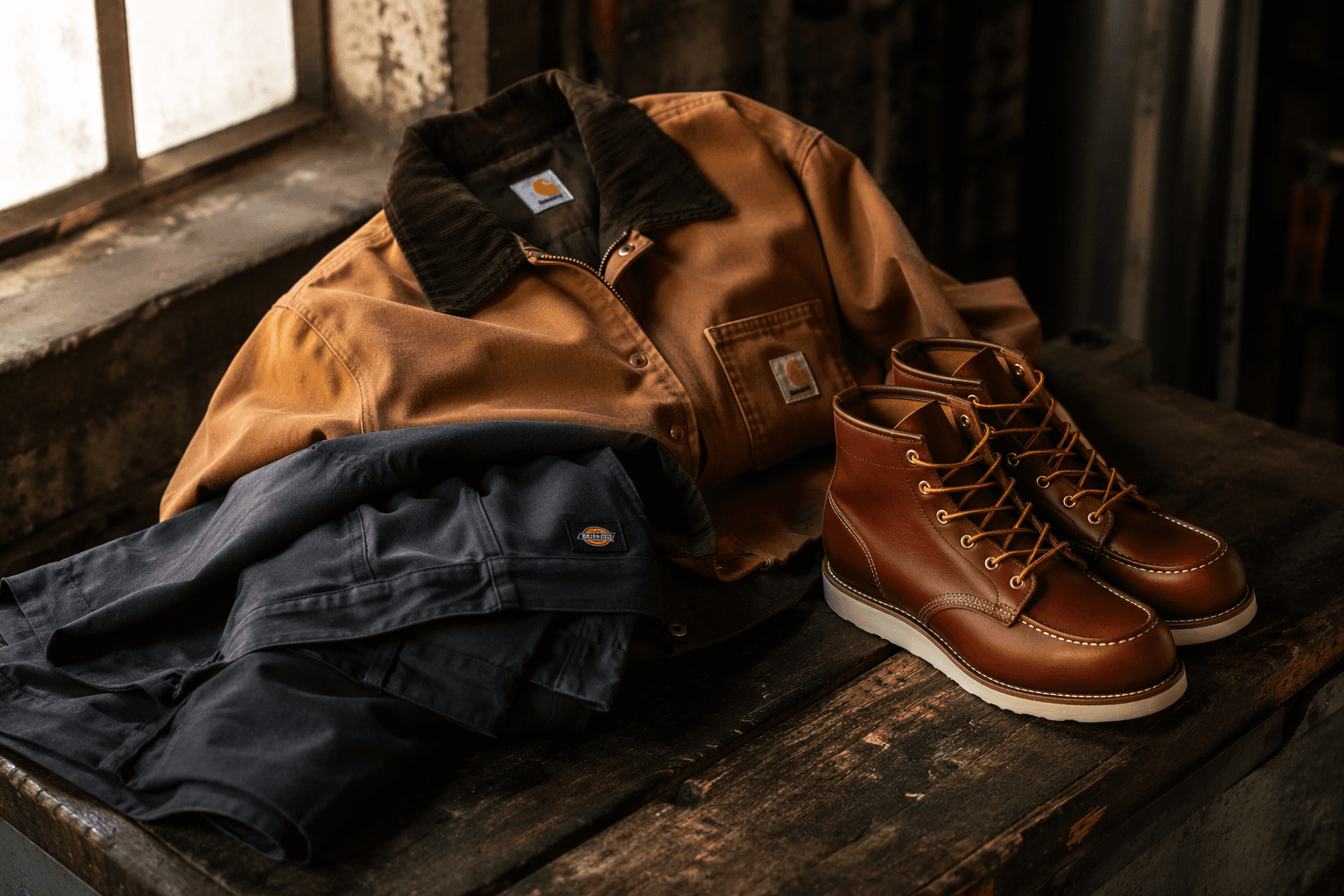
Workwear keeps its grip on fashion because the best labels in the category were never invented for fashion at all. Carhartt, Dickies and Red Wing carry the proof in their histories: these are companies built around labor, toughness and repeat wear, which is exactly why their shapes still read as credible on city streets. If you sort the category by what it actually delivers, the picture gets clearer fast: Carhartt for heritage authenticity, Dickies for entry-level durability, Red Wing for boots, and Wrangler for denim that still feels rooted in the workwear lane.
That is the difference between true workwear and the style-led imitation that borrows the look. Real workwear gives you recognizable silhouettes, bib overalls, chore coats, double-front pants and boots, pieces that were designed for motion, abrasion and weather before they ever became style shorthand. Fashion may have adopted the uniform, but the labels that matter most are still the ones with industrial history behind them.
Carhartt is the blueprint
Carhartt remains the clearest example of how utility becomes cultural shorthand. Hamilton Carhartt founded the company in 1889 in a small Detroit loft, where the first overalls were produced with two sewing machines and a half-horsepower electric motor. That origin story matters because it explains why the brand still feels grounded rather than decorative.
The company built its identity on making railroad workers a better bib overall, and it has stayed family owned and operated ever since. During World War II, Carhartt produced coveralls for soldiers and support personnel, jungle suits for Marines in the Pacific and workwear for women entering factory jobs on the home front. That breadth gives the brand a kind of American industrial seriousness that fashion cannot fake, and the Chore Coat, which dates back to 1917 and remains largely unchanged, is the clearest proof of all.
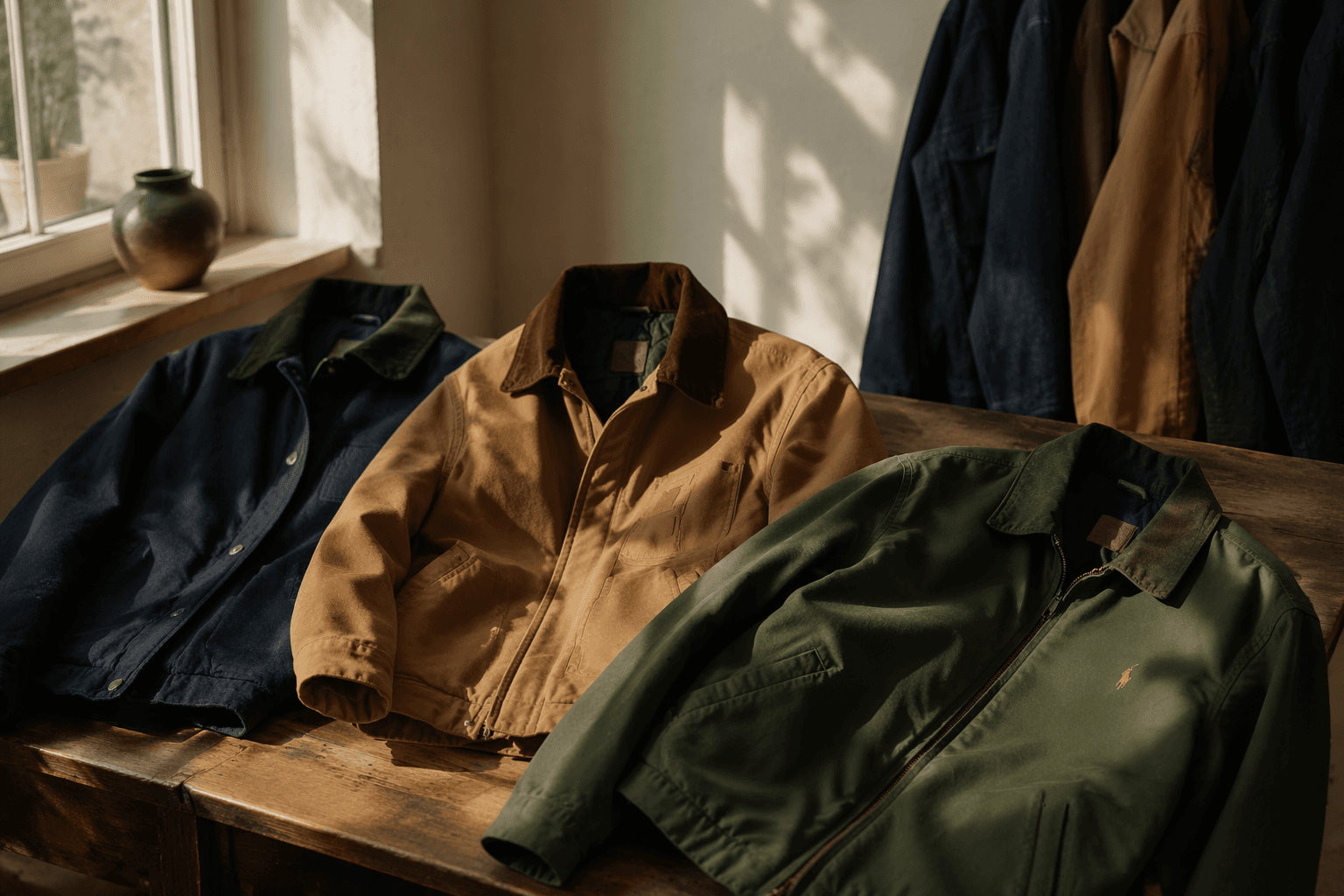
Carhartt’s power in style terms is simple: the garments are so legible that they require very little translation. A chore coat has the weight, pocket placement and easy structure to feel practical first, but it also carries enough shape to sit comfortably in modern wardrobes. When people talk about workwear that looks authentic without trying too hard, they are usually talking about Carhartt.
Dickies is the easy entry point
Dickies occupies a slightly different role in the workwear ecosystem. Founded in 1922, it has grown into a global workwear brand available in more than 100 countries, which makes it one of the most accessible gateways into the category. That reach matters because it turns workwear from niche heritage reference into a shared visual language.
Where Carhartt often carries the most visible historical weight, Dickies delivers the kind of no-nonsense durability that makes the category feel approachable. It is the label you reach for when you want hard-wearing trousers, clean lines and a work uniform that can pass from job site logic into everyday dressing without looking overdesigned. In practical style terms, Dickies is often the bridge between function and fashion, the place where a reader starts if they want the workwear look without the collector’s price or museum-level nostalgia.
That accessibility is part of its authority. Workwear only becomes style when it can be worn by more than one subculture, and Dickies has that rare ability to feel universal without losing its utility-first identity. It is not precious, which is exactly why it keeps showing up in wardrobes that value clarity over costume.
Red Wing is the boot room standard
If the clothing gives workwear its silhouette, Red Wing gives it its footing. Red Wing Shoe Company was founded in 1905 by Charles Beckman in Red Wing, Minnesota, and it is still family owned and still based in the same town. That continuity gives the brand a kind of place-based authenticity that very few fashion labels can match.
The company’s museum adds another layer to the story, with more than 120 years of company history and the world’s largest boot on display. That is not just charming trivia. It underscores how central boots are to the identity of workwear, and why Red Wing has become the default reference point when the category needs a grounded, rugged finish. A Red Wing boot does not merely complete an outfit, it stabilizes it.
This is where the line between function and fashion becomes most visible. A boot built with workwear logic can be styled with selvedge denim, tailored trousers or a chore coat, and it still reads as honest because the shoe was never invented to be a trend object. Red Wing’s appeal lies in that seriousness: the boot looks better because it has a job to do.

Where Wrangler fits in the picture
Wrangler belongs in the conversation because workwear is not only about outer layers and boots. It is also about denim, the fabric that has done more than almost anything else to blur the boundary between labor and style. In that sense, Wrangler represents the jean side of the workwear wardrobe, the category’s most familiar everyday shorthand.
That role matters because denim is where many readers first encounter workwear style. A good pair of jeans can hint at the same utilitarian honesty as a chore coat or a double-front pant, especially when the cut stays sturdy and the finish avoids looking overly polished. Wrangler helps keep that part of the category legible, reminding fashion readers that workwear is not just an aesthetic mood board, it is a system of garments with specific jobs.
How to read the category now
The cleanest way to navigate workwear style is to start with what each label actually does best. Carhartt gives you the deepest sense of historical legitimacy, Dickies gives you accessible durability, Red Wing gives you boots with real stature and Wrangler keeps denim in the conversation without drifting into pure fashion fantasy. Once you see the market that way, the noise falls away.
That is also how you tell the difference between a genuine workwear reference and a borrowed one. The real thing has recognizable proportions, practical construction and a history that can survive close inspection. Fashion keeps circling these brands because the clothes still earn their place, and in workwear, that is what style looks like when it is built to last.
Know something we missed? Have a correction or additional information?
Submit a Tip