Zegna’s Malibu show pairs soft tailoring with made-to-measure luxury
Zegna’s Malibu show traded spectacle for client service, and the clothes were all business: soft jackets, striped separates, and made-to-measure summer tailoring.
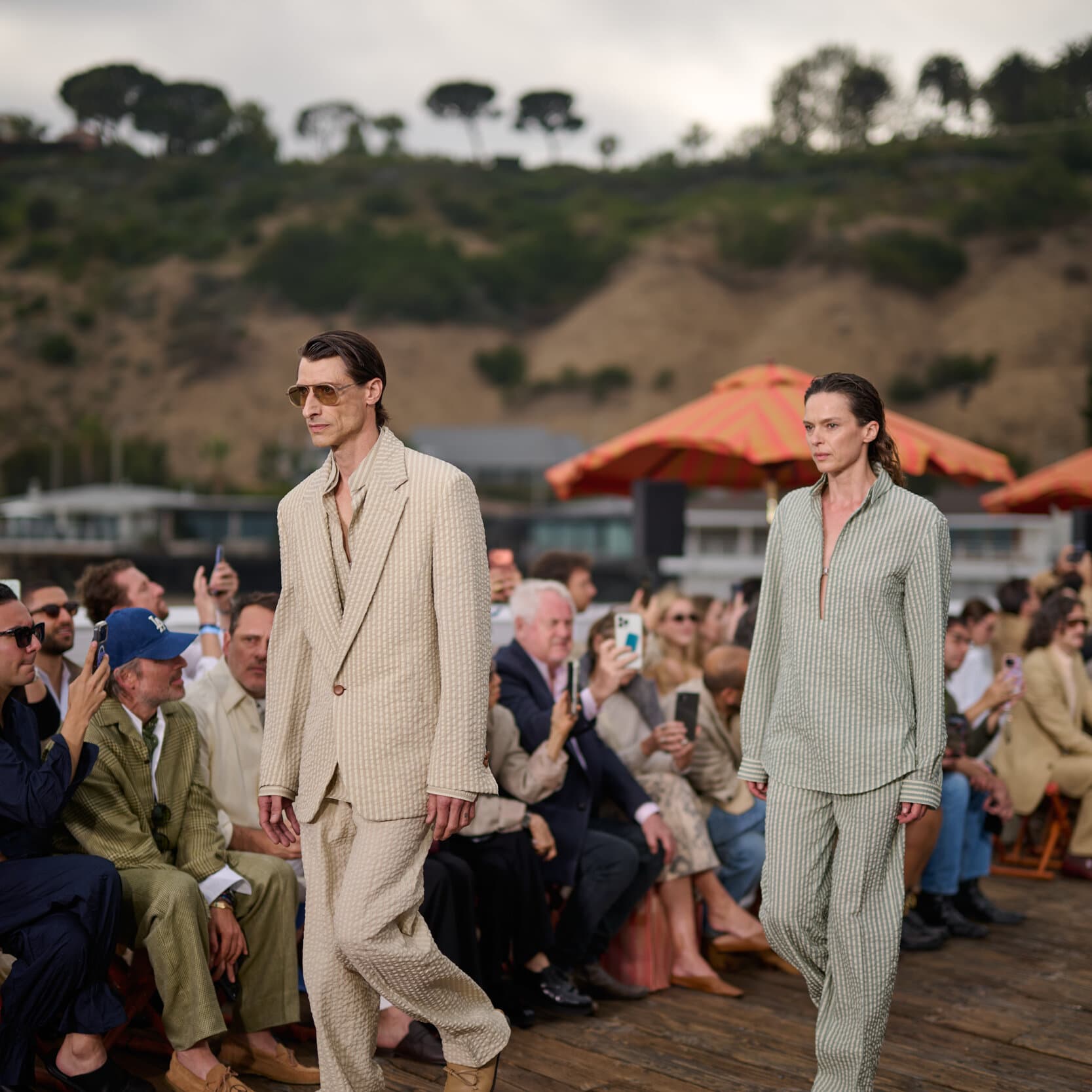
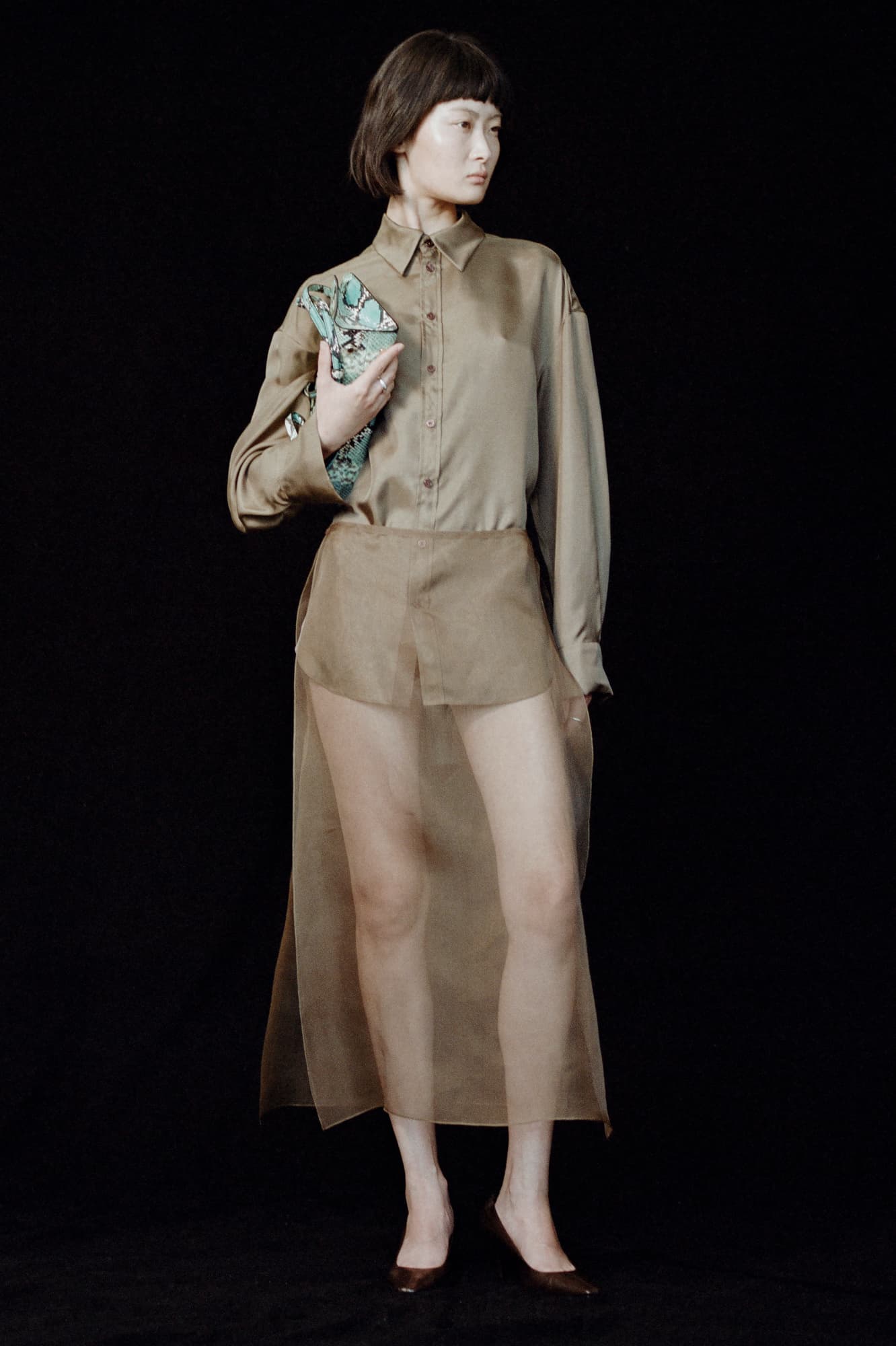
Zegna did not come to Malibu just to stage a pretty sunset moment on the pier. The point was sharper than that: show the kind of summer tailoring that still works when the calendar says hot weather and the office says be presentable. Soft jackets, striped separates, lightweight outerwear, safari jackets, and boxy cropped layers gave the collection its shape, and every piece felt built for men who need authority without the chokehold of stiff suiting.
Soft tailoring, made for real life
What made the clothes land was how wearable they looked from the first glance. The jackets had ease in the shoulder, the trousers and separates carried that Zegna balance between polish and airiness, and the lighter outerwear suggested a wardrobe that can move from a boardroom to a hotel terrace without looking overthought. This was not tailoring trying to prove it can be relaxed. It was tailoring already fluent in summer.
That matters because the modern executive uniform has shifted. The men who actually wear this stuff want the visual weight of authority, but they do not want to look sealed into wool armor in June. Zegna answered that tension with a lineup that leaned into movement and texture instead of rigidity, giving summer suiting a cleaner, more breathable attitude.
Malibu as a client service flex
The Malibu Pier setting gave the show atmosphere, but the real story was service. Zegna said 120 customers were there, and roughly half were American. Including plus-ones, the guest list reached about 240, which tells you exactly who this was built for: not a front-row fantasy, but a highly curated client room with actual buying power.
Alessandro Sartori framed the collection around “La Villeggiatura,” the Italian seasonal ritual of relocating for summer. He linked it to the 1950s through the 1970s, a period he described as especially familiar to the Zegna family, and the idea fit the collection better than a generic resort mood ever could. The clothes felt like they belonged to people who pack their work life with them, not people escaping it.
The hospitality was part of the pitch. Guests were welcomed with vivid citrus-colored cocktails, striped parasols, and orange-and-yellow deck chairs lining the wooden deck. It was polished, yes, but also strategic. This was luxury service presented as atmosphere: the kind that makes tailoring feel personal before anyone even steps into a fitting room.
Why the fabric story matters
Zegna did not stop at the runway looks. For the occasion, the brand created a special selection of signature pieces in vicuña, ultra-fine cashmere, and 12-micron wool. Those are not decorative fabric talking points. They are the point. In this category, material is what separates an expensive suit from one that actually earns its price.
Vicuña brings the obvious status charge, but the more useful detail here is the range of lightness and refinement across the selection. Ultra-fine cashmere and 12-micron wool signal a summer wardrobe that is engineered for softness, drape, and temperature management, not just appearance. That is exactly where Zegna has the edge over more generic luxury tailoring: the finish feels technical without looking technical.
For men dressing for client-facing work in warm climates, that difference is everything. A jacket that breathes, a fabric that holds shape without looking boxy, a separate that reads confident instead of corporate zombie, those are the real tools here.
From the pier to the fitting room
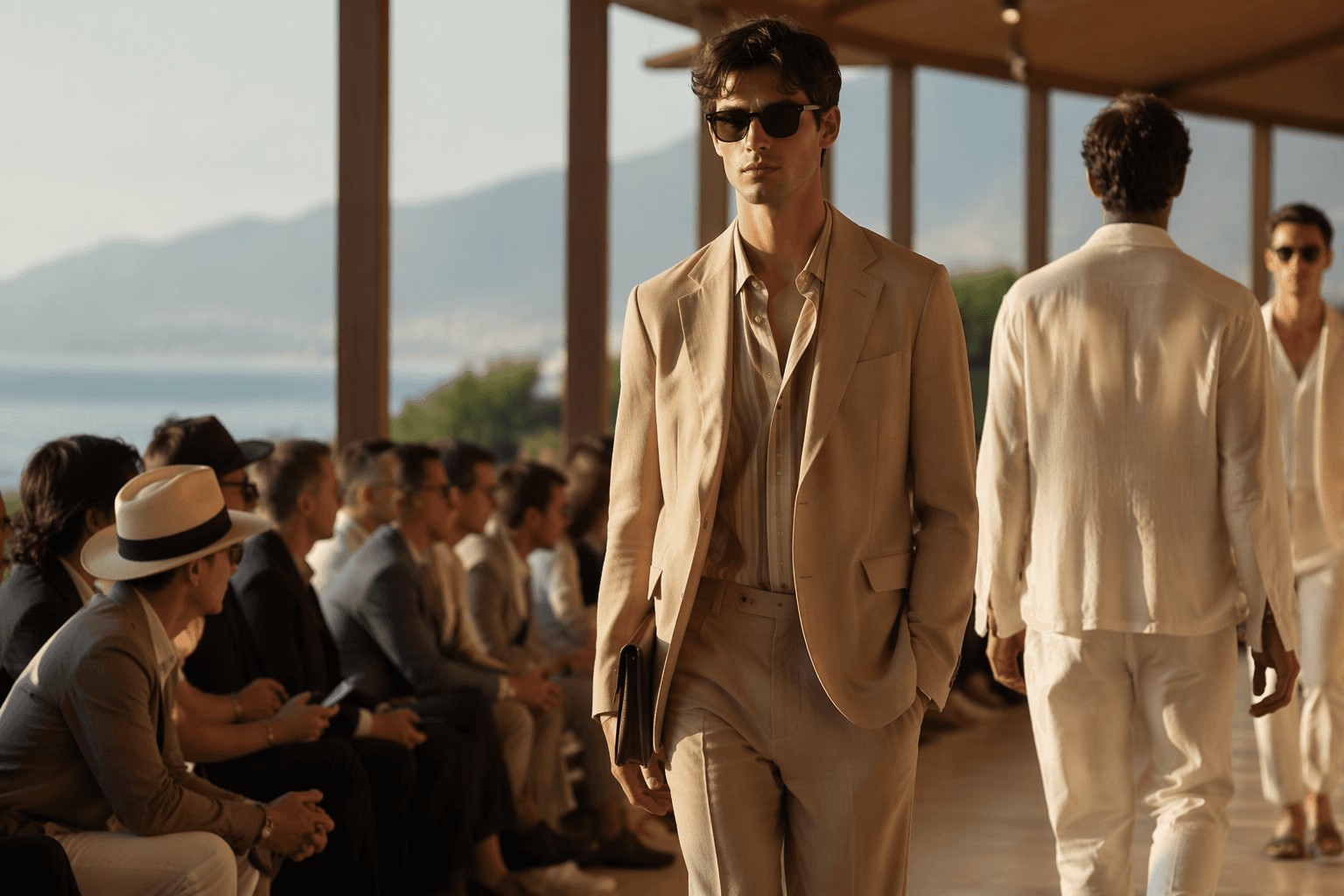
After the show, the collection moved to Chateau Marmont, where it was displayed in cottages so clients could shop the runway looks and place made-to-measure orders. That move was smart because it turned the show into a sales environment without killing the mood. The clothes stayed aspirational, but the process became tactile and immediate.
Zegna also told guests it would take care of them for five days. That is the kind of line that tells you everything about the brand’s current strategy. It is not just selling clothes, it is selling continuity, a world where the show, the fitting, the shopping, and the private access all blur into one controlled experience. In luxury menswear, that level of handholding is not soft. It is the product.
Villa Zegna and the business of access
Alongside the show, Zegna launched Villa Zegna, a temporary invitation-only private club in Los Angeles. That is not a random lifestyle add-on. It extends the same logic as the pier show and the Chateau Marmont setup: build a space where clients feel folded into the brand before they even buy anything.
The Los Angeles trip also continued a pattern Zegna has already used in Milan and Dubai, where client-focused activations have become part of the brand’s larger playbook. The message is clear. Zegna is not treating tailoring as a static category. It is treating it like a relationship business, with the suit, the fabric, and the private setting all working together.
Why Los Angeles made sense
Zegna had announced the presentation on March 3, 2026, saying it would take place on June 5 and align with Camera Nazionale della Moda Italiana. It also said Los Angeles was chosen for its cinematic legacy and its influence on global visual language. That rationale makes sense, especially for a show that cared as much about presentation and image as it did about construction.
The guest list backed that up too. Rami Malek, Mahershala Ali, and Gael García Bernal all fit the kind of international, camera-ready audience Zegna wanted in the room. The setting, the casting, and the clothes all pointed in the same direction: this is tailoring for men whose work lives in public, but who still want the private luxury of being properly dressed.
Zegna’s Malibu show worked because it understood that the new workwear flex is not excess. It is ease, precision, and service, delivered in fabrics good enough to justify the attention.
This article was produced by Prism’s automated news system from verified source data, official records, and press releases, then run through automated quality and moderation checks before publishing. The system is built and supervised by the people who set the standards it runs under. Read our full AI policy.
Know something we missed? Have a correction or additional information?
Submit a Tip