Verify authenticity, sizing and lead times when buying luxury anniversary gifts
Do the legwork before you fall in love, verify certificates and serial numbers, confirm sizing, and factor in customization lead times so your luxury anniversary gift arrives right.
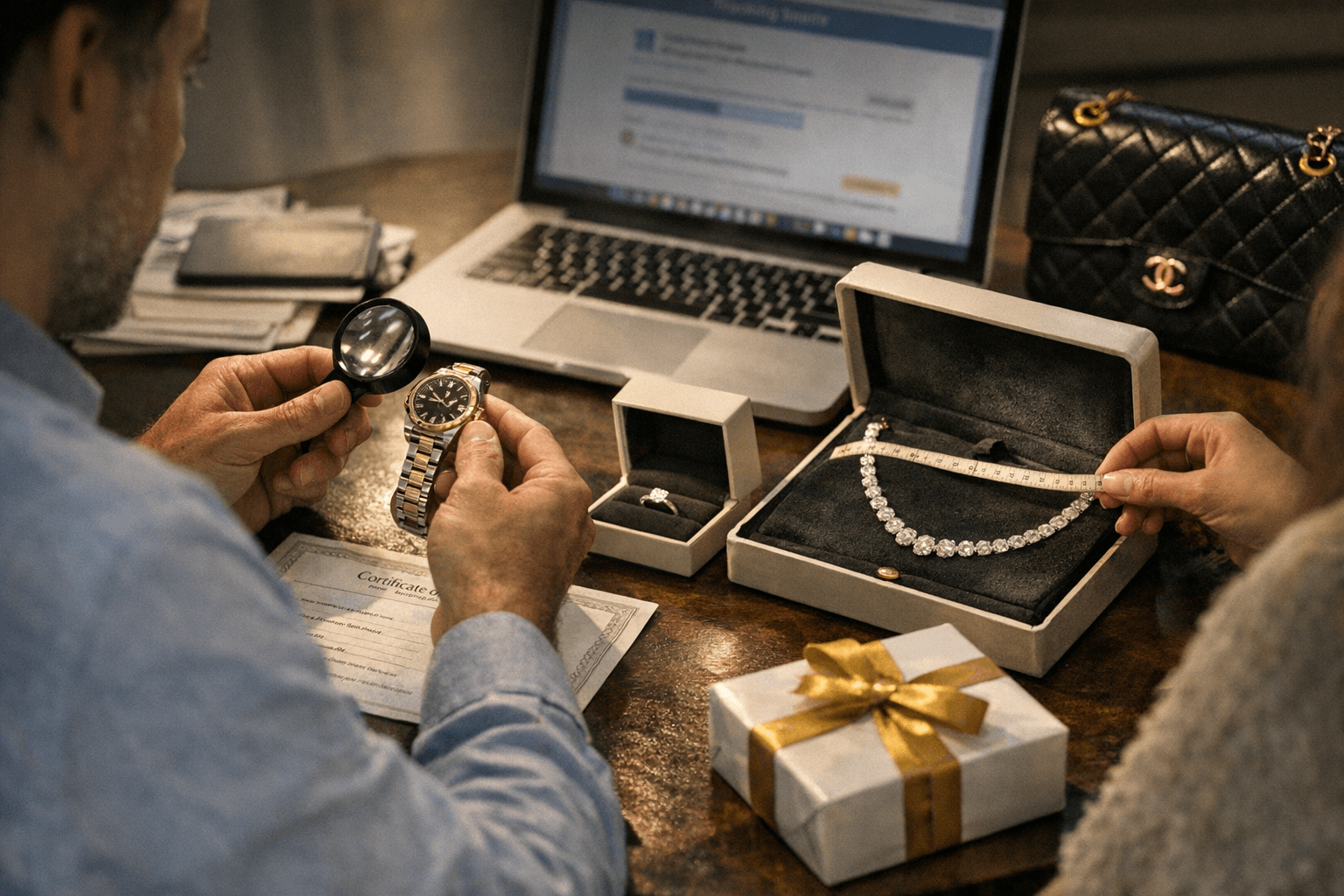
1. Verify authenticity and provenance for jewelry and watches
If you’re buying a diamond, colored stone, or high-end watch, insist on written proof: grading reports, hallmarks, serial numbers and the original receipt or warranty card. Diamonds should come with a GIA, AGS, or GCAL report that spells out cut, color, clarity and carat weight; a GIA report for a 1.00‑ct round typically accompanies pieces in the $3,000–$15,000 range. For watches, check the case and movement serial numbers against the manufacturer’s database and get the warranty card and service history, a Rolex or Omega without a matching serial and warranty is worth far less than one with papers. If a seller won’t produce documentation, walk away: provenance is what separates a $2,000 preowned piece from a $10,000 collectible.
2. Authenticate with a trusted third party when in doubt
When buying preowned or estate pieces, budget for independent authentication: expect to pay $75–$300 for a detailed appraisal or lab report for jewelry, and $100–$400 for an independent watch authentication and pressure test. Reputable appraisers will confirm metal karat, gemstone treatments, and watch service history; their reports are worth the cost because they protect resale value and insurance replacement figures. Bring photos of serial numbers and any seller documentation to the appraiser so you get a complete provenance file you can keep with the gift.
3. Confirm sizing early, rings, bracelets, and clothing
Sizing errors are the single most common reason luxury gifts become headaches. Get an accurate ring size (not “best guess”), a jeweler’s measurement is free at most stores, and remember that fingers swell with heat and seasons: sizes can vary by half a size. Bracelets and cuff sizes require wrist measurements in millimeters; a 16 mm difference can turn a perfectly priced bangle into something that slides off. For clothing and bespoke tailoring, have current measurements from a recent fitting, off‑the‑rack suits can cost $800–$2,500, while bespoke suits typically run $2,000–$6,000 and require precise measurements and multiple fittings.
4. Plan for customization and engraving lead times
Custom engraving, stone setting or made-to-order colorways all add time. Simple engraving often takes 3–7 business days but on high‑end pieces, custom-cut stones, bezel settings, or inlay work, expect 4–12 weeks; high jewelry houses and independent makers can take 8–20 weeks for fully bespoke commissions. If you’re ordering a custom diamond ring, add another week or two if the jeweler needs to source a specific stone; for a 1.5–2.0 ct natural diamond with particular color and clarity you may be quoted $6,000–$40,000 and waiting time increases accordingly.
5. Account for watch servicing and sizing bottlenecks
For luxury watches, sizing a metal bracelet is quick, but if the watch is preowned ask about a full service. Manufacturer servicing often takes 2–8 weeks, Patek, Rolex and Audemars Piguet service centers can have backlogs during busy periods, and can cost anywhere from $300 to $1,500 depending on the model and extent of work. If you’re buying preowned from a dealer, insist on a recent service and a pressure test to ensure water resistance; if not available, factor the service lead time into arrival planning.
6. Fine experiences: book with cancellation and timing in mind
Experiences are special but time-sensitive: Michelin restaurants often open bookings 28 days in advance for coveted nights, private chefs typically need 2–6 weeks to source bespoke menus and ingredients, and luxury weekend getaways (think boutique hotels or private villas) should be reserved at least 3–6 months ahead for peak dates. For a private chef experience expect to pay $500+ for an intimate night and $1,000–$3,000 for truly bespoke multi‑course events. Always confirm cancellation policies and whether the experience can be rescheduled, black‑out dates and no‑refund policies are common at high-end venues.
7. Bespoke items: deposits, sketches, and revision rounds
Bespoke commissions, jewelry, leather goods, couture, usually require a deposit of 30–50% and a signed design agreement. Expect an initial sketch and at least one revision round; simple bespoke jewelry often starts at $1,500 and high‑end custom pieces easily exceed $10,000. Ask up front how many revision rounds are included and what happens if you change specifications midway; that’s when timelines and costs can balloon. Get delivery windows in writing: a 12‑week estimate is common, but put a calendar date in the contract to avoid last‑minute surprises.
8. Confirm returns, repairs, and insurance before purchase
Luxury buys aren’t one‑and‑done. Confirm the store’s return window (luxury retailers often offer 14–30 days), ask whether returns are allowed on custom or engraved pieces (usually nonreturnable), and check repair policies and costs. Insure purchases over $1,000 immediately, homeowners’ policies may cover jewelry but you’ll often need a rider for full replacement value. For watches and high jewelry, an insurance valuation (appraisal) will protect you against loss and is often required within 30–60 days of purchase.
9. Price expectations so you aren’t surprised
Be direct about budget ranges: lab‑grown diamond solitaire rings can start around $1,200, natural 1.0‑ct solitaires typically begin near $3,000 and scale steeply past $10,000 depending on quality. New entry luxury watches (Rolex Oyster Perpetual, Omega Seamaster) usually start around $5,000 and can rise into the tens of thousands; rare or collectible models command premiums. Bespoke clothing and high‑jewelry commissions often start in the low thousands; private experience gifts vary widely but budget $500–$3,000 for memorable, tailored nights. These are realistic starting points, always get written estimates.
- Ask for and retain certificates, serial numbers, receipts and warranty cards.
- Get a written timeline and deposit agreement for any customization.
- Verify return and repair policies; don’t assume “luxury” means generous returns.
- Budget for independent authentication and insurance.
- Build in extra time: add two weeks for domestic shipping and four-to-six weeks for international logistics.
10. Final checklist to wrap the gift with confidence
Closing thought A luxury anniversary gift should feel effortless when it’s presented, not like an emergency project the week before, verifying authenticity, nailing sizing, and planning realistic lead times are the difference between a celebrated surprise and an awkward exchange. Do the small homework now and the memory will be the only thing you and your partner need to keep.
This article was produced by Prism’s automated news system from verified source data, official records, and press releases, then run through automated quality and moderation checks before publishing. The system is built and supervised by the people who set the standards it runs under. Read our full AI policy.
Did this article answer your question?

%3Amax_bytes(150000)%3Astrip_icc()%2Fjackieandadam-7120280829b248d8bea28c8f9d73aabc.jpg&w=1920&q=75)