How to pick a memorable gift for her — 6 editor‑tested rules
Six rules separate memorable gifts from forgettable ones, starting with why a branded collaboration beats a generic option every time.
The Marvel x Oreo collaboration arrived in four package editions with 32 character designs and a color-changing creme that shifts from gray to blue when licked. It launched on March 2, 2026, and it was never really about cookies. It was about the specific pleasure of handing someone something they had never seen before, wrapped in two brands they already trusted. That is the first of six rules that consistently separate gifts she will remember from gifts she will quietly return.
Lead with a branded or collaborative hook
A collaboration gives a gift a reason to exist beyond its function. When two brands fuse, or when a house drops a limited artist edition, the object arrives with a story already attached, and that story is half the gift. For her specifically, this translates to beauty brands partnering with artists on seasonal packaging, a fragrance house releasing a capsule collection, or a fashion label tying a drop to unexpected creative direction.
Merit's current perfume illustrates the more refined version of this principle. Top notes of bergamot and pear move through jasmine, rose, and violet before landing on vanilla, musk, and moss. It is not a collaboration, but it carries a distinct identity and a clear point of view. That specificity is what makes something giftable rather than generic: the product has a perspective, and giving it communicates that you do too.
Build in three price tiers
A single price point excludes most of the people who want to give well. The tiers that hold up across every occasion: under $50 for something she reaches for every day; $50 to $200 for a gift that signals genuine thought without requiring a budget conversation; and luxury, above that threshold, where craftsmanship, scarcity, or brand weight carries the number.
At the entry level, a Madewell Semiprecious Beaded Carabiner Charm Necklace, around $38, delivers daily wearability and a modern edge. The mid-tier is where most considered gifts live: a Longchamp tote under $200 sits at the intersection of recognizable and functional, useful enough to earn daily carry, distinctive enough to feel intentional. Above $200, the question shifts from utility to meaning. Limited-run fragrances, engraved jewelry, and monogrammed leather earn their price through permanence, not novelty.
Pair a keepsake with something experiential
The most consistently successful gift combinations match something she keeps with something she consumes. The tactile anchor, a piece of jewelry, a limited candle, an apparel capsule, gives the gift permanence. The experiential element, a curated food tin, a limited confection, a tasting set, creates a moment in real time. Together they address two separate emotional needs: "I thought about you" and "I wanted you to enjoy this right now."
A limited-edition candle in a reusable tin accomplishes both at once. She burns the candle and keeps the vessel. Luxury candle brands have understood this for years, and the design principle is direct: if she keeps the box after the candle is gone, the packaging has become part of the gift. Jewelry packaging in 2026 follows the same logic, with modular boxes designed to convert into keepsake trays or desk organizers, extending the gift's physical presence in her life long after the occasion has passed.
Make personalisation non-negotiable
A monogram converts a good gift into her gift. The emotional mechanics are simple: personalisation demonstrates time spent, not just money. Retailers built around this premise, Mark and Graham among them, offer custom jewelry, monogrammed handbags, engraved keepsakes, and travel accessories with the implicit understanding that the customisation itself communicates care. Williams Sonoma's monogrammed kitchenware follows the same principle: functional objects become heirlooms the moment they carry her initials.
The operational detail that cannot be overlooked is production timeline. Personalised gifts typically require five to ten business days beyond standard shipping. That window needs to be built into any decision and communicated clearly. A personalised gift that arrives three days after the birthday is not a personalised gift; it is a reminder of a missed deadline.
Call out time and availability
Scarcity is not a marketing mechanism; it is real information that changes buying behavior. When a product has a defined run, a documented launch date, or a history of selling out before most people know it exists, those facts belong in any recommendation. They are the difference between a reader who bookmarks something and a reader who buys it.
The three callouts that matter:
- Launch date: when does it become available, and is there a waitlist or early access?
- Run count: how many units exist, or is this a seasonal production that will not return?
- Sell-out window: based on previous drops, how quickly does inventory move once it goes live?
These details take legwork to find, but they are among the highest-value additions to any gift recommendation. Pointing to something already sold out is not a recommendation; it is friction.
Let the packaging do the work
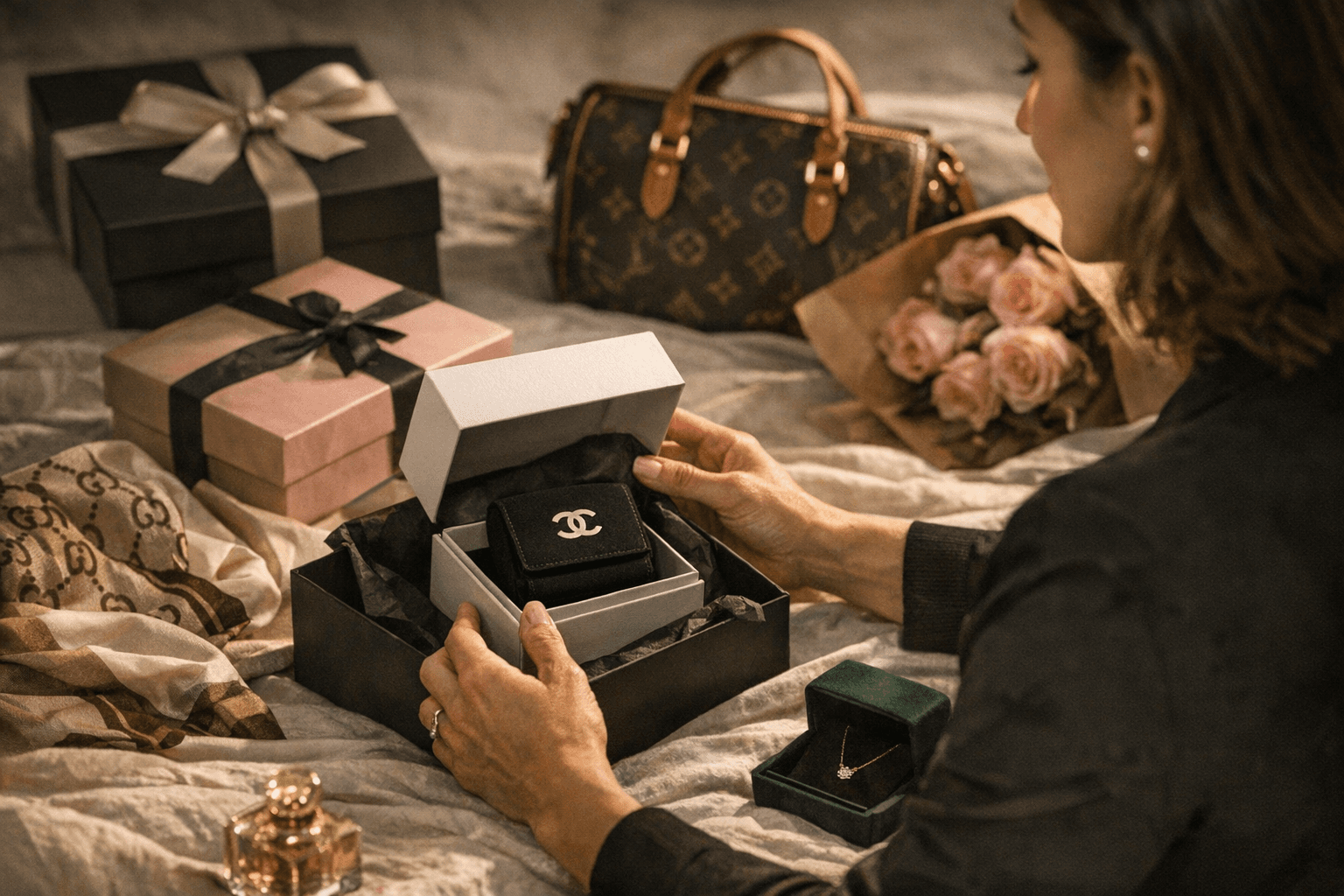
Presentation changes the emotional register of a gift before she knows what is inside. A product in a matte box with a ribbon communicates differently than the same product in a poly mailer, even if the contents are identical. The unboxing is the first physical experience of the gift, and it frames everything that follows.
Reusable pouches designed to protect jewelry from tarnish double as an ongoing part of her storage routine. Modular jewelry boxes convert to keepsake containers. Limited-edition tins eliminate the need for separate wrapping and add a layer of perceived value that standard retail packaging simply cannot. The packaging becomes a second gift she did not expect, which is precisely the register a memorable gift should aim for.
The through-line connecting all six rules is this: a gift worth giving has enough layers that she can tell a story about it. It came in limited quantities. It carries her initials. It was made by a brand she already loves, doing something she did not expect. The box is still on her shelf. Gifts with that kind of depth do not end on the day they are given. They become the standard against which every future gift gets measured.
Know something we missed? Have a correction or additional information?
Submit a Tip

