How Much Cash to Give Graduates in 2026 by Relationship
Cash remains the safest graduation gift in 2026, and the right amount depends on closeness: parents and grandparents give more, friends give less.

You know the grad, you know your budget, and the right cash gift should make both feel respected. Graduation has become a serious spring spending moment, with the National Retail Federation projecting a record $6.8 billion in graduation spending and cash holding its place as the top gift.
What the numbers say
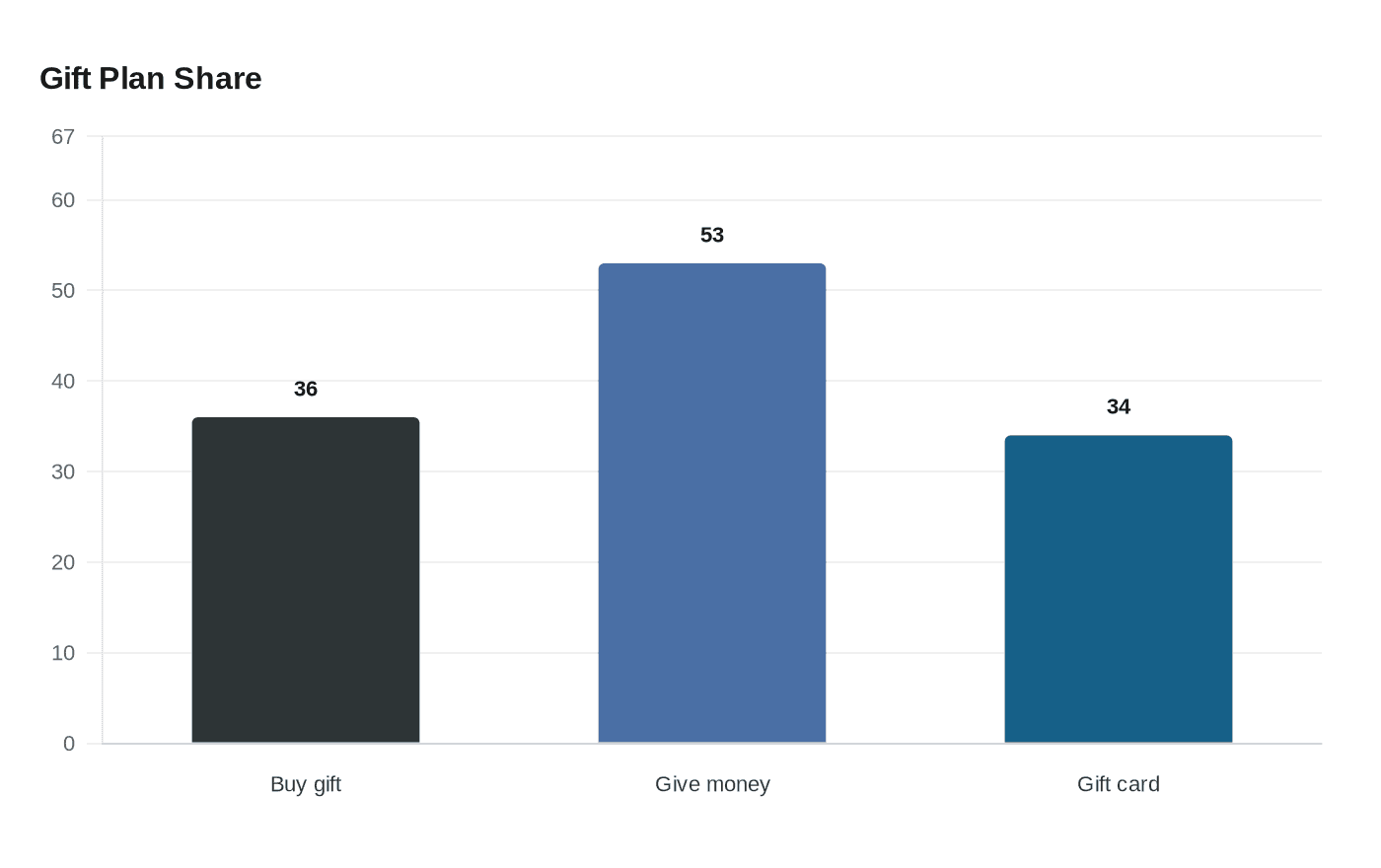
The pressure is not imaginary. The National Retail Federation has tracked graduation spending since 2007, and its 2025 survey of 8,225 adults found that 36 percent planned to buy a gift for a high school or college graduate. More than half said they would give money, 53 percent planned to give money, and about one-third planned to give a gift card, 34 percent. The average graduation gift came in at $116, which tells you something useful: most people are not making a grand gesture, they are trying to land in a range that feels generous without becoming reckless.
That is why cash still wins. It is flexible, immediate, and practical in a way many keepsakes are not. For a graduate, it can cover a moving truck deposit, a train ticket home, a first month of groceries, or the small expenses that appear right after the celebration ends.
How much cash to give by relationship
The cleanest etiquette rule is simple: the closer the relationship, the higher the amount. Western Union’s guidance is the most useful benchmark here because it separates gifts by relationship and by level of graduation, which is exactly how real families think about the decision.
- Parents and grandparents: for a college graduate, $100 to $500 is the normal lane. The lower end works when budgets are tight or when you are already covering bigger expenses, while the higher end fits major milestones and especially close family ties.
- Relatives: for a college graduate, $50 to $250 is the usual range. That covers a wide middle ground, from an aunt or uncle sending a modest cash card to a relative who wants to make the gift feel more substantial.
- Friends and acquaintances: under $50 is the expected lane. If you are a classmate, family friend, neighbor, or someone not deeply involved in the graduate’s day-to-day life, a smaller bill or a gift card feels appropriate and socially clean.
For high school graduations, the amounts are typically lower overall, with gifts often landing between $30 and $200. That narrower range reflects the different stage of life, and it also keeps the gift proportional to the occasion. A high school senior does not need the same cash figure as a college graduate heading into an apartment, a first job, or a cross-country move.
If you are trying to place a distant relative, the safest reading is to keep it near the lower end of the relatives range, or closer to the friend-and-acquaintance tier if you are not especially close. The point is not to max out a chart. The point is to make the gift feel considered, not random.
When cash is enough, and when a small keepsake helps
Cash is perfect when the graduate needs freedom rather than clutter. It is especially appropriate if the student is leaving for college, starting a job, or trying to bridge the gap between graduation and the next financial step. In those situations, money is not impersonal, it is useful.
A small keepsake becomes valuable when you want the gift to feel emotionally anchored as well as practical. A handwritten card, a framed photo, or a simple memento can turn a cash gift into something the graduate remembers long after the bills are spent. That combination works particularly well for parents and grandparents, where the gift often carries both support and sentiment.
The smartest pairing is usually cash plus one small personal touch. A crisp bill tucked into a thoughtful card can feel more luxurious than a larger but generic present, because it signals that you considered who the graduate is, not just what the occasion demands.
Why people are leaning on cash and gift cards
The numbers explain the mood. With 53 percent of respondents planning to give money and 34 percent planning to give gift cards, families are clearly favoring flexibility over ornament. That makes sense in a year when inflation and household budgets are still shaping how people give, especially during a season crowded with other spring expenses.
Cash also removes a layer of social anxiety. It ends the guessing game over whether a niece expects $25 or $100, whether a college grad needs practical help more than a decorative present, or whether a relative’s gift should match the family on the next card table. A clear cash amount lets you stay generous without overshooting your own limits.
The tax worry, simplified
For most families, the tax question is far less dramatic than it sounds. NerdWallet says the annual federal gift-tax exclusion is $19,000 per person in 2025 and 2026, which is far above typical graduation gifts. In plain English, ordinary graduation cash gifts usually sit nowhere near the level that would cause tax concerns.
That reassurance matters because the etiquette around graduation is often loaded with more fear than math. Once you know the common ranges, the decision gets easier: parents and grandparents can give in the $100 to $500 college range, relatives can stay in the $50 to $250 band, friends can keep it under $50, and high school gifts generally stay between $30 and $200. The best graduation gift in 2026 is still the one that fits the relationship, respects the budget, and helps the graduate step into what comes next with a little more ease.
Know something we missed? Have a correction or additional information?
Submit a Tip