How to give savings bonds as graduation gifts
A savings bond turns graduation money into something that can grow, stay intentional, and still feel like a real gift. The trick is knowing the TreasuryDirect steps, the tax perks, and the one-year wait.
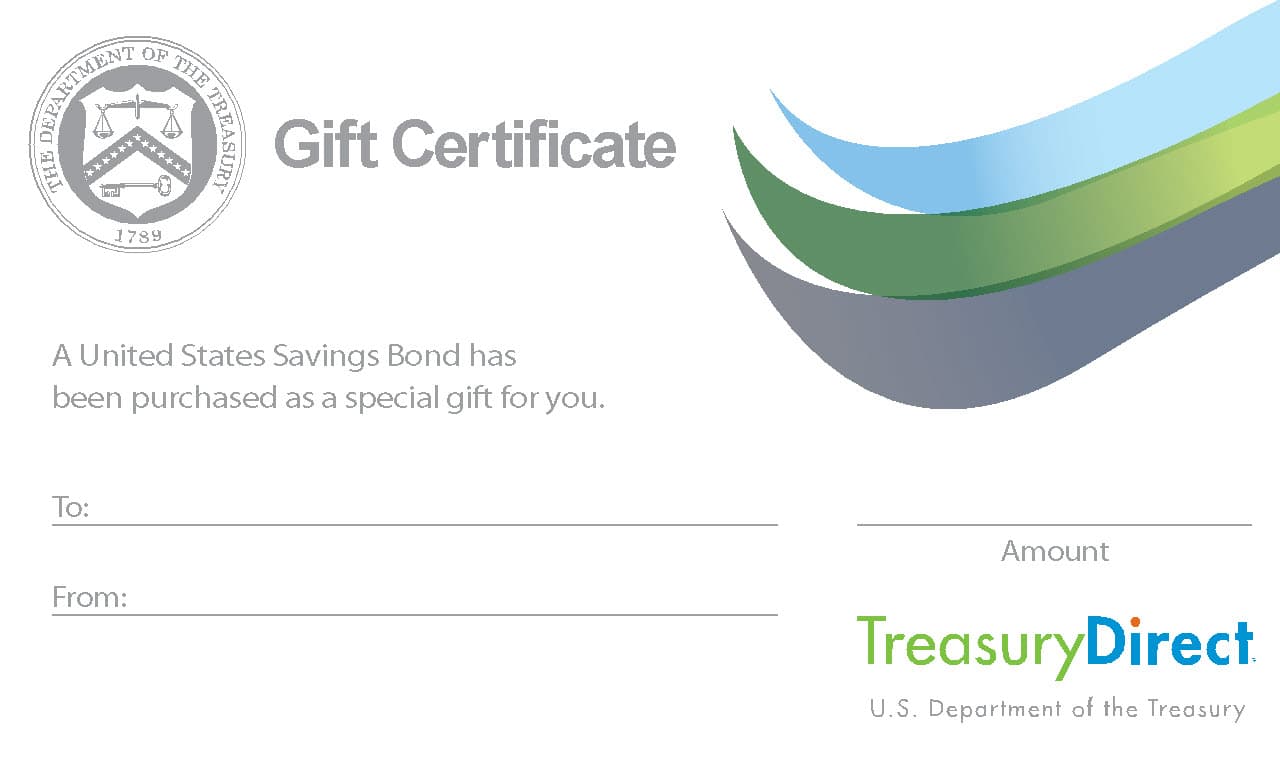
A $100 Series EE savings bond costs $100 and gives a new graduate a government-backed gift instead of cash that can disappear into summer spending. It comes with a paper trail and a purpose, and it still lets you mark the moment with a printable announcement instead of a plain transfer.
Why a savings bond beats cash in the right situation
Cash is flexible, and sometimes that is exactly the point. If the graduate needs money for a deposit, a laptop, or next month’s groceries, send cash and do not overcomplicate it. But if you want a gift that is less likely to disappear into the noise of summer spending, a savings bond is the smarter move because it stays parked and can grow over time.
This works especially well for the graduate who is hard to buy for, already has enough stuff, or is the kind of person who will appreciate an asset more than another envelope. U.S. savings bonds are a popular birthday and graduation gift, and they can be given for graduation or any other occasion, including a new job, a promotion, or no special reason at all.
What kind of bond to give
If you want the simplest version, Series EE bonds are sold at face value. Series I bonds are indexed to inflation, which is why they appeal to relatives who want a gift that can keep pace with rising prices instead of sitting still.
TreasuryDirect lists a 4.26% rate for I bonds issued from May 1, 2026 through October 31, 2026, made up of a 0.90% fixed rate plus inflation; the rate resets every six months. TreasuryDirect caps individual Series I bond purchases at $10,000 per calendar year.
How to give one through TreasuryDirect
This is the part that trips people up, because savings bonds are no longer the old paper certificate tucked inside a card. Gift savings bonds are issued only in electronic form, and both the giver and the recipient need TreasuryDirect accounts for an electronic gift bond.
Here is the cleanest way to do it:
1. Make sure you and the graduate both have TreasuryDirect accounts.
2. Have the graduate’s full name, Social Security number or Taxpayer Identification Number, and TreasuryDirect account number ready.
3. Buy the gift bond and place it in your Gift Box.
4. Keep it there for at least five business days before delivery.
5. Deliver it only after the recipient has a TreasuryDirect account, since the bond cannot be delivered before that.
6. When you deliver it, TreasuryDirect sends the recipient an email announcing the gift.
TreasuryDirect offers more than 25 printable gift announcements in nine categories.
The timing tradeoff you need to know
A savings bond is not a great gift if you want the graduate to use the money immediately. Bonds can be cashed after one year, but if the owner redeems an I bond before five years, they lose three months of interest. That is fine if your goal is to encourage patience, but it is not fine if the graduate needs fast access to every dollar.
Give a bond when you want the money to stay put, grow a little, and feel earmarked for later. Give cash when the graduate needs flexibility now. A gift card is usually the least useful option of the three, because it can get forgotten, boxed up, or stranded on a balance the recipient never remembers to use.
Why families like them for college and beyond
Savings bonds can be especially useful for education expenses or supplemental retirement income, which is why they make sense for graduation. The gift can help with college costs later, but it can also be a small starter asset for the graduate’s first adult savings habit.
Savings-bond interest is not subject to state or local tax, and federal tax can be deferred until the bond is cashed in or matures. The IRS says the education savings bond interest exclusion may apply when Series EE or I bonds are used for qualified higher education expenses, though it phases out at higher incomes. For 2025, the IRS says that exclusion begins phasing out at modified adjusted gross income of $99,500 for single filers and $149,250 for joint filers, and it is fully gone by $114,500 and $179,250, respectively.
The safety and history behind the gift
These bonds are backed by the full faith and credit of the U.S. government, are among the safest investments, and minors may hold them in their own name. That makes them useful for younger graduates too, especially in families that like giving something solid instead of cash that gets spent too quickly.
TreasuryDirect’s timeline lists April 30, 1941 as the date Series E Defense Savings Bonds were announced to help finance World War II, and after Pearl Harbor they became known as War Savings Bonds, or War Bonds. The program has since evolved from those paper-era bonds to today’s electronic EE and I bonds.
This article was produced by Prism’s automated news system from verified source data, official records, and press releases, then run through automated quality and moderation checks before publishing. The system is built and supervised by the people who set the standards it runs under. Read our full AI policy.
Know something we missed? Have a correction or additional information?
Submit a Tip