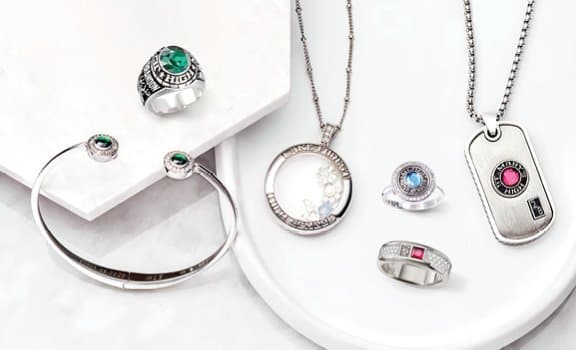
Wealthy Graduates Receive Jewelry as Tangible, Lasting Investment Gifts
A Tiffany necklace sold for $4.2M at Christie's at 10 times its pre-sale estimate. Here's why fine jewelry is the graduation gift that holds — and builds — real value.
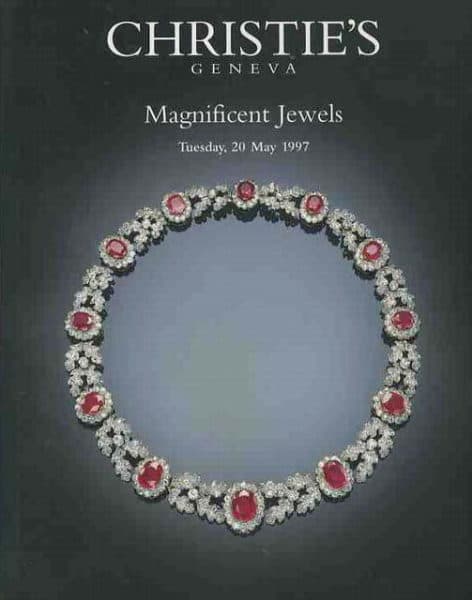
When Christie's Magnificent Jewels sale closed at Rockefeller Center on December 10, 2025, the moment that generated the most buzz wasn't a diamond or a sapphire — it was a Tiffany & Co. Tourmaline and Diamond Necklace from the collection of Max and Cecile Draime, which hammered at $4,223,000, soaring to ten times its low estimate. The sale achieved $46.5 million in total and was 95% sold by lot. The auction was a crystallizing event for a trend that luxury analysts had already been tracking: fine jewelry, especially colored gemstone and gold-heavy pieces, had become the hard asset of choice for wealthy buyers navigating an unusually volatile market.
For graduates entering that world with a financial cushion behind them, the most meaningful gift this season isn't a check or a watch. It's a well-chosen piece of jewelry — one that functions simultaneously as personal treasure and long-term store of value.
The timing matters. Gold surged past the $5,000-per-ounce mark for the first time in history and hit an all-time record of $5,589.38 per ounce on January 28, 2026. Gold started 2025 trading at about $2,624 per ounce, and by late spring had pushed decisively above $3,500, signaling that demand was staying strong even as markets adjusted to shifting rate-cut expectations. That extraordinary run has been the backdrop against which wealthy consumers started treating fine jewelry not just as adornment but as portfolio strategy.
"Whenever you have macroeconomic volatility … the appeal of hard asset investing goes up," said Thorne Perkin, president of investment management firm Papamarkou Wellner Perkin. "Tangible assets, they tend to retain their value or even increase when inflation rises." Mario Ortelli, managing partner at strategic and M&A advisor Ortelli&Co., agreed with that framing, noting a clear "defensive element" to the trend — while adding an important caveat: "Jewelry should not be viewed as a financial asset equivalent to equities or ETFs — liquidity, transaction costs, and dispersion of returns are much higher."
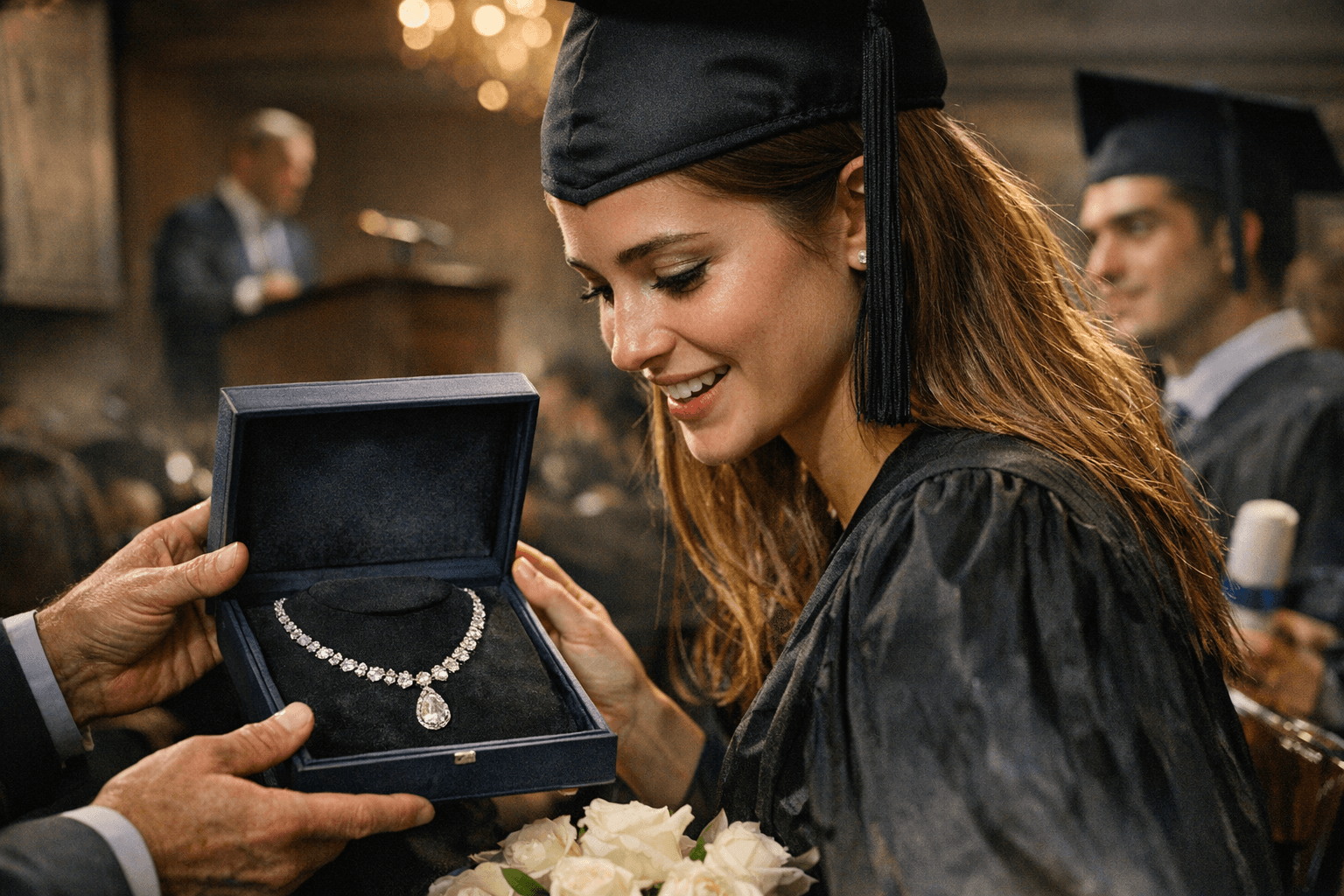
Ortelli's warning is the right one to carry into any gifting conversation at this level. Jewelry does not generate income the way stocks or real estate do, and storage and safety costs are real considerations. But what makes a piece of fine jewelry a genuinely compelling graduation gift — as opposed to a purely financial instrument — is precisely what Ortelli's counterparts are tracking as its most durable appeal. For ultra-wealthy buyers, pieces priced in the hundreds of thousands, or even millions, are increasingly viewed as "hybrid assets: part investment, part cultural object."
The category shift driving demand is specific: sapphires have performed exceptionally well at auction, with a Pair of Exceptional Antique Sapphire and Diamond Earrings achieving $3,064,000 against a low estimate of $1,500,000 at Christie's recent Magnificent Jewels sale. Rubies, sapphires and emeralds are especially popular with ultra-high-net-worth buyers right now as collectors seek alternatives to diamonds. Colored gemstones in particular drew heightened interest at Christie's, pointing to continued demand for rare and unique stones in the global market.
The broader economic context reinforces the logic. Analysts describe a K-shaped economy where the wealthiest consumers continue to spend freely even as others retrench. In the United States, households earning above $250,000 control a disproportionately large share of financial assets, providing sustained demand for high-value goods. Within that segment, Buccellati expects jewelry to continue growing and surpassing soft luxury goods — handbags and accessories — in the high-luxury tier.
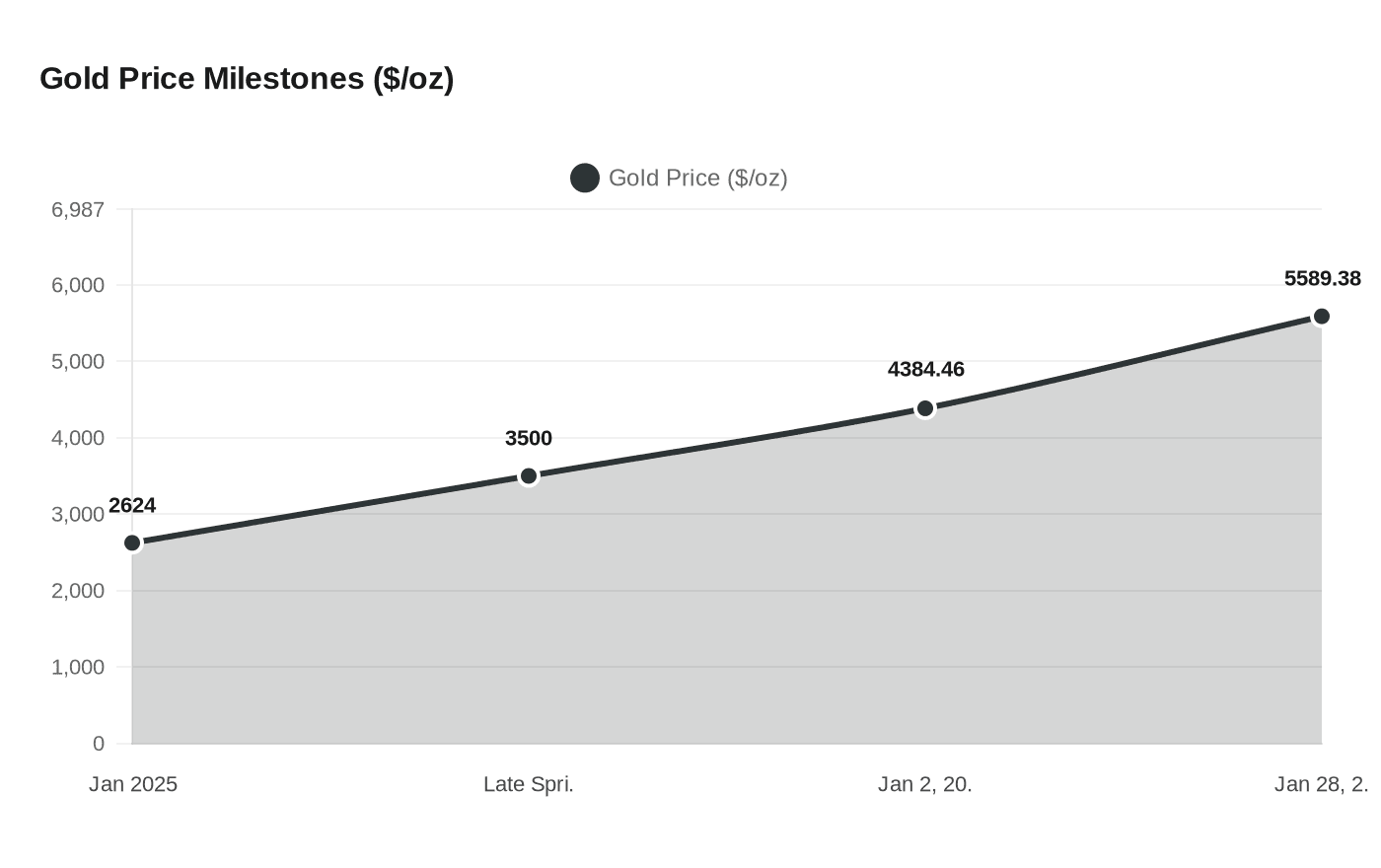
Gold began 2026 at $4,384.46 on January 2 and continued to rise throughout the first month of the year, breaking to a record high of $5,589.38 on January 28. Gold's decline to the $4,300 level as Q1 came to a close has done little to diminish jewelry's appeal as a long-term store of value — resale market strength has reinforced that reputation independently of spot price.
The gift that makes sense for a wealthy graduate, then, is not a piece chosen for its brand logo alone. It is a piece chosen for material quality: a colored gemstone in a well-made setting, a gold-heavy design from a branded house with strong secondary market history, or a signed vintage piece with documented provenance. The Christie's December result — a necklace that cleared its estimate by a factor of ten — is a reminder that the right object at the right moment can do more than commemorate a milestone. It can become one.
This article was produced by Prism’s automated news system from verified source data, official records, and press releases, then run through automated quality and moderation checks before publishing. The system is built and supervised by the people who set the standards it runs under. Read our full AI policy.
Did this article answer your question?