Best Kosher Wines, Spirits and Foods to Gift Seder Hosts This Passover
Nearly 40% of all kosher wine sales happen during Passover; the shopping window is short and the certification rules are strict. Here's what actually clears the KFP bar.

Nearly 40% of all kosher wine sales happen during Passover. That single statistic explains everything: why the best bottles vanish from specialty shelves in the days before the seder, why "kosher" and "kosher for Passover" are two categorically different designations, and why arriving at a host's table with the wrong certification means your gift sits unopened on a counter rather than poured at the table.
The distinction is worth understanding before you buy anything. Regular kosher wines and spirits may be produced on equipment that has been in contact with chametz, the leavened grains that are strictly prohibited throughout the eight-day holiday. A bottle that is genuinely Kosher for Passover, abbreviated KFP, will carry a "P" symbol or the words "Kosher for Passover" directly alongside the standard kosher certification mark on its label. For spirits, the designations to look for are OU-P, OK-P, or Star-K-P. Without one of those specific markings, even a thoughtful, expensive bottle of wine misses the mark entirely. With Passover beginning April 1, 2026, and running through the evening of April 9, the window to find what you want is short.
Here is what is worth bringing.
Wines
1. KFP Provence Rosé (seek the 2024 vintage)
A Provence rosé certified kosher for Passover is the gift that signals genuine thought and refined taste. Château Sainte Roseline, a Provençal estate whose wines appear on KFP-approved selections, produces pale, structured pink wine that works beautifully as an aperitif before the seder begins or alongside the fish course. One critical vintage note from serious kosher wine critics: skip any 2022 or 2023 Provence rosé. Those years produced muted, off-form bottles across the appellation, and the 2024 vintage is what to bring to the table.
2. Full-bodied Israeli Reds
Israeli winemaking has matured dramatically over the past two decades, and the Galilee, Golan Heights, and Judean Hills are now producing Cabernet Sauvignon, Merlot, and Syrah blends that deserve serious attention. For a seder host serving roasted lamb or braised brisket, a full-bodied Israeli red is both culturally resonant and genuinely delicious. An added practical advantage: virtually all Israeli wine is produced under kosher supervision as a matter of course, making KFP-certified bottles from Israeli estates easier to find than their European counterparts. These work particularly well with any seder menu built around red meat.
3. Kosher Aglianico
For the host who has already received their share of Cabernet, an Aglianico certified kosher for Passover is a genuinely surprising and memorable choice. The grape, a southern Italian varietal with ancient roots in volcanic soils, produces deeply colored, high-tannin wines with dark fruit and earthy mineral notes that hold their own against slow-cooked brisket. Finding a KFP Aglianico requires more effort than picking up a standard Israeli red, which is precisely what makes it worth giving.
4. Baron Herzog Zinfandel
Baron Herzog produces some of the most consistently well-reviewed and widely available KFP wines in the United States. The California Zinfandel is a full-bodied red with ripe blackberry and raspberry aromas that pairs directly and reliably with brisket, arguably the most common main course on the Ashkenazi seder table. For hosts feeding a large crowd over multiple seder nights, it is an accessible, approachable bottle that needs no explanation and delivers exactly what the table needs.
5. A 93-Point Kosher Cabernet at $25
Wine Enthusiast has awarded 93 points to a KFP-certified Cabernet Sauvignon available for around $25 through specialty kosher wine retailers, noting aromas of black cherry, mint, and cola with a palate of ripe blackberry and soft tannins. At that price point and score, it represents the kind of value that makes gifting a case entirely defensible. It is the bottle for the host who takes wine seriously but isn't expecting a grand gesture.
6. Celebrity-Backed KFP Champagne via Royal Wine Corp
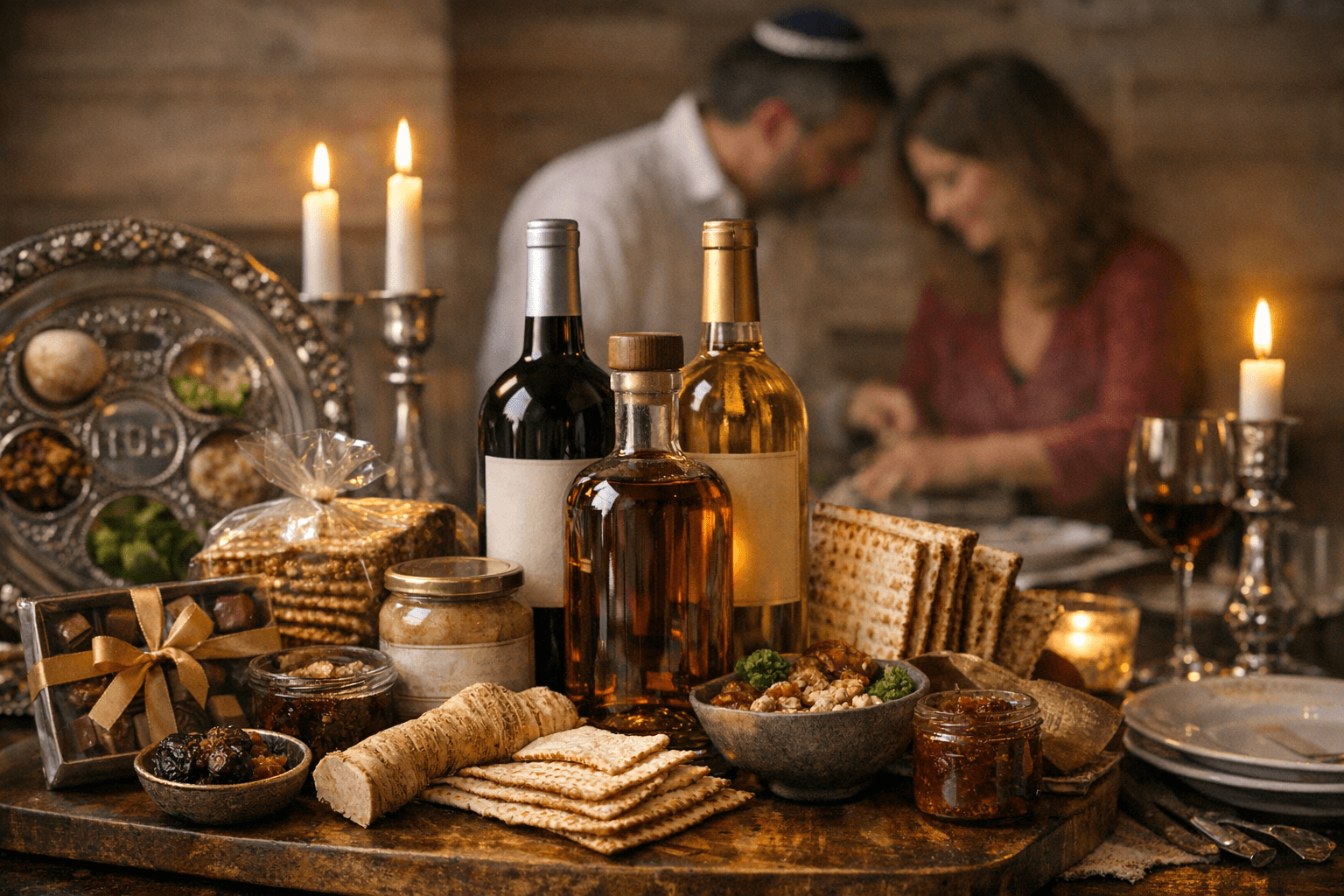
The most unexpected gifting story for Passover 2026 is NBA Hall of Famer Isiah Thomas partnering with Cheurlin Champagne, a French house established in 1788, to release a luxury Champagne certified kosher for Passover. Royal Wine Corp, widely recognized as the world's largest producer and importer of kosher wines and spirits, is also behind KFP wines connected to Vera Wang and former NBA star Amar'e Stoudemire. These bottles span roughly $10 to $500 and offer a natural conversation starter for a host who follows sports, fashion, or simply appreciates something genuinely unexpected at the seder table.
Spirits
7. KFP Brandy and Cognac
The Chicago Rabbinical Council publishes an annual Pesach Liquor List covering brandy, cognac, gin, rum, tequila, vodka, and liqueurs, all verified kosher for Passover when bearing the appropriate certification mark. For the host running an adult-oriented seder with pre-dinner cocktails or who simply appreciates a proper after-dinner drink, a bottle sourced from this list carries the added credibility of rabbinical verification. Brandy and cognac are particularly seder-appropriate given their long association with Jewish holiday celebrations and their natural affinity with the dessert course.
8. KFP Tequila or Gin with a Cocktail Kit
Both tequila and gin appear on the cRc's certified KFP spirits list, and either opens the door to gifting a small cocktail kit alongside the bottle: a certified mixer, fresh citrus, and a handwritten recipe card. Several kosher specialty retailers offer nationwide shipping on KFP spirits, which makes a timely delivery possible even with only days remaining before the holiday begins. The presentation alone elevates what might otherwise be a standard bottle into something considered.
Foods
9. Artisan Passover Macaroons
Coconut macaroons are the defining sweet of Passover, but the gap between tinned mass-market versions and handmade artisan ones is considerable. Small-batch macaroons crafted with premium chocolate coatings and certified KFP make a meaningful standalone gift or a natural companion to a bottle of wine. These work at every price point and require no explanation to any seder host.
10. A Curated KFP Gift Basket
For maximum ease with guaranteed kashrut, a curated Passover gift basket from a trusted retailer removes every certification question at once. Zabar's, the New York institution, offers a KFP basket assembled with coconut macaroons, chocolate-covered coconut macaroons, chocolate-covered almonds, a praline nut roll, fruit slices, and a chocolate and candy assortment, with every item certified kosher for Passover. It covers every course from pre-dinner nibbling through dessert and signals that you understood the stakes of the holiday without requiring the recipient to say so.
One Rule That Overrides Everything Else
When gifting food to an observant household, always look for the word "parve" on the label. Under kosher law, parve foods are neutral, meaning they contain neither meat nor dairy, and can be served at any point in the seder meal regardless of what the host is cooking. Artisan parve chocolates and confections are universally welcome; dairy chocolates served after a meat-forward brisket dinner are not. That single piece of knowledge separates a genuinely thoughtful gift from an awkward one.
A final note for anyone bringing a bottle to the seder in person rather than shipping ahead: it is worth a quick call to the host to confirm which certifying agencies their household accepts. Observant families sometimes apply specific standards about which rabbinical authorities they follow, and a bottle purchased in good faith may still not meet the mark at a particular table. The most luxurious thing you can give any host is the certainty that what you brought will actually be used, and that kind of care costs nothing.
This article was produced by Prism’s automated news system from verified source data, official records, and press releases, then run through automated quality and moderation checks before publishing. The system is built and supervised by the people who set the standards it runs under. Read our full AI policy.
Did this article answer your question?


