Boutique Hub, Local
What indie boutiques ordered in July is on shelves right now — and it's miles ahead of big-box defaults. Here's how to shop those finds by category.
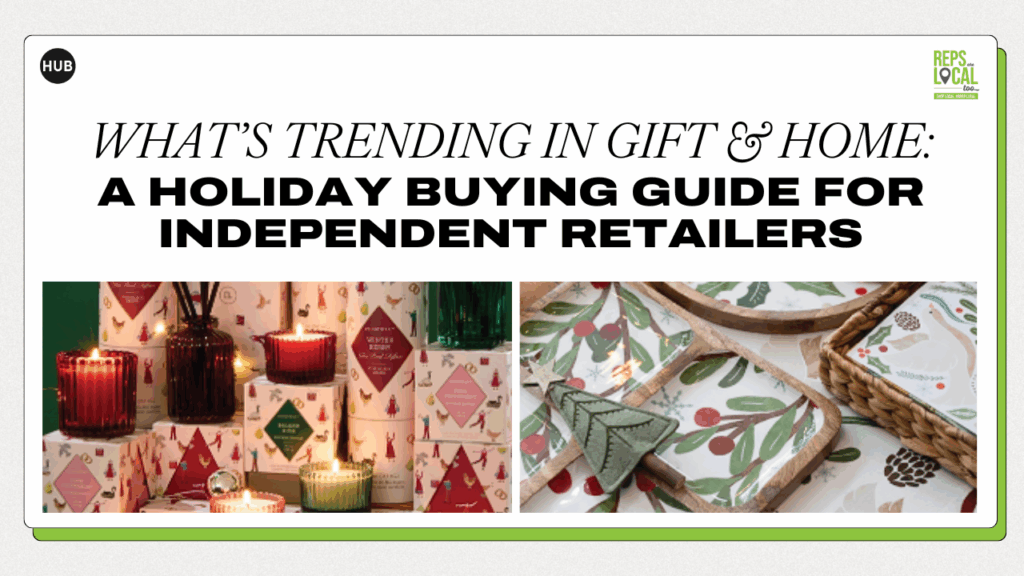
The holiday gifts that feel the most thoughtful rarely come from an algorithm. They come from a shop owner who drove to a regional trade show in July, held the candle, tested the texture of the throw blanket, and said: "My customers are going to love this." That's the reality behind every well-stocked independent boutique you walk into between November and December. The curation happened months before you arrived.
The Boutique Hub, in partnership with the Reps Are Local Too community, mapped out exactly how that process works for indie retailers — and understanding it as a shopper completely changes how you approach holiday gifting. When boutique buyers place orders in July and August, receive shipments in September, and build floor displays by early October, what they're stocking is not a reactive response to the same trend reports driving Target's inventory. It's a deliberate, category-by-category bet on what gift shoppers actually want. Here's how to translate that insider buying calendar into the smartest possible haul for everyone on your list.
Home: Seasonal décor with staying power
The single most important thing to know about boutique home décor right now: the best pieces were bought with longevity in mind. Independent buyers consistently favor seasonal décor that leans nostalgic, because nostalgia sells across demographics and survives trend cycles. Think handcrafted ornaments with personalization options, bottle-brush trees in natural materials like stoneware or wicker, and winter table accents in muted, heirloom-quality palettes rather than the bright plastic cheerfulness of big-box holiday aisles.
When you're browsing the home section of a local boutique, look for pieces that have a provenance story: where they're made, what material they're cast or carved from, whether they're small-batch. Ask the staff directly. A good boutique team knows their product lines well enough to tell you whether that ceramic serving dish came from a woman-owned studio in Vermont or a 200-unit minimum run at a domestic wholesaler. The answer changes the gift. In the home category, the boutique advantage over big-box defaults is almost always material quality and exclusivity: you're unlikely to see the same piece at three other people's holiday tables.
Hostess: Gift-forward pieces that do double duty
Boutique buyers specifically stock what the trade calls "gift-forward" home pieces in the run-up to the holidays: products that read as intentional presents but are also immediately functional. This is the category where indie shops genuinely outshine department stores. You'll find glazed stoneware trivets, artisan candles with genuinely interesting scent profiles, hand-painted holiday tea towels (one of the fastest-growing seasonal categories in independent gift retail), and curated hostess bundles that have already been cross-merchandised together on the floor.
That last point is worth paying attention to. When a boutique displays a linen dish towel next to a small-batch olive oil and a hand-thrown ceramic oil dish, they're not just decorating a table: they're building your gift for you. Resist the urge to pull one item and bring the whole vignette to the counter. A cross-merchandised hostess bundle from a local shop, priced anywhere from $45 to $90, consistently beats the generic wine-and-cheese-board option that every other guest will show up with.
Self-care: The cozy gift corner
The Boutique Hub's merchandising guidance to retailers specifically calls out the "cozy gift area" as a holiday floor priority: a zone where slippers, candles, bath salts, and a pajama set live together, creating a ready-made self-care bundle that gift shoppers can immediately visualize giving. As a shopper, this is the section to head toward when you need something universally appreciated and reliably well-received.

In a boutique context, these products tend to carry better ingredient transparency and more interesting brand stories than their pharmacy or big-box equivalents. Look for bath and body products with short ingredient lists, locally or regionally sourced botanicals, and packaging that isn't primarily a vehicle for a celebrity name. Ask whether the candles are soy or beeswax-based, whether the bath salts are mineral or synthetic fragrance, and whether the brand is carried exclusively by independent retailers. That last detail is a genuine differentiator: some lines work only with indie boutiques, which means you genuinely cannot find them elsewhere.
Kids: Nostalgic lines with handmade credibility
Boutique buyers leaning into nostalgia-linked product lines is nowhere more apparent than in the kids' gift category. The independent retail market has largely moved away from trying to compete with mass-market toys and toward handcrafted, open-ended, and heirloom-quality items: wooden puzzles, hand-knit soft goods, illustrated books from independent publishers, and personalized keepsakes. These are the gifts that photograph well, last past one season, and don't require batteries.
When shopping this section, handmade and small-batch are the two phrases worth asking about. A hand-stitched stuffed animal from a boutique, at a price point that might feel higher than a big-box equivalent, is often made from non-toxic materials, produced in a traceable supply chain, and designed to be kept, not discarded. That framing matters when you're giving to a parent who is already navigating a house full of plastic.
How to shop this: What to ask, what to look for
Walking into a local boutique with a few direct questions transforms a browse into a targeted mission:
- "Is this small-batch or handmade?" (If yes, ask by whom and where.)
- "Do you carry this brand exclusively, or is it at other retailers?" (Exclusivity signals boutique-specific buying.)
- "Can you tell me about the material?" (For home and self-care especially, this separates quality from commodity.)
- "Is this part of a set or bundle?" (Cross-merchandised displays often have pieces that work together.)
One more thing worth knowing: the boutique buying calendar doesn't just inform what's on shelves in November. It also determines what goes on sale after Christmas. Boutique buyers plan markdowns from December 26 through the first days of January, which means the same quality-forward seasonal décor and gift items move to clearance during that window. Shopping a local boutique in early January is one of the most underrated moves in home décor. The crowd is gone, the staff has time to talk, and the products on the floor were chosen by someone who actually cared about them.
This article was produced by Prism’s automated news system from verified source data, official records, and press releases, then run through automated quality and moderation checks before publishing. The system is built and supervised by the people who set the standards it runs under. Read our full AI policy.
Did this article answer your question?