Corporate gifting turns thoughtful, fewer gifts make bigger impact
Companies are cutting the clutter and sending fewer, better gifts that feel chosen, useful, and retention-minded. The smartest holiday spend now works harder per person.

Corporate gifting is getting sharper, quieter, and far more deliberate. The old logic of sending the same box to everyone is fading fast, replaced by a simpler idea: one useful gift that lands well is worth more than three forgettable ones that never leave a drawer.
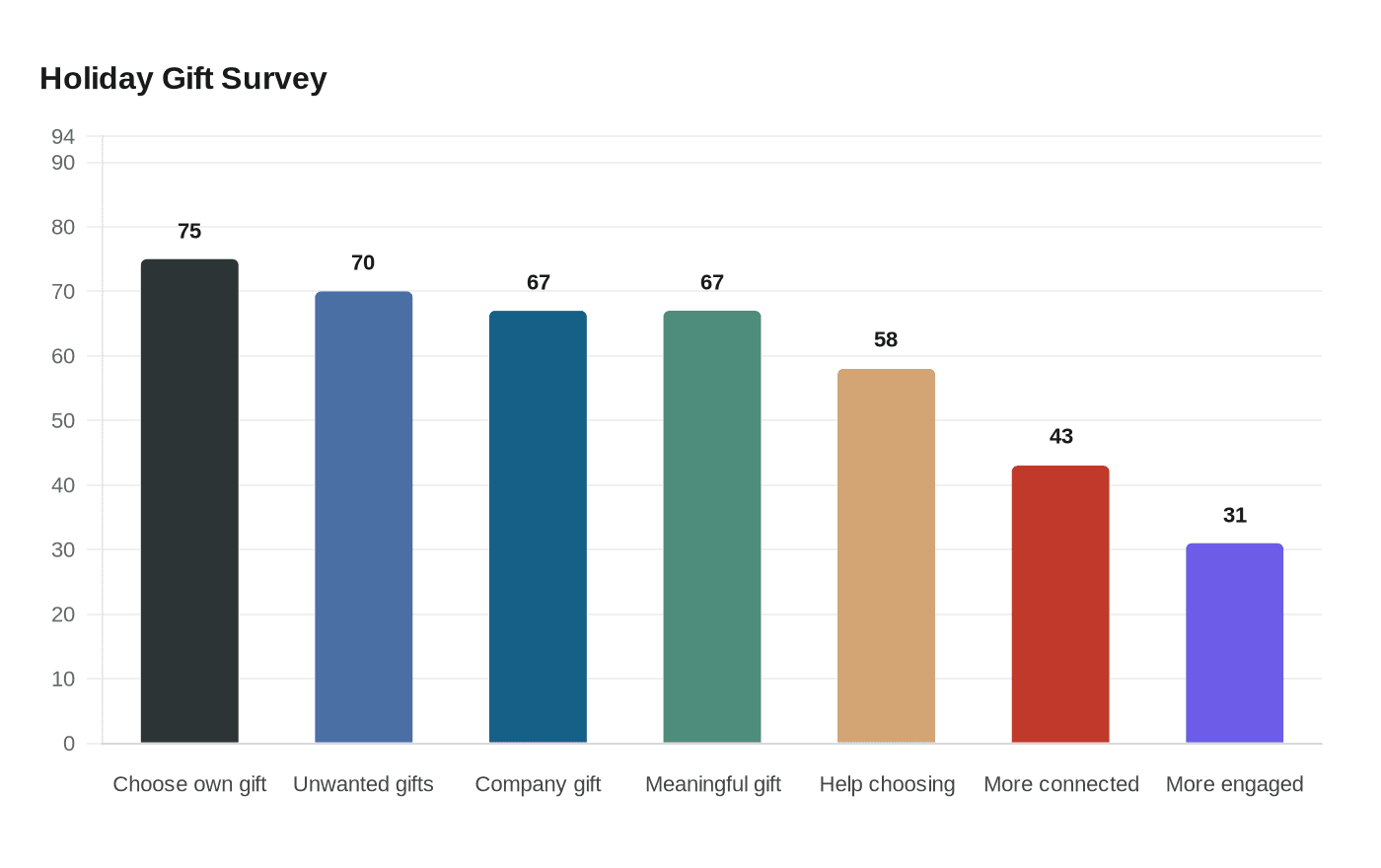
That shift matters because the stakes are higher than etiquette. In Snappy’s 2025 holiday gifting survey, 70% of respondents said they had received gifts they did not want, while 58% wished they had help choosing the right gift. At the same time, 75% of employees said they would love to choose their own gift. That is the real briefing for 2026 holiday business gifting: less bulk, more relevance, and a lot more room for judgment.
The new logic behind fewer gifts
The smartest companies are treating gifting less like seasonal obligation and more like a tool for engagement. Snappy’s 2025 report found that 67% of employees wished they received a company holiday gift, and 67% said a meaningful gift increased job satisfaction. It also showed that 43% felt more connected to their team and culture after receiving one, 31% felt more engaged and more likely to recommend their company, and 29% said it made them want to stay longer.
That is why the most effective holiday gifts are not the loudest. They are the ones that feel considered, easy to use, and appropriate for the relationship. A smaller number of better gifts is not just a budget story, it is a signal that the sender knows the difference between a gesture and a task.
Client thank-yous should feel polished, not promotional
For clients, the goal is to be memorable without being generic. The strongest gifts feel like a thank-you, not a marketing package, which means they should be useful, tasteful, and easy to share or enjoy without explanation. That is especially important because 86% of customers in Snappy’s 2025 report said a brand gift improved their perception of the brand.
The safest approach is usually the most effective: choose something with clear utility, premium presentation, and enough flexibility that it does not land as one more object competing for desk space. If you are sending to a group, keep the experience clean and brand-safe. A gift that looks refined in a New York office and still makes sense for a remote client in Washington, DC, is doing the job properly.
Employee appreciation works best when it gives people choice
Employee gifts fail when they assume a shared taste that does not exist. The data makes that clear: 70% of people have received gifts they did not want, and three-quarters of employees say they would rather choose for themselves. That is why the best employee appreciation gifts in 2026 are increasingly flexible, not fussy.
A meaningful gift does more when it respects the recipient’s preferences. It can be a curated selection with a few good options, a budget that lets people choose what they actually want, or a gift that solves an everyday problem rather than creating one. The point is not extravagance. It is usefulness with a little pleasure built in, which is often what people remember long after the holiday season ends.
The broader workplace backdrop helps explain why this matters. The American Psychological Association’s 2025 Work in America survey found that the American workplace is in flux, shaped by technology, economic shifts, and policy changes, and that workers want transparent communication and empathetic leadership. Snappy’s 2026 newsroom added another telling note: feeling appreciated can outrank pay raises as a reason employees stay. That makes holiday gifting less like ornamentation and more like a visible form of leadership.
Last-minute executive gifts need to be simple, elevated, and safe
Executive gifting has its own rules because the margin for error is smaller. A last-minute gift should never look rushed, which means you need something that reads as polished from the first moment it is opened. The best choices tend to be understated, well-presented, and easy to use right away, with no awkward setup or explanation required.
This is where fewer, better gifts have a real advantage. Instead of sending a stack of branded items, select one gift that feels intentional enough to stand on its own. Think in terms of fit, not volume: a gift should match the pace, taste, and practical reality of the person receiving it. If it looks expensive but behaves poorly, it is not a luxury gift. It is clutter in nicer packaging.
What makes a gift feel personal and brand-safe
Personal does not have to mean private, and brand-safe does not have to mean bland. The sweet spot is a gift that suggests the sender paid attention without overreaching. That can mean choosing a universally useful item, keeping the branding subtle, or letting the recipient make the final choice.
A few principles separate thoughtful gifts from forgettable ones:
- Favor utility over novelty when the audience is broad.
- Use restraint in branding so the gift feels owned by the recipient, not the sender.
- Choose presentation that feels clean and well-composed, because packaging is part of the message.
- When possible, build in choice, since 75% of employees say they want it.
- Match the gift to the relationship, because clients, teams, and executives need different levels of formality.
This is also where a $50 gift can outperform a $500 one. If the smaller gift is more useful, better timed, and better matched to the person, it will feel more luxurious because it respects the recipient’s time and taste.
The small-business layer adds meaning
There is another reason the “fewer, better” approach matters now: it gives companies a cleaner way to support small businesses. Small Business Saturday, first observed in 2010, was backed by a unanimous Senate resolution in 2011, and by 2012 officials in all 50 states were participating. The U.S. Chamber of Commerce says there are 33.2 million small businesses in the United States, representing 99% of all businesses and roughly 40% of U.S. GDP for the past 20 years.
That scale matters because holiday gifting dollars can either disappear into bulk sameness or flow toward smaller makers, local vendors, and more distinctive suppliers. American Express Shop Small has long pushed that idea forward, and it fits the new gifting mood perfectly. A more selective gifting strategy is also a more intentional way to support the businesses that depend on seasonal spending.
The practical takeaway
The holiday business gift that lands in 2026 will not be the one with the most items inside. It will be the one that feels chosen, not assigned. With employees craving choice, clients responding to better perception, and workplaces asking for more empathy and clarity, the strongest gifts are the ones that do one thing well: make the recipient feel seen.
That is the new standard for corporate gifting, and it favors restraint, precision, and a little more humanity than the old bulk-swag model ever allowed.
This article was produced by Prism’s automated news system from verified source data, official records, and press releases, then run through automated quality and moderation checks before publishing. The system is built and supervised by the people who set the standards it runs under. Read our full AI policy.
Did this article answer your question?


