Holiday shopping trends shaping 2026 strategy
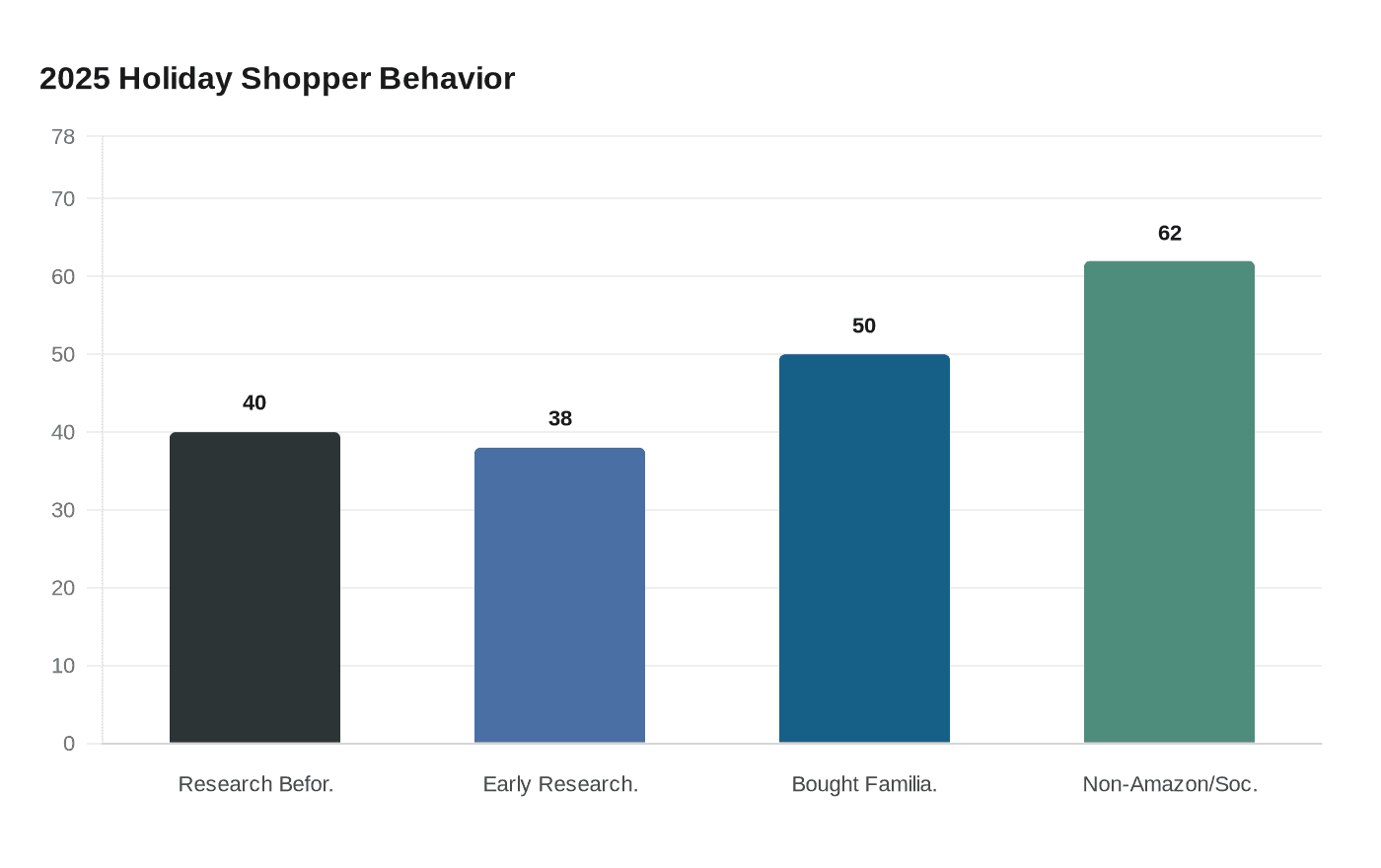
Two in 5 Americans research holiday gifts before Black Friday, and with $1.35 trillion spent in 2025, the data for 2026 is unambiguous: start earlier and curate smarter.

The 2025 holiday season didn't just break records; it redrew the map. Americans spent more than $1.35 trillion during the season, with nearly half of shoppers reporting they spent more than the year before. That number, drawn from an eMarketer forecast published in February 2026, sets the baseline for what 2026 is competing against. And the research from The Trade Desk Intelligence and Appinio, which surveyed 400 U.S. shoppers in January 2026, makes one thing clear: the shoppers who won that season, meaning those who found the right gifts without overspending or scrambling, started earlier, searched wider, and filtered smarter.
Here is how to use that data as your personal playbook.
Rule 1: Start Building Your Shortlist Before Halloween
The single most actionable finding in the Trade Desk Intelligence and Appinio data is this: two in 5 Americans begin researching holiday purchases before Black Friday, and 38% of those early researchers go on to buy during that window. That is not a niche behavior; that is a significant share of the gifting population making decisions weeks before the traditional season even opens.
What this means practically: the best prices and the widest selection are available before the late-November rush. Brands and retailers know the early window exists and often release promotions specifically to capture it. If you wait until Cyber Monday, you are competing with everyone, paying peak-urgency prices, and gambling on stock availability.
Checklist item: Draft a working shortlist for each recipient by the first week of October. It doesn't need to be final; it needs to exist so you can watch for deals and act when they appear.
Rule 2: Anchor Your Budget to Value, Not to a Price Ceiling
The research is consistent on what drove 2025 purchase decisions: value and practicality won over pure luxury. Shoppers prioritized mid-priced, useful items, and this held even as total holiday spending climbed. The takeaway is not that people spent less; it is that they spent more intentionally. A $75 item that solves a real daily problem outperforms a $200 item that sits on a shelf.
Half of Americans said they bought from both their familiar go-to brands and new-to-them brands during the holidays. That behavioral split creates two distinct gift opportunities: the reliable, trusted item the recipient already loves in an upgraded version, and the discovery gift that introduces them to something they didn't know they needed. Neither requires spending at the high end of the market to land well.
Checklist item: For each person on your list, write one sentence describing a friction point in their daily routine. Then find the mid-priced product that removes it. That is your gift.
Rule 3: Discover Gifts Where Gift-Givers Actually Spend Their Time
Here is the number that changes how most people build a gift shortlist: 62% of U.S. shoppers surveyed bought online through channels that were neither Amazon nor social media. That same 62% figure describes how gift-givers spend their media time, specifically outside of social platforms, in environments like connected TV, streaming audio, gaming, and editorial content sites. Gift discovery is happening through a much wider channel mix than most shoppers assume.
The practical implication: editorial gift guides published on media sites, recommendations surfaced through streaming TV, and content encountered while gaming are all shaping purchase decisions. If you are only browsing Amazon and Instagram for ideas, you are missing the channels where a large share of your peer group is actually finding their gifts.
Checklist item: Add at least two non-social discovery sources to your research routine. Curated editorial guides, connected TV recommendations, and independent review sites consistently surface products that never appear in algorithm-driven feeds.
Rule 4: Don't Ignore the Store; Just Use It Differently
E-commerce is growing nearly five times faster than in-store retail. Yet 79% of actual purchases in 2025 still happened at a physical register. These two facts are not contradictory; they describe how modern holiday shopping actually works. Digital channels drive discovery and build the shortlist. The store closes the deal.
For gift-givers, this means the optimal path is research-heavy online browsing followed by deliberate in-store verification. You find the candle brand, the tech accessory, or the cookware piece through an editorial guide or streaming ad. You confirm the quality, the size, and the feel in person before committing. The mistake most shoppers make is treating these two phases as alternatives rather than as a sequence.
Checklist item: For any gift over $50, build your shortlist online and visit one physical retailer to confirm before purchasing. This step eliminates the most common gifting regret: buying something that looked better on screen than it does in hand.
Rule 5: Filter by Interest and Occasion, Not by Recipient Demographics
The research is clear that curated lists organized by interest, hobby, or price point convert undecided shoppers more effectively than broad, demographic-sorted roundups. The "gifts for her" framing is the least useful search you can run. The "gifts for someone who meal-preps every Sunday" framing gives you a shortlist that actually fits.
This applies both to how you search for ideas and to how you evaluate gift guides. The best guides in 2026 will be organized around a specific occasion, cultural context, or interest cluster. Influencer recommendations work similarly: the most useful ones come from creators whose specific interest overlap with the recipient's, not from general lifestyle accounts recommending everything at once.
Gen Z shoppers are already operating this way by instinct, with 43% starting their product searches on TikTok rather than on Google or Amazon, and 60% making final decisions based on influencer input within their interest communities.
Checklist item: When searching for gift ideas, replace demographic search terms ("for dad," "for teens") with interest-based terms ("for someone who runs at 5am," "for the person rewatching every Criterion Collection film"). The specificity narrows the field to gifts that will actually resonate.
Building the Full Playbook
The five rules above are not independent; they compound. An early start gives you access to the best deal windows. A value-first mindset stops you from overspending on the wrong items. Wider discovery channels surface options you wouldn't find otherwise. In-store verification prevents expensive mistakes. And interest-based filtering ensures that whatever you buy is specific enough to feel chosen rather than grabbed.
The 2025 data makes the case plainly: $1.35 trillion was spent during the holiday season, and the shoppers who navigated it best were the ones with a strategy that began months before the checkout rush. The 2026 season will reward exactly the same approach.
This article was produced by Prism’s automated news system from verified source data, official records, and press releases, then run through automated quality and moderation checks before publishing. The system is built and supervised by the people who set the standards it runs under. Read our full AI policy.
Did this article answer your question?


