Holiday ski gifts for every skier, from rippers to Deadheads
The smartest ski gifts solve real mountain problems, from frozen toes to foggy goggles, and the best guides sort them by skier type.
Why ski gifts work when they solve a problem
The best ski gifts are never just “for skiing.” They are for the cold chairlift, the soggy boot bag, the fogged-up goggle, the kid who refuses to stand still, and the friend who wants one more lap even when everyone else is done. That is exactly how the strongest holiday ski guides are built now: by skier type, not by random stocking-stuffer logic. SKI Magazine’s updated gift guide is organized around skier dudes, lady shredders, little rippers, tech-minded skiers, skier homes, and an online-exclusive Grateful Dead section, while REI’s and Christy Sports’ newer guides break gifts into similarly practical buckets like beginners, powder-chasing skiers, skiers who hate the chill, warmth, safety, and smart tech.
That structure makes sense when the ski industry is still healthy enough to justify very specific shopping. The National Ski Areas Association reported 61.5 million skier visits in 2024-25, the second-highest total on record, with operating ski areas rising from 484 to 492. Michael Reitzell and NSAA also pointed to a record season in the Pacific Northwest and a sharp Midwest rebound, which is a good reminder that people are not just dreaming about ski season. They are showing up for it.
For the resort regular who lives for easy wins
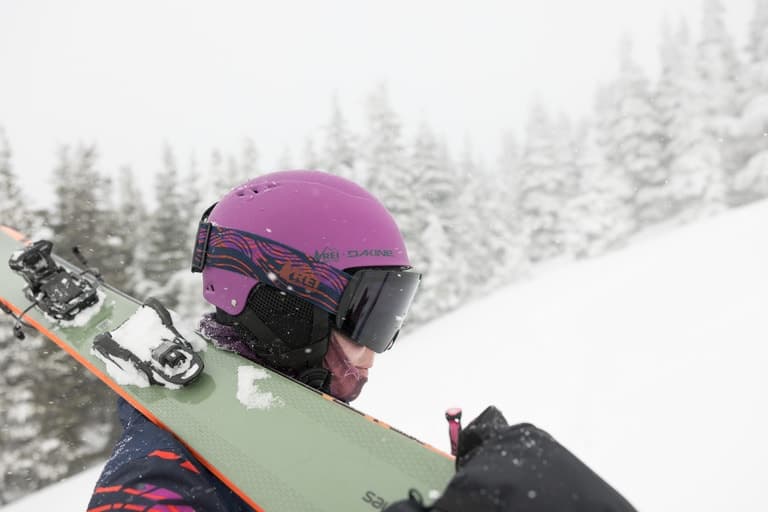
If your skier spends most of the season at the resort, give them something that makes every ordinary day feel smoother. REI’s DAKINE x REI Co-op Daytripper Mips Snow Helmet is the kind of gift that earns its keep immediately: it is $62.83 on sale, down from $127, and it has a partially recycled hard shell, Mips protection, a Fidlock magnetic buckle, and 10 passive vents. That is a very good price for a helmet with real safety and comfort features, especially compared with the pricier wave of premium helmets landing closer to the $130 to $190 range.
For the same skier, goggles matter as much as the helmet. The Anon M6 Snow Goggles with MFI Face Mask run $294.95 at REI, which is not cheap, but the magnetic face-mask integration, bonus lens, and fog-fighting seal make the price easier to swallow for anyone who skis in cold, stormy conditions. This is the kind of gift that fixes a daily annoyance instead of adding another dusty gadget to the gear closet.
For the backcountry obsessive who already owns three beanies and too much corduroy
This is where the ski guide gets gloriously specific. SKI’s backcountry-leaning picks included the WNDR Vital 100 at an MSRP of $699, a ski built with bio-based materials and pitched for maximum edge hold, which makes it a smart gift for the skier who cares about performance and sustainability in equal measure. SKI also called out the Tactica M100.X Bundle Pack at $55, a 12-bit multitool setup that feels tailor-made for the person who fixes everything in the parking lot, and the Ortovox 3+ Avalanche Transceiver at $310, which is not a luxury in avalanche terrain so much as a non-negotiable.
If you want to spend a little less while still giving something genuinely useful, REI’s ski boot accessories section is full of fixes that backcountry skiers actually appreciate. The DryGuy Force DX Dry Boot Dryer is $112, and the DAKINE Boot Pack DLX 75 L is $138, with a tarp-lined boot compartment and room for helmet, goggles, gloves, and layers. Those are practical gifts for anyone who lives out of the truck and hates starting the day with cold, damp boots.

For lady shredders and the skier who is always cold
The best gift for this skier is comfort that does not feel fussy. Christy Sports’ staff picks make that point well: Charlotte B. recommended the Sidas Fusion Uni S-1400B Heated Socks, and the pair is $219.97 on sale from $439.95, with Bluetooth-controlled warmth and batteries rated for up to 16 hours. That is an outrageous amount of warmth, but if your person is the type who quits when toes go numb, it is exactly the right kind of overkill.
If socks feel too niche, the Sidas Heat Vest + Slim Powerbank Mens is $129.96 on sale from $350, and the women’s Salomon S/Pro Supra Dual BOA 105 Ski Boots are $552.97, down from $789.95. The vest gives you five heated zones, a thin layer profile, and smartphone control, while the dual-BOA boots are for the skier who wants fit dialed in without the old buckle-and-hope routine. Between the two, you are solving warmth and performance at the same time.
For little rippers, keep it warm and durable
Kids do not need precious gifts. They need gear that survives snow angels, lift-line snacks, and the walk from the parking lot. Christy Sports’ Town Hall Down Town Puffy Kids is $112 on sale from $160, and the brand itself was started in Steamboat Springs, Colorado by parents who wanted better, more sustainable kids’ clothing. The jacket uses recycled down and a PFC-free DWR finish, which is exactly the sort of thoughtful design that matters more than a loud print.
Pair that with the Smith Scout MIPS Helmet Juniors, now $42.96 on sale from $105. It has MIPS protection, eight fixed vents, removable ear pads, and all-season certification, which means it works in the snow, on a bike, and through enough growth spurts to feel like money well spent. For kids, that combination of protection and adaptability beats novelty every time.
For the tech nerd and the person who wants every run to feel cleaner
REI’s 2025 guide leans hard into the tech-obsessed skier, and I think that is the right instinct. The Salomon S/PRO Supra BOA 120 GW Ski Boots are $552.93 on REI, down from $789.95, and the appeal is not just the price drop. The BOA Fit System, Exowrap construction, and Power Spine support are all about micro-adjustability and better heel hold, which is exactly the sort of improvement a gear-head notices on run one and talks about all season.

Christy Sports’ Outdoor Tech Chip Ultra 2.0 Wireless Snow Helmet Audio is another very on-brand tech gift at $229.95. It is Bluetooth-compatible, gives 12 to 14 hours of play time, charges in 1.5 hours, and uses a single oversized button that works with gloves on. That is the opposite of fiddly, and on a chairlift, that matters more than any spec sheet.
For skier homes, travel days, and the trunk that smells like wet gloves
The home-gift section is where this whole category becomes less about performance and more about sanity. REI’s DAKINE Boot Locker 69 L costs $90, while the DAKINE Boot Pack DLX 75 L is $138 and gives you a tarp-lined boot compartment plus space for the rest of the kit. If your skier travels often, either bag solves the most annoying part of ski gear, which is that it multiplies the second you open the garage door.
I would also include the DryGuy Force DX Dry Boot Dryer at $112, because nothing improves a winter morning faster than putting on boots that are actually dry. REI says it dries footwear in about an hour, and that is the sort of gift people never buy for themselves but absolutely brag about after the first thaw-free morning. Add a pair of insoles if you want to be extra thoughtful: REI’s SIDAS 3Feet Winter High insoles are $21.93 on sale, a small upgrade that can make a boot feel instantly better.
For the Deadhead who skis, or the skier who is basically a Deadhead
SKI’s online-exclusive Grateful Dead section is the kind of niche, joyful detour that tells you this guide understands personality as well as equipment. If your skier wants lift laps with a soundtrack and a little counterculture in the mix, that section is a reminder that ski style is cultural, not just technical.
That is the real trick with ski gifting: the best present is not the most expensive one, but the one that solves the exact cold-weather problem your skier complains about every season. Warm toes, dry boots, better fit, safer head protection, and fewer fogged lenses are the gifts that get used, not stashed, and those are the ones that turn holiday spending into a better winter.
This article was produced by Prism’s automated news system from verified source data, official records, and press releases, then run through automated quality and moderation checks before publishing. The system is built and supervised by the people who set the standards it runs under. Read our full AI policy.
Did this article answer your question?


