How a Gift Closet Helps You Be a More Thoughtful Friend and Neighbor
A gift closet turns spontaneous thrifting finds and sale scores into acts of genuine connection — and it fits in a single drawer.
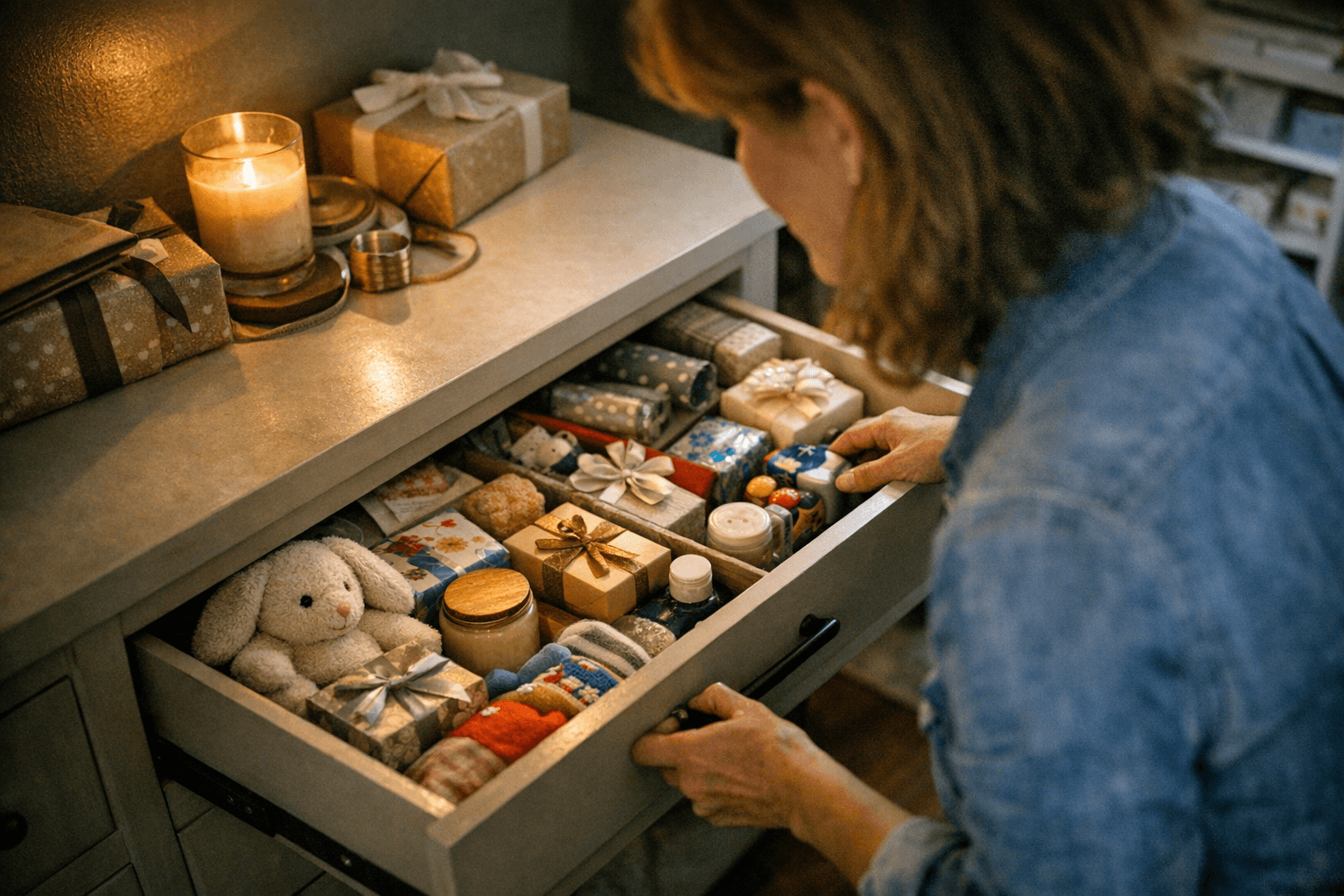
The best gifts rarely come from a panicked last-minute run to the store. They come from the person who spotted a cookbook at the thrift shop three months ago and thought of you before you even knew you needed it. That person probably has a gift closet, and it likely started the same way most of them do: by accident.
What a gift closet actually is
"Simply put, a gift closet is a stockpile of great gifts for unexpected circumstances." It ensures that when life throws you a surprise gifting opportunity, you're prepared. More specifically, birthday cards, occasion cards, gift inserts, tags, ribbon, paper, and tissue can all live in a gift closet alongside the gifts themselves. The concept isn't new, but it has quietly become one of the most practical tools in a thoughtful person's home.
The origin story is almost always the same. It begins with a container of wrapping paper and some saved bows, the kind of thing most people already have stashed in a closet or under a bed. Then it evolves. While out shopping or thrifting, you come across a really great cookbook or find a deal on a favorite reusable bag. Sometimes you have a recipient in mind; other times you just have an inkling you'll know who the gift is for later. Eventually you accumulate enough gifts, wrapping, and cards to create an intentional space in your home just for gifting. That space, as one early adopter of the practice put it, becomes "one of my favorite tools for being a thoughtful friend and neighbor while also saving money and resources."
The habit of saving gift bags and tissue from received presents is itself a small inheritance, the kind of resourceful domestic practice passed down quietly from one generation to the next. The practice of reusing bags and boxes received as gifts keeps wrapping materials out of the landfill and reduces spending on packaging.
Where to put it (your space doesn't need to be large)
This is the part that stops most people before they start. They picture a dedicated room, or at minimum a full empty closet, and conclude they don't have the space. Neither is true. Your gift station doesn't have to be a whole closet or even a closet at all. You can use an empty kitchen or desk drawer, part of a bookcase or cabinet, or storage bins to organize and hide your gift station out of sight. Even a single small shelf is enough to begin.
A dedicated gift closet means organizing everything in one tidy, accessible space. It could be a small, affordable piece of furniture, but the ideas adapt easily to a closet, drawer, or even a storage box. You don't need to dedicate an entire closet in your home to gifts. As one creator who documents gift closet building put it, "I truly think any shelf anywhere would work!"
The practical upside of keeping everything in one place is significant: many people have stopped on the way to an event to grab a gift bag or box because they forgot about or couldn't find something suitable they already had. A consolidated gift station solves that problem entirely.
How to stock it thoughtfully
A gift stash shouldn't be a hodgepodge of random things you wouldn't use yourself, but a well-thought-out, carefully shopped, available stash of items you can gift to friends, coworkers, and family for last-minute dinner invites, birthdays, housewarming gifts, and moments when someone needs a pick-me-up after an illness.
The best approach to stocking it combines two modes of acquisition: intentional and opportunistic. Keep several gift items of varying price points and collect them throughout the year. When shopping, you may find a "too good to be true" item, a sale item, or something you love enough to purchase in multiples. Thrift stores are particularly rich territory: one creator regularly chronicles sourcing items from thrift stores, searching for knickknacks, accessories, stationery, vessels, and more to build gifts for loved ones.
You can save significantly by being on the lookout for sales all year long. One strategy is to start looking in the spring and then buy one or two items throughout the year, which also helps spread out spending. Then stash your gifts away. If you're looking for token or hostess gifts, keep your eyes open at back-to-school time, the holidays, Valentine's Day, and Easter. Candy, chocolates, candles, dishes, small gift items, and school supplies often go on great sales at these times. Stock up and save them to repackage as gifts.
A strong gift closet covers a range of occasions rather than clustering around one. Good categories include teacher appreciation, greeting gifts for new neighbors, "thank you" presents, grief gifts, welcome home presents, and host gifts. It helps to have gifts on hand for adults, kids, and pets, and to have options for both happy occasions and tough situations, everyday gatherings and holidays.
The wrapping side of the equation
The gift itself is only half of what a gift closet holds. In addition to a stash of gifts, it's worth maintaining a stash of wrapping paper, cards, tags, tape, and other gift-wrap supplies, including generic paper and cards that can be used for any occasion. Keep all the gift bags you receive and any gift wrap that can be reused.
Putting effort into wrapping or presenting gifts shows the recipient how much you care. Presentation matters not because it needs to be elaborate, but because it signals intention. A thrifted candle in a saved tissue-lined bag, finished with a handwritten card, lands entirely differently than the same candle handed over unwrapped. Thank-you notes, custom stationery, pens, and stamps are all worth keeping in the gift station too.
The mindset behind the closet
What separates a gift closet from mere hoarding is the relationship between the objects and the people in your life. Many gifts can obviously be given for many different events or occasions. When shopping, be mindful of gift-giving and how perfect a particular find may be at a later date. The speculative purchase, the item you pick up without a specific recipient in mind, is entirely valid. The closet is what makes the impulse pay off.
A useful rule: do not buy things just to fill up your closet. Start by looking at your own house. Are there any unused products or vintage pieces that deserve a new home? The goal is not accumulation. It is readiness. The gift closet makes you the person who shows up to the housewarming with something that feels chosen rather than grabbed, because it was chosen, just weeks or months earlier when the pressure was off and the judgment was clear.
Once this setup has been in place for some time, it consistently saves both time and money. More than that, it shifts the entire experience of giving from reactive to generous, from stressful to genuinely warm. The friend who always seems to give the perfect gift at exactly the right moment usually isn't luckier than you. They just have a shelf somewhere.
This article was produced by Prism’s automated news system from verified source data, official records, and press releases, then run through automated quality and moderation checks before publishing. The system is built and supervised by the people who set the standards it runs under. Read our full AI policy.
Did this article answer your question?


