Meta’s 2026 holiday guide focuses on trust and creator-driven shopping
Meta says holiday shopping now starts with trust, a creator, and a message thread, not a last-minute search.
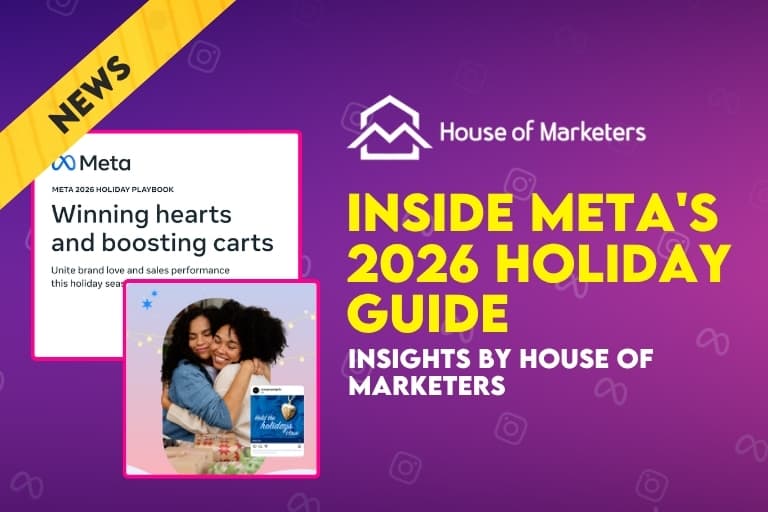
Meta’s 2026 holiday roadmap starts in Q2. Creator partners and content briefs come first, months before most shoppers think about gifts. The holiday shelf now gets built in the scroll. Gifting season looks less like a December sprint and more like a long runway, with trust, creator content, and messaging doing the heavy lifting before shoppers ever hit the buy button. Meta’s bet is blunt: if people trust the brand, see it from a creator, and can move easily into chat or checkout, the gift feels easier to choose.
Trust is the first gate
Meta’s clearest message is that trust comes before transaction. Meta says 82% of consumers say they need to trust a brand before buying, and 79% say convenience matters at the point of sale. Those numbers explain why holiday discovery is no longer just about showing up loudly in December; it is about looking reliable enough in June and July that the sale feels obvious later.
Holiday shoppers are not starting from zero. Meta says 85% of global holiday shoppers use its technologies on a weekly basis, which gives Facebook, Instagram, WhatsApp, and the rest of the ecosystem a built-in role in how gifts get surfaced, repeated, and remembered. When a platform is already part of the daily routine, trust signals and convenience cues start to matter more than a flashy one-time campaign.
Creators now do the persuading
Meta says 71% of consumers make a purchase within days of seeing creator content on its platforms, which is why creator influence has moved from nice-to-have to core holiday strategy. If a product keeps appearing in Reels or in creator-led posts, it starts to feel familiar before the shopper has even decided to look for it.
In a discussion of shopping in India, Meta put it this way: “the future of shopping is found in a scroll, sparked by a creator, and closed on a messaging surface.” Discovery starts in the feed, persuasion comes from a creator, and the final nudge happens in chat, where questions get answered faster and hesitation gets shorter.
For shoppers, that is why some gifts seem to appear everywhere at once. They are not necessarily the best products on paper. They are the ones with the cleanest creator explanation, the easiest visual payoff, and the shortest path from curiosity to confirmation.

The season now runs on a Q2, Q3, Q4 calendar
Meta is no longer treating holiday planning as a late-year event. Its 2026 roadmap is broken into three phases: Q2 is for identifying creator partners and developing content briefs, Q3 is for launching and optimizing campaigns, and Q4 is for scaling what works during the busiest shopping season. By the time most shoppers start thinking about gifts, Meta expects the discovery work to already be in motion.
The framework matches how products actually spread. The early work is not about pushing volume. It is about deciding which creators can credibly explain a product, what kind of content will make sense in a feed, and which audiences are most likely to convert once they see the item repeated across Meta surfaces. By Q4, the goal is not to invent demand. It is to amplify the products that have already earned attention.
What changed from the 2024 playbook
Meta’s 2026 holiday handbook builds on its 2024 framework. That earlier version leaned on a four-step framework, plan, experiment, push, and sustain, and Meta’s own survey data showed that 54% of holiday shoppers discovered brands or products on Meta apps while 55% said those apps influenced their purchases. The 2026 version keeps the same basic ambition, but it is more specific about where the leverage lives: creator trust, omnichannel selling, and AI optimization.
Meta has kept layering commerce tools across its apps. In 2026, it has continued pushing shopping and creator features, including new AI tools on Facebook and a Facebook Marketplace holiday shop that launched in December 2025. The company is also making selling on Marketplace faster and easier with more AI support.
This article was produced by Prism’s automated news system from verified source data, official records, and press releases, then run through automated quality and moderation checks before publishing. The system is built and supervised by the people who set the standards it runs under. Read our full AI policy.
Did this article answer your question?


