Thoughtful, Sensory-Friendly Gift Ideas for Autistic Kids, Adults, and Caregivers
Sensory processing differences affect up to 97% of autistic people; here's how to give gifts that actually help, organized by sensory profile and daily life.
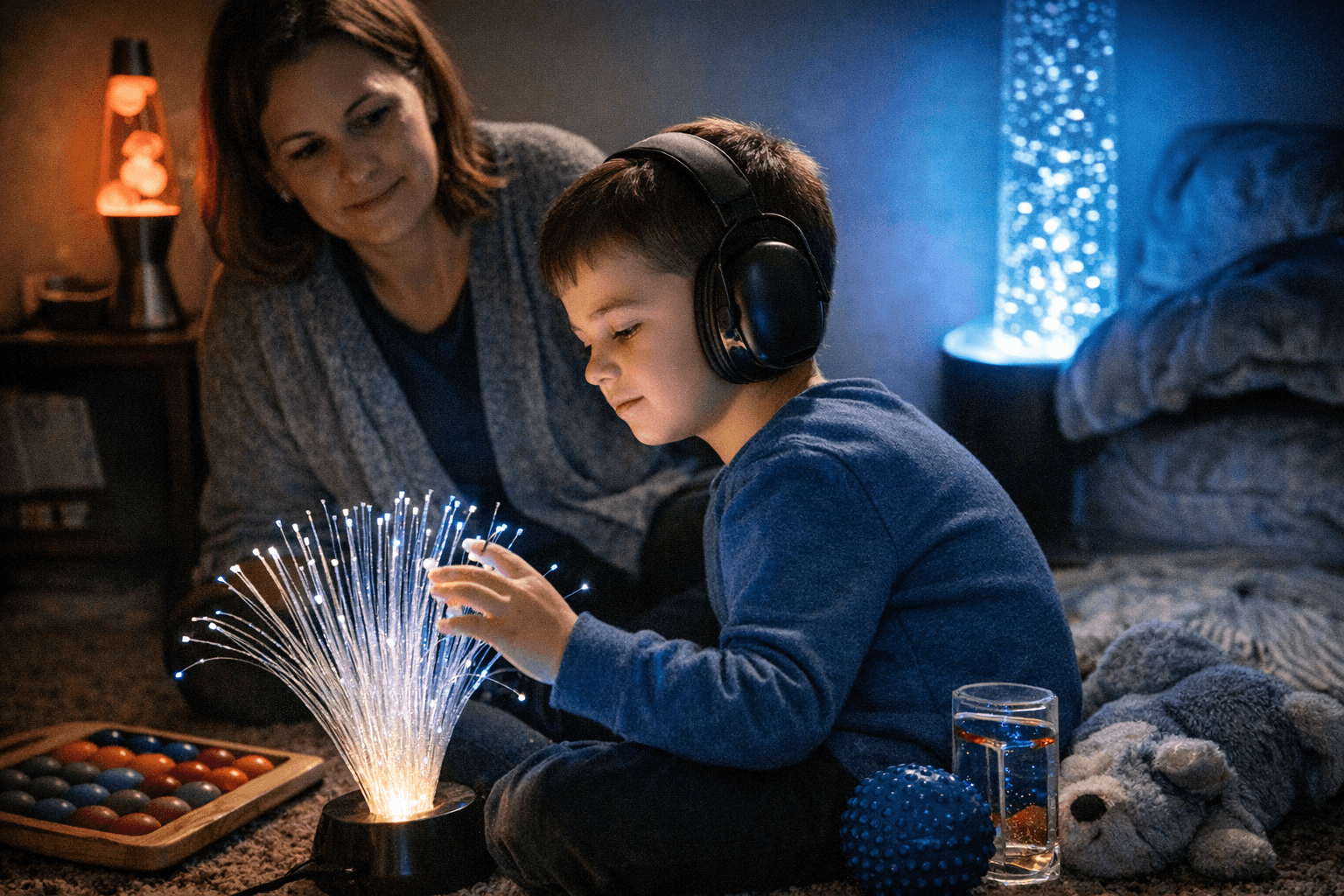
April is Autism Acceptance Month, and if you're shopping for someone autistic in your life, whether that's a child, an adult, or the caregiver holding everything together, the instinct to grab something colorful and wrapped in a big bow is exactly the instinct to override. Sensory processing differences are reported in up to 97% of individuals with autism spectrum disorder, according to recent research published in early 2026. That number is worth sitting with. It means nearly every autistic person you're buying for has a distinct relationship with texture, sound, scent, and pressure, and the gift you choose either works with that or against it.
The best autism-friendly gift isn't the most expensive one or the most clever one. It's the one that says, as one guide put it plainly: "I see you, I support you, and I celebrate this journey with you." Here's how to do that, organized by sensory profile and daily-life use case.
Calming: Weighted Blankets and Lap Pads
Weighted blankets work on the principle of deep-pressure stimulation, a gentle, distributed pressure that activates the parasympathetic nervous system and signals safety to the body. For someone who experiences sensory overwhelm regularly, coming home to a weighted blanket isn't a luxury. It's a tool. Look for blankets weighted at roughly 10% of the user's body weight: a 15-pound blanket for a teen or adult runs around $60 to $90 from reputable sensory-focused retailers. Weighted lap pads are the more portable version, ideal for desk work, car rides, or classroom settings, and typically run $25 to $45. Both are genuinely useful for autistic children and adults alike, and neither infantilizes the recipient.
Before purchasing, confirm the weight range with whoever knows the person best. Too heavy can feel restrictive rather than calming.
Movement: Fidgets, Sensory Swings, and Liquid Motion Timers
Not every autistic person is a sensory avoider. Sensory seekers, people who actively need more input to feel regulated, often thrive with movement-based or tactile gifts. Tactile fidgets with varied textures, squishy, spiky, stretchy, and smooth, give hands something to do without demanding eye contact or verbal engagement. Individual fidgets are remarkably affordable: options like a Boinks fidget run under $2, while a Twiddle Fidget or Sensory Stixx Hand Fidget lands around $10. A curated pack of four or five different types costs $20 to $35 and lets the person discover what works best for them.
Liquid motion timers sit at a different price point, typically $15 to $30, but they deliver something a fidget spinner cannot: a slow, mesmerizing visual experience that functions almost like a reset button. Watching liquid move through oil and water at its own unhurried pace is genuinely regulating for many autistic people, kids and adults both.
Sensory swings, the cocoon or pod style that allows for spinning and deep-pressure wrapping simultaneously, are a more significant investment at $80 to $200 depending on weight capacity, but for a child or adult who seeks vestibular input regularly, they're among the highest-impact gifts on this list.
Oral Sensory: Chewable Jewelry Done Right
Chewing is a legitimate and common self-regulation strategy, and for years the only options were pencils, shirt collars, and fingernails. Chewable jewelry, often called "chewelry," is the thoughtful alternative: non-toxic, durable pendants and bracelets designed specifically for oral sensory input. The coil and pendant designs from sensory-specialty retailers provide input to the mouth, lips, and tongue, and they're sized and styled for teens and adults, not just young children. Prices range from $8 to $20. When you give this gift, skip the explanation and just include a note that says you thought it might be useful. No editorializing needed.
Communication and Organization: Planners, Label Makers, and Structure Tools
For autistic adults who rely on external organizational systems to manage the cognitive load of daily life, the practical gift is often the most meaningful one. A high-quality weekly planner with clear visual structure costs $20 to $45 and can genuinely reduce daily anxiety. A label maker, the handheld kind that produces clear, adhesive labels for bins, shelves, and containers, runs $25 to $60 and supports the kind of environmental organization that helps many autistic people feel in control of their space.
These aren't exciting gifts in the traditional sense. They're better than that. They communicate that you understand how the person actually lives, and that you want to make that life easier.
Special Interests: Follow the Lead, Not the Age
One of the most consistent pieces of guidance from occupational therapists and autistic self-advocates is this: always honor the special interest, regardless of the person's age. A 35-year-old who is deeply passionate about train schedules, marine biology, or a specific video game franchise deserves a gift that reflects that enthusiasm, not something that redirects them toward more "appropriate" adult hobbies.
This category is where experience gifts and memberships do real work. A membership to a local science museum, botanical garden, or aquarium gives an autistic person access to a low-pressure environment built around their interests, on their own schedule, without the social demands of a group outing. Look for venues that offer sensory-friendly hours or low-crowd windows; many now explicitly advertise these. Membership prices vary widely by institution but typically run $60 to $150 annually for an individual.
Caregiver Support: The Gift That Often Gets Skipped
Autism caregivers, parents especially, are frequently the last people anyone thinks to gift. The research is unambiguous on caregiver burnout in this community, and a meal delivery subscription or spa voucher isn't a frivolous gesture. It's an acknowledgment of the real and relentless work involved. A four-week meal kit subscription runs $50 to $120 depending on the service and number of meals. A spa or massage voucher, particularly from a local provider who offers quiet, scent-free options, gives a caregiver something most of them haven't had in a long time: an hour entirely to themselves.
The best versions of these gifts come with a follow-through offer. Pairing a spa voucher with a genuine offer to cover a few hours of childcare or household support transforms it from a nice gesture into a genuinely usable one.
What to Avoid: Guidance from Autistic Self-Advocates
The gifting mistakes that show up most often in conversations within the autistic community cluster around a few consistent themes:
- Noisy or flashing toys: Even when marketed as "fun" or "educational," toys with unexpected loud sounds or intense light patterns can cause genuine distress. If a gift requires batteries and produces sound, double-check it against the recipient's known sensory profile first.
- Strongly scented products: Candles, lotions, perfumes, and bath products with heavy artificial fragrances are a common gifting instinct that frequently backfires. Scent sensitivity is one of the most underappreciated sensory triggers. Unscented or lightly scented options are always the safer choice.
- Games that require sustained eye contact or social performance: Some popular party games are built around reading facial expressions, staring contests, or rapid social improvisation. These aren't just unfun for many autistic people; they actively replicate the social demands that are already exhausting. Skip them entirely.
- Surprise packaging: Ribbons, multiple layers of wrapping, inflated expectations around "opening a gift" as a performance can all create pressure. A gift bag with tissue paper, or even just a clean box, is genuinely appreciated.
- Novelty and infantilizing items: Generic puzzle-piece merchandise or items that frame autism as a problem to be solved rather than a way of being are consistently named by autistic self-advocates as gifts that miss the mark. The goal is dignity, not awareness ribbon aesthetics.
The through line in all of these categories is the same: you are buying for a specific person with a specific sensory profile, specific interests, and a specific daily life. The research, the special interest, the texture of the blanket, the weight of the lap pad: every one of those details matters. Getting them right isn't just good gifting. It's the clearest possible signal that you actually paid attention.
Know something we missed? Have a correction or additional information?
Submit a Tip