Community-Organized Welcome Home Kits Ease Families Into Permanent Housing
A single box of bedding, cookware, and cleaning supplies can determine whether a family's first week in permanent housing feels like a fresh start or a crisis.
The Gap Nobody Talks About
Getting the keys to a permanent home after a period of homelessness or housing instability is a milestone. What happens in the 48 hours after is where things quietly fall apart. Pots, bed sheets, a toilet brush, dish soap: these are the items that cost families anywhere from $300 to $600 to assemble from scratch, all at a moment when most of their income has just been committed to a deposit and first month's rent. Community-organized Welcome Home Kits exist specifically to close that gap, and the model is simple enough that a housing society committee, a workplace team, or a church congregation can run one with a weekend of planning.
For families who have recently overcome homelessness, the transition to permanent housing can be daunting. Despite ongoing support from case managers and social services, affording basic necessities like bedding and cookware remains a genuine financial challenge in those first weeks. The Welcome Home Kit model addresses that directly: curated, practical boxes delivered at move-in, assembled by community volunteers and donors rather than the family itself.
What Goes In: The Tiered Shopping List
Not every donor or drive has the same budget, and that's by design. The most effective kit programs build their wish lists around three tiers, letting participants contribute at whatever level makes sense.
₹ First-Night Essentials (Under $30 per contribution)
These are the items a family needs before their first morning. A single missed night of sleep because there are no pillows, or a morning without soap or toilet paper, lands harder than it sounds when someone has just navigated months of instability.
- Pillows and pillowcases
- Bar soap and shampoo
- Toothbrush and toothpaste
- Toilet paper (multi-pack)
- Trash bags
- Dish soap and a sponge
Programs like Welcome House prioritize housing needs including bedding, kitchen items, and bath items as the core of any donation, and these smaller consumables are among the highest-turnover items they receive and redistribute.
₹₹ Kitchen and Cleaning Basics ($30–$100 per contribution)
This tier covers the items that turn an empty apartment into a functioning home. The Welcome Home Cleaning Kit from community housing programs typically includes paper towels, floor cleaner, a sponge, dish cloth, trash bags, and a toilet brush as the foundational cleaning layer.
For kitchen function, the Casa kit model gives a clear benchmark for what a complete starter setup looks like:
- A covered saucepan (1.3qt and 1.8qt are the most practical sizes)
- A Dutch oven or deep pot for soups and rice
- An open frying pan
- A basic flatware set (16-piece covers a family of four)
- A dinnerware set (ceramic, 12-piece)
- A kitchen scissors and one or two knives
Bath towels, a bath mat, and a blanket round out this tier.
₹₹₹ Complete Kit Sponsorship ($500–$550)
Every $540 raised covers the cost of one complete Welcome Home Kit at the Weingart Center in Los Angeles, one of the most established kit programs in the country. At Our Just Future in Portland, a $500 donation sponsors a gift card that helps families acquire pots and pans, bath towels, and cleaning supplies on their own terms. At this tier, corporate donors and workplace drives can sponsor entire households rather than individual items.
What's Most Requested Versus What Gets Wasted
Every housing program coordinator will tell you the same thing: bedding and cookware are perpetually short, and decorative items pile up unused. Here's the practical breakdown based on what intake coordinators consistently report:
- Most requested (always needed):*
- Twin and full sheet sets
- Blankets and comforters
- Covered saucepots and frying pans
- Toilet brushes and floor cleaner
- Alarm clocks
- Multi-pack toilet paper and paper towels
- Often donated but low-priority:*
- Scented candles and decorative items
- Specialty kitchen gadgets (food processors, bread makers)
- Mismatched single items without lids or pairs
- Heavily branded or personalized goods
The reason decorative donations tend to sit is practical: with 94% of families in programs like Partners in Housing headed by single mothers, and over half of housing units on upper floors without elevator access, compact and easily moved essentials take clear priority over anything bulky or fragile.
The Move-In Pain Points That Kits Solve
The most important frame for understanding why kits matter is financial timing. A family moving into permanent housing typically faces their highest-cost month at exactly the moment they have the least liquidity. Deposit, first month's rent, transit costs, and utility setup fees can absorb an entire paycheck before a single pot or bedsheet is purchased.
One current program participant, Mia, was handed the keys to her new apartment along with a welcome basket by a housing coordinator. Her response: "I knew I couldn't afford to buy anything right then. There was no judgement, no demands, nothing to further destroy my self-esteem, or my belief that I could take care of my kids. I was so comforted."
That reaction, replicated across thousands of move-ins each year, is why housing stability researchers emphasize the first 30 days as the most fragile period. Studies show that between 75% and 91% of households remain housed one year after being rapidly re-housed when adequate support is in place at move-in. A kit doesn't just deliver a pot and a pillowcase; it signals that someone prepared for this person's arrival.
How to Run a Kit Drive: A Template You Can Copy
Whether you're organizing through a workplace, a housing society, a realtor's office, or a place of worship, the structure is the same. Here's a replicable framework:
Step 1: Find your local recipient partner. Search for housing transition programs, rapid rehousing nonprofits, or shelters in your area. Organizations like Welcome House accept donations Monday through Friday from 9am to 4:30pm, and reaching out in advance to schedule drop-offs ensures your items are received efficiently. Confirm exactly what they need and, crucially, what they already have in surplus.
Step 2: Define your drive scope. A 2-week collection window works well for workplaces. Set a concrete goal: "We're assembling 5 complete kits for single-person households" is more motivating than an open-ended ask. Contact the agency to identify which needs are most critical, and understand any specific guidelines, including what they don't need and how much storage they have available.
Step 3: Use the tiered list. Post three clear contribution levels (First-Night, Kitchen Basics, Full Kit Sponsor) so donors of every budget feel included. The ₹ tier items, under $30, are accessible to nearly everyone and in constant demand.
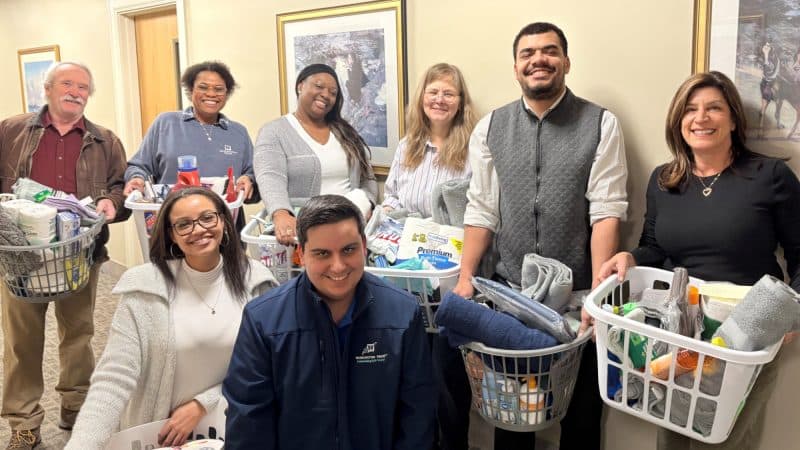
Step 4: Assign a bundling day. Groups can volunteer onsite at program locations to assemble kits, which also gives volunteers a direct connection to the mission. A Saturday bundling session with coffee and music builds team energy and makes the donation feel tangible rather than transactional.
Step 5: Communicate impact. After delivery, share the outcome: how many kits went out, how many households received them. Specific numbers close the loop for donors and make future drives easier to mobilize.
Copy-Paste Template for Your Drive Announcement:
*We're running a Welcome Home Kit drive from [DATE] to [DATE]. We're collecting [items] to help families moving into permanent housing in [neighborhood/city]. Drop donations at [location] during [hours]. We're aiming to assemble [X] kits. Questions? Contact [name] at [email].*
Why This Model Scales
What makes community-organized Welcome Home Kits a durable model rather than a one-time gesture is that they align donor psychology with genuine need. Giving a pot to someone who has never owned one in their new home is a different transaction than buying a candle for someone who already has a full kitchen. The specificity of the need and the directness of the impact remove the guesswork that makes most charitable giving feel vague.
Organizations like Hope through Housing distribute kits to residents moving into new properties opening to families, seniors, and residents with special needs, demonstrating that the model adapts across demographics rather than serving a single population. The housing society or workplace that starts one drive this spring often finds it becomes an annual program because the need doesn't diminish, the logistics are learnable, and the gratitude is concrete.
A family's first night in their own home should feel like an arrival, not another emergency. A well-assembled kit, put together by 20 coworkers or 30 neighbours, makes that possible for a cost that breaks down to roughly the price of a dinner out.
This article was produced by Prism’s automated news system from verified source data, official records, and press releases, then run through automated quality and moderation checks before publishing. The system is built and supervised by the people who set the standards it runs under. Read our full AI policy.
Did this article answer your question?