Fudgy Biscoff Brownies Make the Perfect Homemade Housewarming Gift
Forget the candle. A batch of dense, fudgy Biscoff brownies says "welcome home" with the kind of warmth no store-bought gift can replicate.
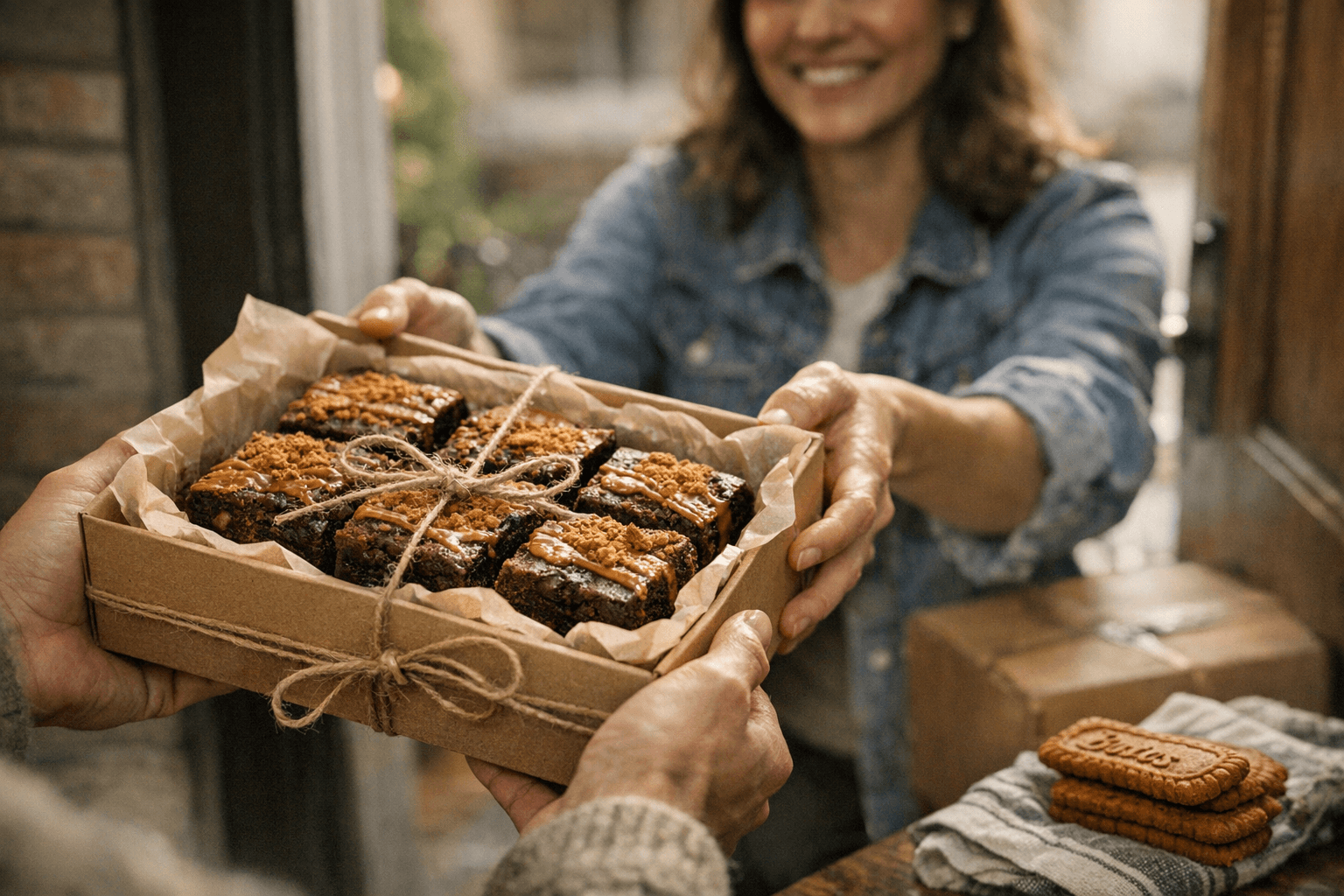
The housewarming gift aisle is full of scented candles, generic picture frames, and decorative objects that will spend the next decade looking for shelf space. None of those feel like a real welcome. A batch of dense, fudgy Biscoff brownies does.
Why Homemade Beats Store-Bought on Moving Day
Moving day is one of the most logistically punishing experiences in a person's life: boxes everywhere, furniture in the wrong rooms, the takeout menus buried somewhere unreachable. What a new homeowner genuinely does not need is another decorative item to unpack and find a home for. What they almost certainly do need is something rich, sweet, and made by an actual human being who thought of them. Homemade baked goods carry a warmth that pre-wrapped department store gifts simply cannot replicate. There is no shortcut to someone spending an afternoon in their own kitchen on your behalf. That time, translated into something edible and beautifully packaged, communicates care more directly than almost anything you could purchase. Lauren's Cravings captures this well in framing the recipe as a "warm, human" housewarming gesture, and that framing is exactly right.
What Makes Biscoff the Right Ingredient
Lotus Biscoff cookie butter, the golden-brown spread made from finely crushed speculoos biscuits, brings something no ordinary brownie recipe can: a deeply caramelized, gingerbread-adjacent warmth layered with cinnamon and toffee notes. The flavor traces back centuries to Belgian speculoos biscuits, traditionally associated with festive celebrations. Lotus transformed the biscuit into a spreadable form by simply crushing the baked cookies after baking, preserving all their signature spice and caramel flavor in a creamy, peanut-butter-like consistency. It is vegan-friendly and made without artificial colors, flavors, or preservatives, which makes it a broadly shareable ingredient.
When Biscoff meets a classic fudgy brownie base, the result is something far more interesting than either element alone. The contrast is the entire point: deep, slightly bitter cocoa against that caramelized, mildly spiced cookie butter creates a balance that tastes indulgent without tipping into cloying sweetness. It is the kind of brownie that makes people stop mid-bite and ask what is in it.
Building the Brownie: Method and Technique
A truly fudgy Biscoff brownie starts with technique before ingredients. The key step is blooming the cocoa: gently heating it together with butter in a saucepan to coax out the deep chocolate compounds that remain dormant in dry cocoa powder. This process is what separates a dense, intensely chocolatey brownie from a flat, forgettable one. The difference shows immediately in color, aroma, and final texture.
The Biscoff layer deserves its own treatment rather than a casual swirl into the batter. Layering the spread directly in the center of the brownie, sandwiched between two pours of chocolate batter, creates a pocket of gooey, spiced cookie butter hidden inside each square. The brownies bake in a standard 8x8-inch pan, yielding approximately 16 bars, with roughly 30 minutes in the oven delivering that signature fudgy set.
A few details determine whether the final result is truly gift-worthy:
- Use unsweetened Dutch-process cocoa powder rather than natural cocoa. Dutch-process has a smoother, more intense chocolate flavor that holds its own against the sweetness of the Biscoff.
- Pull the brownies slightly underbaked. A skewer inserted in the center should come out with a few moist crumbs, not clean. Overbaking by even five minutes turns a fudgy brownie cakey and dry within hours.
- Use room temperature eggs. Cold eggs can cause the melted chocolate mixture to stiffen and disrupt the batter's consistency.
- Chill completely before cutting, ideally overnight. A full rest in the refrigerator gives the Biscoff layer time to set and produces clean, shareable squares rather than collapsed, sticky ones.
Packaging: Presentation as Part of the Gift
The difference between "I made you brownies" and a proper gift lies almost entirely in presentation. The approach is layered: protection first, beauty second.
Wrap each individual square in parchment or wax paper before anything else. Brownie bars are naturally oily, and skipping this step turns whatever container you use into a greasy, smeared mess. From there, a kraft paper box, a vintage-style tin, or a clear cellophane bag tied with ribbon all work depending on how formal the occasion feels. For a housewarming specifically, a reusable container does double duty as a second gift: a ceramic dish, a small wooden crate, or a glass storage container with a lid that the recipient can immediately put to use in their new kitchen.
The note is as important as the packaging itself. Keep it handwritten, keep it brief, and make it specific to the person or the occasion. A single line referencing something about their new neighborhood, a memory in their old place, or an inside joke does far more than any generic congratulations card.
The Quiet Logic of a Baked Gift
Homemade baked goods have anchored celebrations, condolences, and welcomes for as long as there have been kitchens, and the reason is not complicated. They require time, attention, and effort, three things that cannot be purchased and shipped next-day. For a housewarming in particular, when a new homeowner is surrounded by the low-grade anxiety of a fresh start, a batch of fudgy, Biscoff-laced brownies arriving in thoughtful packaging communicates something a $200 candle simply cannot: that someone took an afternoon and thought specifically of them.
The brownies are the proof. The gift is the time it took to make them.
This article was produced by Prism’s automated news system from verified source data, official records, and press releases, then run through automated quality and moderation checks before publishing. The system is built and supervised by the people who set the standards it runs under. Read our full AI policy.
Did this article answer your question?