Hindu Mythology and Vastu Traditions Inspire 12 Meaningful Housewarming Gift Ideas
Forget another dust-collecting decorative piece: these 12 gifts rooted in Hindu mythology and Vastu tradition carry real symbolic weight for a griha pravesh.

The generic housewarming gift, the one that ends up quietly donated six months later, is almost always chosen without a framework. Hindu mythology and Vastu Shastra offer a remarkably specific one. Vastu Shastra gifts are chosen to harmonize the five elements (Earth, Water, Fire, Air, and Space) in a living space, creating positive energy, prosperity, and emotional well-being. That guiding logic is what separates a meaningful griha pravesh gift from an expensive afterthought. The 12 ideas below are drawn from those traditions, each with a clear reason to exist in a new home.
Lord Ganesha Idol
The Griha Pravesh ritual is deeply rooted in Vastu Shastra, aiming to purify the home and invite positive energy, and no gift signals that intention more directly than a Ganesha idol. "Lord Ganesh is traditionally the remover of obstacles and the harbinger of wealth and prosperity." A finely crafted silver idol becomes not only a meaningful gift but also what Riyaash Chaandi calls "a spiritual anchor for the home." Gifting an auspicious idol of Lord Ganesha can bring peace and overall well-being, and it finds a natural place in the puja room or mandir. For silver versions, Riyaash Chaandi is one brand worth looking at for craftsmanship.
Lakshmi Footprints
Among the most visually distinctive gifts in this tradition, Lakshmi footprints are placed at the threshold or leading into the home as prosperity symbols, representing the goddess of wealth entering and blessing the space. Door hangings and threshold symbols of this kind symbolically welcome Lakshmi (goddess of wealth) while creating a protective barrier. A Lakshmi Charan Paduka is considered highly auspicious as a Griha Pravesh gift. They work particularly well for the entrance or prayer room and are one of the few gifts that integrates into the home's daily ritual life rather than sitting on a shelf.
Silver Diya
A diya is one of the oldest ritual objects in Hindu practice, and the choice of metal matters here. Riyaash Chaandi puts it plainly: "Unlike brass or copper diyas, silver diyas are known to attract prosperity and align beautifully with vastu principles. As a gift for your loved ones, it not only enhances the beauty of the home but also becomes a cherished keepsake passed down through generations." Astrologically, silver connects to the Moon (Chandra), which governs peace, comfort, and emotional well-being, which reinforces why it's considered the superior metal for ritual lighting. A silver diya is the right call specifically for families who value daily puja rituals.
Brass Diya and Puja-Ready Items
For those working with a tighter budget or gifting someone who prefers the warmth of traditional metals, brass diyas remain a firmly auspicious choice. Brass, being a metal associated with the fire element, complements the fire energy encouraged by Vastu for a harmonious living space, and a set of beautifully crafted brass lamps or diyas makes a considered gift. Items like brass diyas are considered auspicious as they align with Vastu Shastra and symbolize prosperity. Paired with incense, a small bell, or kumkum, a brass diya can anchor an entire puja-ready gifting set.
Pooja Thali
The pooja thali is both ceremonial and practical, used at every significant moment in the household calendar. In Indian tradition, giving a puja thali of brass or silver is one of the best griha pravesh gifts; these metals balance the elements in a house and transport spiritual energy, and both brass and silver are known to cleanse the surroundings while encouraging calm and tranquility. A well-crafted thali with a matching kumkum box and small bell is the kind of gift that gets used weekly, not once a year.
Kumkum Box and Silver Tray
The kumkum box is small, but its presence in a home's ritual practice is consistent. In the Riyaash Chaandi gifting philosophy, it features prominently in their signature hamper alongside a silver diya and dry fruits. Presented in a silver tray, this combination is "rooted in auspiciousness while catering to modern aesthetics." A standalone kumkum box in silver makes an understated but genuinely useful gift, especially for brides setting up their first home altar.
Urli
The urli is a wide, shallow vessel traditionally used in Kerala and across South India for floating flowers and diyas in water. Traditional handicraft items such as brass urlis purify air and promote prosperity per Vastu Shastra. Modern urlis come in brass, bronze, and silver-toned finishes and double as stunning coffee table or entrance décor. Handcrafted urli bowl sets with lotus petal cutouts are available from several Indian craft studios and photograph beautifully, which has made the urli a popular choice for couples furnishing a first home together.
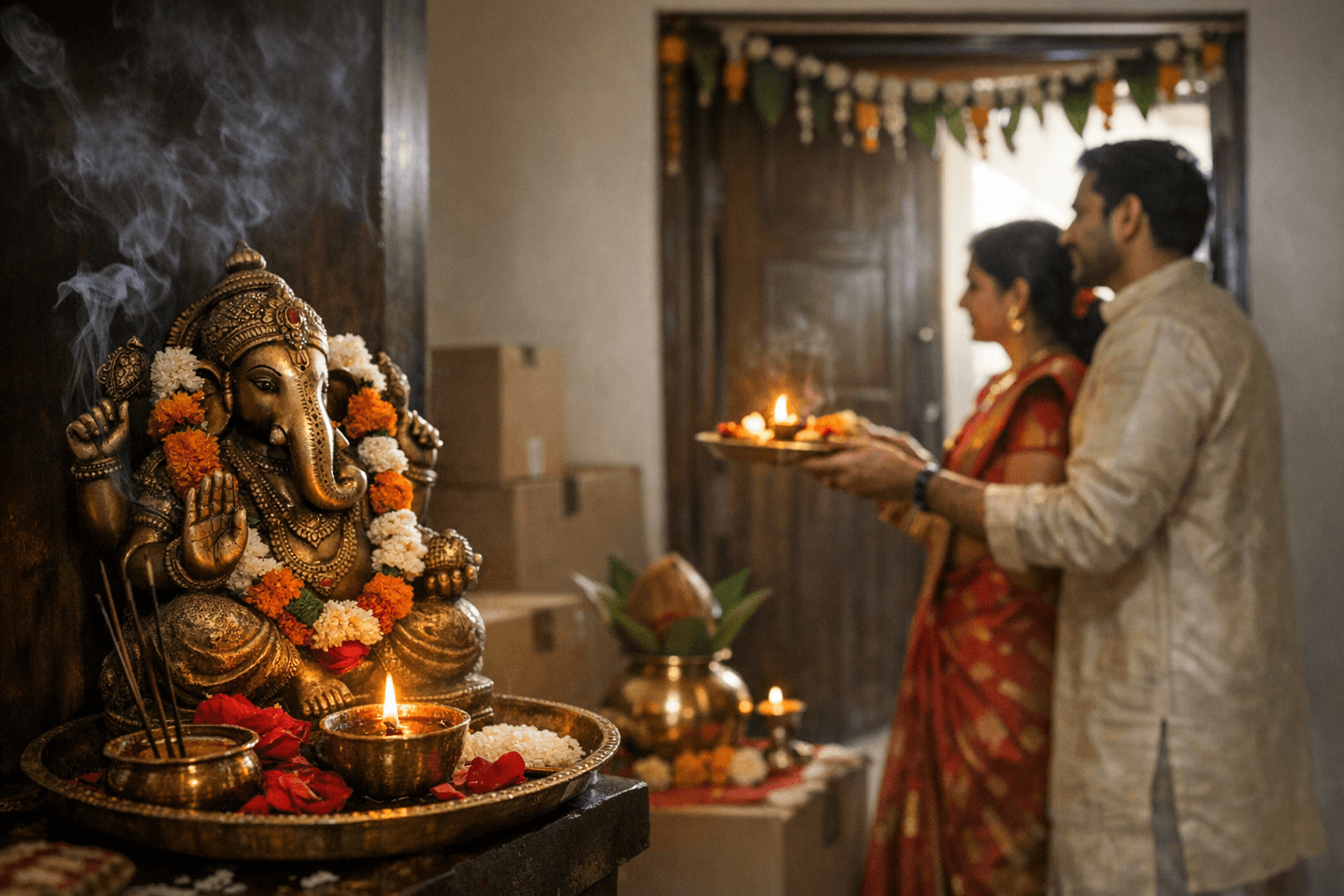
Lord Ganesha and Buddha Idols: The Prosperity Pair
"Gifting an idol for a housewarming ceremony has deep symbolic meaning," as Riyaash Chaandi notes. While Ganesha leads the way as the remover of obstacles, a Buddha statue serves a distinct purpose: it works especially well for those who love home décor as much as spiritual practice, bridging the gap between aesthetic and intention. Younger couples or cosmopolitan families may prefer contemporary interpretations, including a minimalist Buddha, that bridge tradition with current aesthetic preferences. A seated Buddha in a living room or entryway anchors the space without requiring a dedicated puja corner.
Silver Dinner Set
A silver dinner set is described by Riyaash Chaandi as "an ideal housewarming gift for daily use and festive occasions," and that dual utility is exactly what makes it stand out from purely decorative options. Silver coins, small idols, or utensils make fantastic gifts that combine investment value with spiritual significance. A full dinner set in silver is a significant financial investment, but even a partial set (a pair of katoris, a serving bowl, or a puja-use thali) carries the same symbolic weight at a more accessible price point.
Silver Planters and Decorative Bowls
Pairing greenery with silver elevates the gesture entirely. Riyaash Chaandi is explicit about this: "Pairing them with elegant silver gifts like planters or decorative bowls ensures they become more than just greenery, they transform into perfect housewarming gifts that align with principles of vastu." A silver planter holding a money plant or tulsi is both ecologically alive and ritually meaningful, covering two of the tradition's most recommended gift categories in one.
Money Plant and Holy Basil (Tulsi)
For eco-conscious gifting, these two plants are the most Vastu-aligned options available. From a Vastu standpoint, plants like money plants and tulsi are especially lucky; tulsi, ideally positioned in the northeast, is well-known for both spiritual and medicinal advantages, while money plants draw success and good energy, especially in the southeast corner. The Tulsi plant, considered sacred in Hindu traditions, is associated with positive energy and spiritual well-being; according to Vastu, placing a Tulsi plant in the northeast corner of the home is believed to bring prosperity and happiness to the family. Present either in a decorative ceramic or silver-toned pot and the gift becomes something the household genuinely tends to.
Traditional Hamper with a Silver Touch
When you genuinely aren't sure what to choose, the curated hamper is the most thoughtful default. Riyaash Chaandi describes the ideal combination: a small silver diya, a kumkum box, and dry fruits presented in a silver tray, a combination that is "both practical and symbolic." Such hampers work beautifully as gifts for couples, new homeowners, and for anyone attending a housewarming party where you want to arrive with something that reads as considered rather than convenient. Classic inclusions like dry fruit packs are universally liked and complement the ritual items without overpowering them. The hamper format is especially useful for griha pravesh occasions where the household may already have certain individual items; the assembled whole carries a ceremonial completeness that a single object cannot.
A Note on What to Avoid
The Vastu framework for gifting is as clear about exclusions as it is about inclusions. Sharp objects, including knives and scissors, are avoided because they symbolize conflict. Artificial or dried flowers lack life energy and may not attract positive vibes. Thorny plants like cacti are also best avoided, as they are believed to create tension in relationships. The principle is simple: anything that represents stagnation, conflict, or the absence of abundance has no place in a griha pravesh gift. Every item on this list is there because it actively represents the opposite.
In Hindu tradition, gifting is more than a simple act of giving; it is a transfer of energy. Choosing with that in mind, whether you spend $15 on a tulsi plant in a decorated pot or several hundred on a Riyaash Chaandi silver hamper, means the gift carries intention that a new homeowner will feel every time they see it.
This article was produced by Prism’s automated news system from verified source data, official records, and press releases, then run through automated quality and moderation checks before publishing. The system is built and supervised by the people who set the standards it runs under. Read our full AI policy.
Did this article answer your question?