Housewarming gift etiquette: when to bring one and how much to spend
The safest housewarming gift is the one that fits the home, not your ego. Spend $20-$50 for friends, $50-$100 for close family, and bring it within a few weeks.

Showing up to a housewarming empty-handed is an easy way to miss the point of the invitation. The best gifts are not expensive or elaborate, they are useful, timely, and easy for the host to accept without fuss. If you were invited, bring something even when the host waves it off, keep the spend tied to the relationship, and choose a gift that makes the new place easier to live in.
When a housewarming gift is expected
If the invitation says housewarming, treat a gift as part of the visit. GiftList’s etiquette advice is blunt on this point: if you are invited, bring a gift even if the host says not to, because the gesture is part of the welcome. That is a useful rule for anyone who gets stuck in the gray area between courtesy and overthinking, especially when the move has just happened and no one wants to create awkwardness at the door.
For a casual visit with no party, the pressure drops. A gift is optional, but a small token still feels gracious, especially if you are visiting someone in the middle of unpacking and sorting boxes. A plant, a candle, or a bottle of wine can work in the right setting, though wine is not the universally safe move people assume it is.
How much to spend without making it weird
Housewarming gifts do not need to climb into wedding territory. GiftList’s spending guide is one of the clearest benchmarks out there: roughly $20 to $50 for friends and coworkers, and $50 to $100 for close family. Those ranges keep the gift thoughtful without turning the visit into a financial performance.
The relationship should set the tone. For a neighbor’s first apartment, $25 or so buys a smart, low-pressure gesture. For a sibling or parent who just bought a house, $75 feels more natural, especially if you are giving something they will use repeatedly, like serving pieces or kitchen basics. The point is not to signal status. It is to match the warmth of the moment with a spend that does not make either of you uncomfortable.
What to bring, and what to skip
The safest housewarming gifts are practical and easy to fit into real life. GiftList specifically recommends choosing something that suits the recipient’s home and lifestyle, and including a gift receipt. That advice matters more than it sounds, because housewarming gifts often go wrong for simple reasons: the item is too large, the finish clashes with the décor, or it solves a problem the recipient does not have.
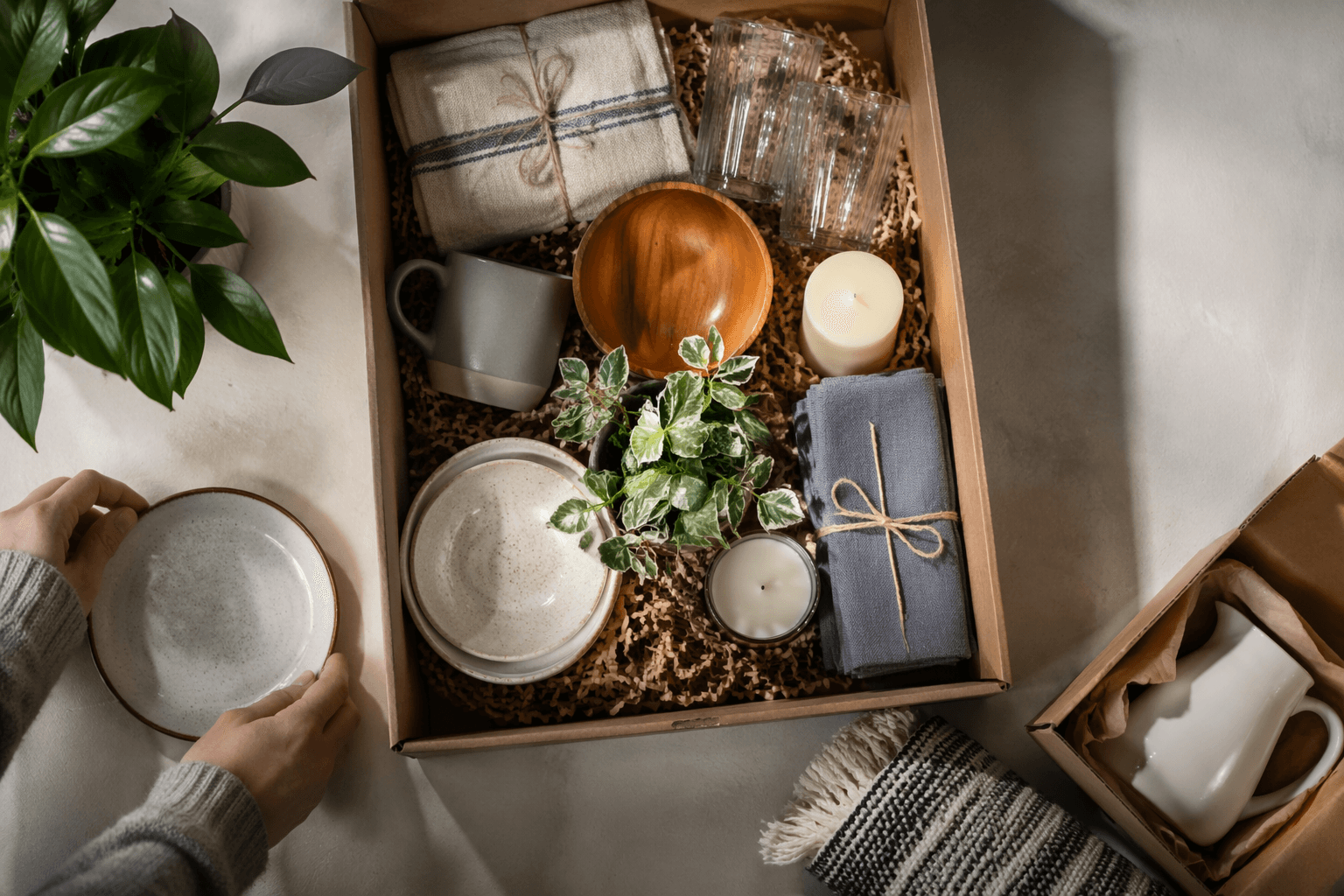
That is why modern housewarming etiquette leans hard toward problem-solving gifts instead of decorative ones. A cutting board makes sense for someone who cooks in a small kitchen. Little bowls or platters are ideal for someone who entertains. Cocktail napkins are a smart pick for the friend who has already started stocking a bar cart. These are the kinds of gifts Emily Post’s host-gift guidance has long favored, because they are small, manageable, and easy for the host to receive while greeting people.
A few categories are still worth skipping unless you know the person very well:
- Too-bulky décor that will be a pain to place, store, or return.
- Overly personalized items that lock the recipient into your taste.
- Anything that assumes a specific style, color palette, or layout.
- Alcohol, unless you know the host well enough to be sure it fits their preferences and circumstances.
That last point is worth underlining. Parade, drawing on Emily Post guidance, flags alcohol as a surprisingly awkward housewarming gift because it may not suit the host. The idea that a bottle of wine is always the safe default is one of those etiquette habits that sounds right until you remember the recipient may not drink, may not want more bottles in the house, or may simply have no use for it. If you do not know the host’s habits well, skip the guesswork.
When to give it
Timing matters almost as much as the object itself. GiftList recommends giving the gift within the first few weeks after the move, once the initial chaos has eased enough for the recipient to appreciate it. That is the sweet spot for housewarming etiquette: late enough that the host can breathe, early enough that the gesture still feels tied to the move.
If you are invited to an actual party, bring the gift to the party unless the host has made another arrangement. If you are making a houseguest-style visit instead, Emily Post’s guidance is even more flexible: a thank-you gift can be given on arrival, during the stay, or sent afterward. That gives you room to act like a civilized person without panicking about the exact minute you are supposed to hand something over.
There is also a practical advantage to waiting a little. A new home rarely looks or functions its best on move-in day, and the recipient may not yet know what they need. A gift delivered after a few weeks is more likely to fit the actual routines of the house, not the fantasy version that existed before the boxes arrived.
Why bread and salt still feels right
The symbolism behind housewarming gifts goes back much farther than modern etiquette columns. In many cultures, bread and salt have long stood for prosperity, hospitality, and good fortune. Traditional housewarming customs often include a loaf of bread and a bowl of salt, a pairing that makes sense as both a blessing and a practical offering.
That older tradition explains why the best housewarming gifts are still the ones that help a home feel stocked and welcoming. Bread says there will be food. Salt says there will be flavor. The modern version can be a cutting board, a set of napkins, or a useful serving piece, but the logic is the same: give something that supports the life happening inside the house.
The cleanest housewarming formula
The simplest rule is also the most useful one. If you were invited, bring a gift. Keep it in the $20 to $50 range for friends and coworkers, or $50 to $100 for close family. Choose something practical, include a gift receipt, and avoid anything bulky, overly personal, or hard to use.
That approach keeps housewarming gifting where it belongs: thoughtful, useful, and easy to receive. A good housewarming gift should make the new place feel easier to live in, not harder to unpack.
This article was produced by Prism’s automated news system from verified source data, official records, and press releases, then run through automated quality and moderation checks before publishing. The system is built and supervised by the people who set the standards it runs under. Read our full AI policy.
Know something we missed? Have a correction or additional information?
Submit a Tip