Housewarming Gifts 2026 Trend: Personalized & Sustainable
The gift that lands in 2026 isn't the most expensive one in the room; it's the one that proves you actually paid attention.
There's a specific dread that sets in about 48 hours before a housewarming party: you want to give something that matters, but you don't want to spend $200 on a vase that ends up in a donation pile by spring. That anxiety is now the central force reshaping how people shop for new-home gifts in 2026. Homeowners are moving away from generic presents, seeking items that reflect their unique tastes and lifestyles. The market has responded, and the shift is sharper than it's been in years: personalization and sustainability have moved from niche preferences to the primary signals that a gift was chosen with real care.
The Split in the Market: Two Kinds of Thoughtful
Eco-conscious materials like bamboo kitchenware, organic cotton bedding, and recycled glassware are now prioritized for their sustainability. Zero-waste kits featuring compost bins, reusable beeswax wraps, and biodegradable cleaning supplies align with the 68% of consumers who prefer eco-friendly gifts. But sustainability alone doesn't explain the full picture. The 2026 gifting landscape has split into two distinct camps, and knowing which one you're shopping in changes everything.
The first group, higher-budget buyers, is trading up into wellness and premium home categories: aromatherapy systems, luxury linens, high-end kitchenware. A boxed set featuring scented candles, a lemongrass diffuser with wooden reeds, and a linen-spray room mist is one of the most-cited premium gift configurations right now, because it transforms a single category (home fragrance) into a layered, ritualistic experience. An artisan reed diffuser made with 100% pure essential oils, presented in a beautiful gift box, hits every trigger that signals genuine luxury without requiring a four-figure spend.
The second group, value-conscious buyers, is gravitating toward what you might call accessible premium: items that feel elevated but stay practical. Blueland's Clean Essentials set, for instance, comes with four reusable bottles and plastic-free refills packaged in compostable paper, making it one of the cleanest embodiments of the "durable basics" trend. It's not decorative, it's not clever, it's just immediately useful in a way that communicates genuine forethought.
A Simple Decision Tree Before You Buy
The biggest mistake in housewarming gifting isn't going over budget. It's ignoring the four variables that separate a memorable gift from a forgettable one: budget, relationship closeness, home type, and local climate. Work through them in order.
*Budget first.* Under $50 is the sweet spot for acquaintances and colleagues. Artisan candles, a custom-labeled soap from a local maker, or a personalized refillable return address stamp (the ink cartridges last for years) all land well here. Nothing says new home like a new address, and a return address stamp customized to order, with refillable ink so homeowners never need a new one when the pre-inked plate runs out, is one of the most underrated gifts in this price range. Between $50 and $150, you have room for something with genuine material quality: The Lively Root's Money Tree (Pachira Aquatica) starts at $56 and ships in an Eco Pot made of recycled plastic, stone powder, and wood dust, available in three earthy color options. It's beautiful, air-purifying, and renewable. Above $150, the story becomes about layering: a premium diffuser system, a monogrammed stainless steel growler filled with a good local beer, or a personalized bamboo cheese board with serving tools.
*Relationship second.* The closer you are, the more personalization earns its place. A custom candle label printed with the new home's coordinates or a photo book printed on Forest Stewardship Council-certified paper (starting around $25) works for close friends because it anchors the gift to a specific memory or place. For an acquaintance, skip the personal detail and focus on universal quality instead.
*Home type third.* Minimalist and multifunctional designs dominate the 2026 gift landscape, with gifts expected to serve multiple purposes without cluttering the home. A small city apartment calls for a different instinct than a house with a garden. Urban condo dwellers appreciate compact gifts with high utility: refillable dish soap in recyclable packaging, ultra-absorbent Swedish dishcloths, or a sleek aromatherapy diffuser that doubles as ambient lighting. New homeowners with outdoor space open up possibilities for self-watering planters, solar-powered garden lights, or weather-resistant entertaining pieces.
*Climate fourth, and often overlooked.* Slurpy Bear's refillable hanging wardrobe dehumidifier, for instance, removes excess moisture and prevents mould in confined spaces, can be refilled more than 20 times, and combines functionality and sustainability perfectly - it's the right gift for someone moving into a humid coastal city or a basement-level apartment. In dry climates, an essential oil diffuser that doubles as a humidifier does the opposite work. Matching the gift to the environment is the detail most givers skip, and the one recipients notice most.
The Personalization Layer: What Actually Makes It Feel Special
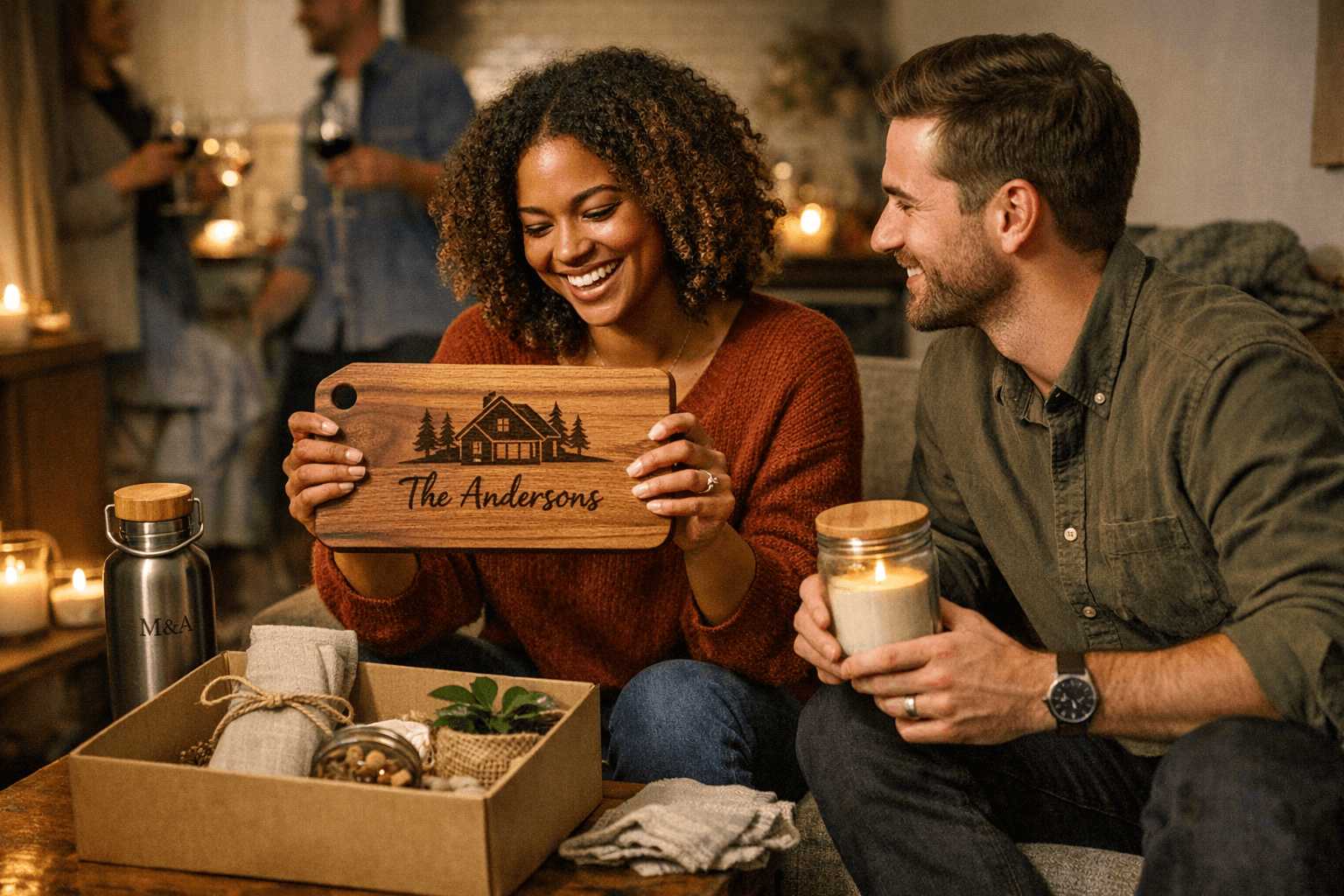
Personalization in 2026 doesn't mean monogramming everything. It means choosing one element that tethers the gift to this specific person, home, or moment. The most effective approaches are also the most searchable:
- A custom candle label from a small-batch maker like Retreat Candle Co., printed with the new address or a meaningful date, turns a $30 candle into something that would feel strange to donate.
- A bamboo cheese board that swivels out from a triangle shape into a multi-level serving wheel, with personalized engraving added at checkout, is a housewarming gift that doubles as a conversation piece every time it comes out.
- A stainless steel monogrammed growler, designed to store and share wine, beer, and other carbonated drinks, rewards the bonus effort of filling it with something local before you arrive.
- A photo book printed on FSC-certified paper, featuring images of the recipient's old neighborhood or shared memories, gives the new home an immediate sense of history.
The through-line in each of these is specificity. The gift signals: I know your new address, I know what you cook, I know where you came from.
Why Packaging Has Become Part of the Gift
Eco-friendly housewarming gifts are practical, stylish, and carry meaning beyond the moment, but the packaging around them is now doing real purchasing work. Visible value, meaning quality wrapping, clear materials information, and ingredients or sourcing transparency, has emerged as a genuine trigger for purchase decisions. A refillable soap in a beautiful glass vessel with a hand-typed ingredient list communicates something the same soap in a plastic pump bottle never could. The same logic applies to how you present a gift basket: swap cellophane for a linen napkin, add a handwritten card explaining why you chose each item, and suddenly a $60 basket reads as a $120 gesture.
The Rise of Digital Gifting
One notable development worth acknowledging: digital gifting formats are gaining real traction in the housewarming category. Subscription services (meal kits, plant delivery, cleaning supply refills), online experience gifts, and even thoughtfully chosen e-cards with a gifted experience attached are all growing. There is a noticeable rise in tech-integrated solutions and curated experiences, with personalization valued more than ever before. For long-distance gift-givers, a three-month subscription to a sustainable cleaning brand's refill program, or a local restaurant gift card paired with a digital card explaining the neighborhood recommendation, can feel more generous and more specific than a generic item shipped from a warehouse.
The clearest signal from 2026's gifting landscape is this: the gifts that succeed aren't the ones with the highest price tags or the most impressive packaging. They're the ones that communicate, without ambiguity, that you thought about this particular person moving into this particular home. Sustainability and personalization aren't trends so much as they're the vocabulary of that message, now spoken fluently enough that gifts that lack either one increasingly feel like they weren't really chosen at all.
This article was produced by Prism’s automated news system from verified source data, official records, and press releases, then run through automated quality and moderation checks before publishing. The system is built and supervised by the people who set the standards it runs under. Read our full AI policy.
Did this article answer your question?