How a bread, salt, and wine basket revives housewarming gifting
The old bread, salt, and wine ritual is still the smartest housewarming gift: symbolic enough to feel special, practical enough to get used tonight.

What makes the old basket work now
If you are heading to a housewarming tonight, skip the decorative candle and bring something the host can open, pour, and put on the table. A bread, salt, and wine basket is the rare gift that feels ceremonial without becoming clutter, which is exactly why it still lands: it is personal, functional, and immediately useful.
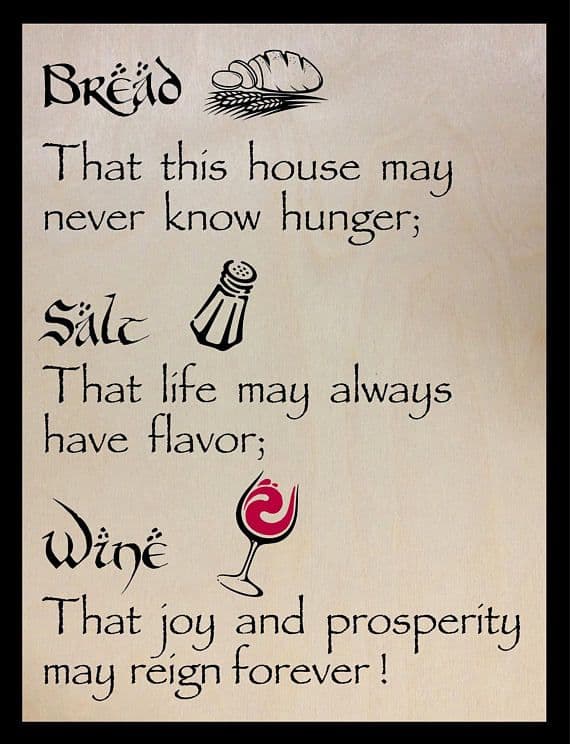
The formula comes straight out of *It’s a Wonderful Life*, the Frank Capra film released on December 20, 1946. In the housewarming scene, George and Mary Bailey arrive at the Martini family home in Bedford Falls with bread, salt, and wine, offering a blessing that has outlived the movie itself: “Bread, that this house may never know hunger,” “Salt, that life may always have flavor,” and “Wine, that joy and prosperity may reign forever.” That scene helped turn the film into a Christmas-season staple, but the gift itself works far beyond the screen because it gives a housewarming a sense of ritual instead of another forgettable bottle drop.
Why bread, salt, and wine mean something
The symbolism is older than the movie, and that is why it feels so grounded. Bread and salt have long been used in multiple cultures as welcome gifts, and in Jewish tradition they are a natural pair. Bread stands for the most basic food, the thing that keeps people going; Reform Judaism also connects bread and salt to Temple ritual practice and the Hebrew letters of *lechem* and *malach*, which are spelled with the same letters.
Salt carries a second layer of meaning. It has long been prized because it was rare and because it preserves food, so it signals both scarcity and endurance. Wine adds the bright note at the end: joy, prosperity, and the idea that a new home should hold more than survival. Put together, the basket becomes a compact blessing for a household that is just getting settled.
How to build the modern version without making it fussy
The smartest modern basket keeps the classic trio but treats it like a framework, not a script. Start with one good loaf of bread, a small container of salt, and a bottle of wine, then decide how formal you want the rest to feel. If you want to nod to later retellings of the blessing, add honey and olive oil, which make the basket feel fuller without turning it into a random assortment of pantry items.
- one fresh loaf from a bakery, not a giant supermarket loaf that will stale before the host gets to it
- a salt that feels intentional, such as flaky finishing salt or a small jar of good sea salt
- one bottle of wine if the host drinks, or a nonalcoholic bottle if they do not
- honey or olive oil if you want to extend the blessing without adding clutter
- a reusable tote, basket, or tea towel so the packaging does not become trash
A useful modern basket should look thoughtful, not overpacked. That usually means:
The point is not abundance for its own sake. It is to bring something that can be eaten, poured, or stored the same day.
Smart swaps for different hosts
Not every host wants wine, and a good housewarming gift respects that. If the household does not drink alcohol, swap the wine for sparkling cider, grape juice, or another celebratory nonalcoholic bottle that still feels like an occasion. The symbolism stays intact because the gesture is about joy and welcome, not the alcohol itself.
If the host is living in a small rental or just moved into a fully furnished place, keep the basket lean and useful. A loaf, a salt tin, and a bottle are enough. You can also add one renter-friendly item that will get used fast, such as a bottle opener, a linen napkin set, or a bread knife if you know they do not already own one.
If you are shopping on a tighter budget, the beauty of this idea is that it does not require a grand spend to feel generous. A bakery loaf, a pantry salt, and a modest bottle still read as deliberate because the meaning comes from the trio itself, not the price tag. When the host is practical, the gesture matters more than the label.
The grocery-store version that still feels polished
If you need to pull this together on the way to the door, the grocery store can absolutely save you. Go straight to the bakery, the spice aisle, and the beverage section. Choose the best bread you can find, a salt that is not the lowest-common-denominator shaker, and a bottle that feels like something you would happily open on a weeknight.
The last-minute version works especially well because the ingredients are familiar and readable. Nobody has to decode it. Bread means sustenance, salt means flavor and preservation, and wine means celebration. That clarity is what makes the basket feel more elegant than a generic house plant or another scented object the host has to find a place for.
The etiquette that makes it land
What makes this gift feel generous is the message underneath it: I see the milestone, and I brought something that fits the moment. It is especially good for a first home, a dinner party housewarming, or any occasion where you want to show up with more intention than a random bottle.
The best version is the one that matches the host’s life. A drinker gets wine. A non-drinker gets something sparkling and festive. A baker gets the bread. A minimalist gets fewer items, not more. That flexibility is why the old formula still beats the modern grab bag of housewarming odds and ends.
A bread, salt, and wine basket works because it is old enough to feel meaningful and simple enough to be used tonight. It blesses the table without crowding it, which is exactly what a housewarming gift should do.
This article was produced by Prism’s automated news system from verified source data, official records, and press releases, then run through automated quality and moderation checks before publishing. The system is built and supervised by the people who set the standards it runs under. Read our full AI policy.
Did this article answer your question?