How to Make a Charming House-Shaped Gift Box for Housewarming
A house-shaped gift box you build yourself sidesteps the $9.5 billion wasted on unwanted gifts each year, and it takes just nine steps.

There is a quiet awkwardness that arrives at every housewarming: you stand at the door holding a candle or a bottle of wine, something perfectly nice and perfectly forgettable, wondering whether the person who just moved in will even remember who brought it. More than $9.5 billion is wasted on unwanted gifts in the U.S. each year, an average of $71 per person, and housewarming presents are among the most likely to end up in the donation pile within months. A house-shaped gift box you've built and filled yourself changes the entire dynamic.
The Ancient Art of Welcoming Someone Home
The instinct to bring something meaningful to a new home runs deeper than most people realise. The word "housewarming" is entirely literal: before central heating existed, guests would arrive carrying firewood and build fires in every available fireplace to physically warm a newly occupied structure. The tradition stretches further still, to medieval times, when uninhabited homes were believed to attract vagrant spirits and required communal ritual before they were considered safe for children.
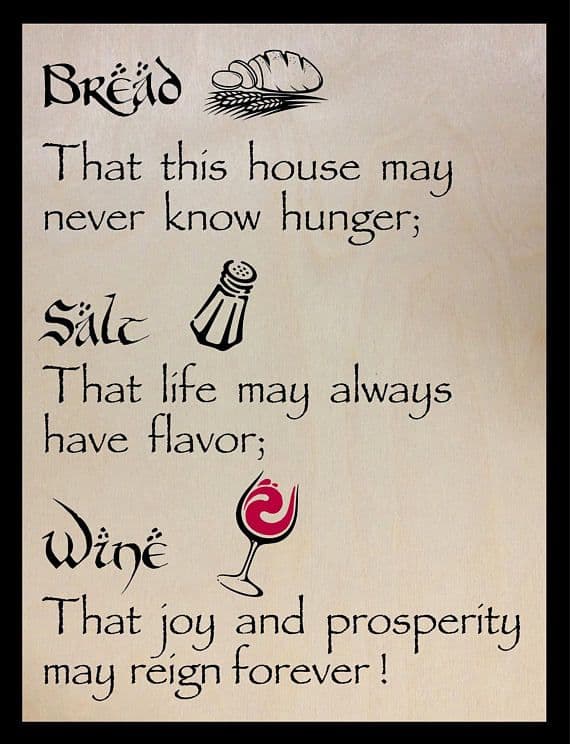
The symbolic vocabulary of housewarming gifts formed over centuries and crossed nearly every culture. Bread, so no one in the home would go hungry; salt, so life would always have flavour; wine, for prosperity; a broom, to sweep away whatever darkness lingered. These traditions appear consistently across German, Italian, Irish, Russian, and Jewish households. In the 17th and 18th centuries, pineapples became the extravagant housewarming gift of choice throughout Europe and America, their rarity making them one of the most powerful signals of hospitality a visitor could offer. In Korea, the traditional gift remains a roll of toilet paper: the longer the roll, the greater the prosperity wished upon the household.
The items most naturally suited to filling a handmade gift box, candles, small preserves, tea, and seeded sachets, are not arbitrary choices. They echo those same ancient symbols: warmth, nourishment, abundance, and the promise of something growing.
Why Handmade Has Never Mattered More
The global gifts market was valued at USD 762.4 billion in 2023 and is projected to grow at a compound annual rate of 7.8% through 2030. But scale and satisfaction are not the same thing. The same data that tracks the market's expansion also reveals its inefficiency: billions spent annually on objects people neither want nor keep. The response has been a measurable cultural pivot toward personalisation. The U.S. personalised gifts market was valued at USD 8,919 million in 2024 and is projected to reach USD 15,185 million by 2030, a compound annual growth rate of 9.2%. Home décor and accessories lead that segment with the largest market share at 21.8%, which makes housewarming the single most natural occasion to give something handmade.
On the craft side, the numbers are equally striking. U.S. craft industry revenue has reached $51 billion, and custom and DIY craft kits saw a 35% increase in sales in 2024 alone. Sales of handmade and personalised items grew 37% year-on-year, driven by demand for products that feel ethical and individual rather than mass-produced. In 2024, 71% of U.S. adults engaged in at least one craft project; among Gen Z, 86% identify as crafters. Gift-giving is the primary motivation behind 45% of all handmade purchases. These are not niche hobbyist numbers. They reflect a genuine realignment in how people choose to express care.
What You Need: Materials and the Right Machine
The central tool for this project is the Gemini die cutting and embossing machine, made by Crafter's Companion. It is a motorised machine that sits in the same competitive tier as Sizzix and Cricut, but distinguishes itself with a larger platform than the Sizzix Vagabond 2, making it particularly well-suited for projects involving significant volumes of die cutting and embossing in a single session. It handles thin materials, including the coloured linen card and patterned paper used here, cleanly and without pre-trimming, accepting full sheets of cardstock up to 8.5" x 11".
Beyond the Gemini, the full materials list includes:
- Seasonal House Dies
- Coloured linen card
- Patterned paper
- An inkpad
- Tacky glue
- A trimmer
- A scoreboard
- 3D foam pads
- Hook and loop closure (for the opening roof mechanism)
Building the Box: Nine Steps
This is a sequential construction process. Each step builds directly on the last, so working in order is essential.
1. Cut and score a 12" x 10" base piece and mark the fold lines that will form the box structure.
2. Create glue tabs along the edges, then decorate the inside panels by adhering patterned paper to each surface.
3. Cut and add the side panels, sized to match the base dimensions.
4. Assemble the box, folding and gluing the tabs so that all joins are internal and the panels sit flush.
5. Make the house-shaped front and back panels using the Seasonal House Dies, then score across the roofline to allow for a clean fold.
6. Die-cut the windows and doors from the house panels, then layer patterned paper behind each window opening to add visual depth.
7. Attach the completed house panels to the assembled box body.
8. Create the fastening strip for the roof opening: fold on a mountain fold and secure with a hook and loop closure so the roof can be opened and reclosed repeatedly.
9. Fill the finished box and tuck in a handwritten note before presenting it.
The opening roof is the design detail that makes this more than a decorative object. Because the box is genuinely reusable, recipients can return to it long after the candles have burned down. That practicality aligns directly with the 47% of shoppers who now say they prioritise eco-friendly and sustainable materials in their craft purchases, and it distinguishes this gift from anything disposable.
Filling It With Intention
What goes inside the box matters as much as the construction. The filling choices here are deliberate, not decorative: candles for warmth (a direct echo of the original fireplace-lighting tradition), mini preserves for nourishment, tea for comfort and abundance, and seeded sachets for growth. Each item is small enough to pass through the roof opening without stressing the structure, and together they form a gift that tells a coherent story about the home the recipient is beginning.
Personalisation extends well beyond the contents. The coloured linen card you select for the exterior sets the entire emotional register: warm terracotta for something Mediterranean, sage green for a garden-adjacent feeling, deep navy for a more structured and architectural sensibility. A stamped greeting inside the roof panel adds a layer of intimacy, and a miniature portrait of the recipient's actual house, tucked behind one of the die-cut windows, elevates the object from craft project to lasting keepsake.
The handwritten note is not optional flourish. In the context of a gift built from hours of considered effort, it is the one element that makes the whole thing irreplaceable.
A Gift That Outlasts the Occasion
Spring is when most people move, and the surge in seasonal demand for craft supplies around major life events confirms this project's timing. Roughly a quarter of all U.S. adults now cite DIY and arts and crafts as a personal hobby, a share that has grown steadily, and with 86% of Gen Z already identifying as crafters, the audience for handmade gift-making is only widening. The global DIY Craft Kits Market, valued at USD 14.5 billion in 2025, is projected to reach USD 27 billion by 2033, reflecting not a trend but a structural shift in how people spend time and express affection.
A gift that required genuine thought, time, and skill carries something no store purchase can replicate: visible evidence that someone considered, specifically, you. That is what a housewarming has always been about, long before the gift-giving began.
This article was produced by Prism’s automated news system from verified source data, official records, and press releases, then run through automated quality and moderation checks before publishing. The system is built and supervised by the people who set the standards it runs under. Read our full AI policy.
Did this article answer your question?