Seed Art Festival guide spotlights art as a lasting housewarming gift
Korean art can do what registry gifts often cannot: stay in a home, gather meaning, and become part of a couple’s story. SAF’s guide turns housewarming gifting into a question of scale, symbolism, and staying power.
Art that becomes part of a home
A housewarming gift should do more than fill a shelf. Seed Art Festival makes the case for Korean artwork as something a couple can live with, move with, and one day pass down, which is a very different proposition from another appliance, a gift card, or a piece of decor chosen only for the moment.
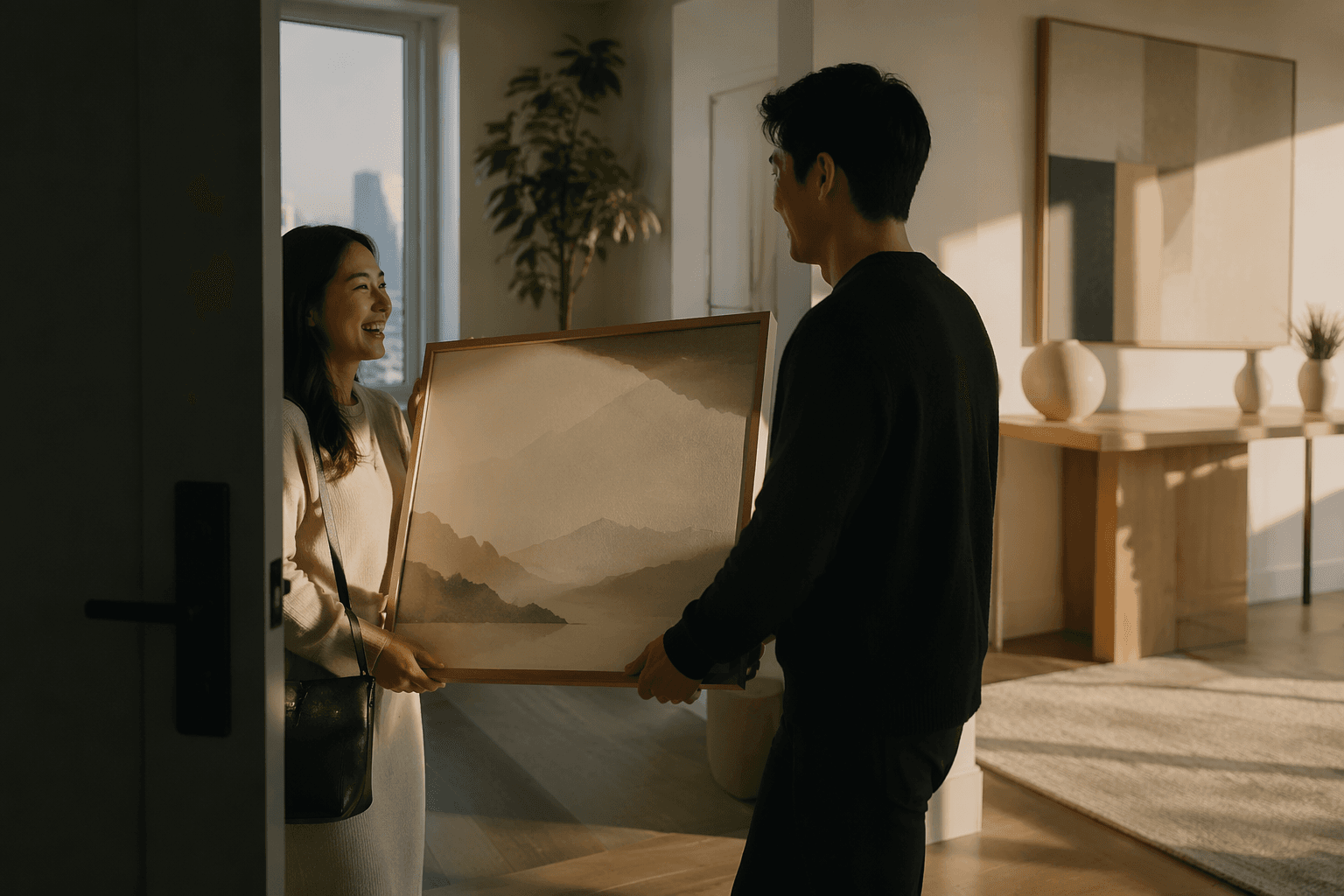
That is the appeal of its wedding and housewarming guide, titled in English “Art as a Wedding & Housewarming Gift - A Practical Guide.” It is meant not just for weddings and housewarmings, but also for business openings, and it treats art as a lasting presence in a new chapter of life rather than a decorative afterthought.
Why art feels more personal than standard registry gifts
The guide starts from a simple truth: when people move into a new home, they often already have enough toasters, kettles, and cookware. Gift cards can feel impersonal, while luxury goods can be deeply taste-dependent. Artwork sits in a different category entirely. It has a daily visual presence, but it also carries memory, which means the gift can become part of the home’s emotional identity over 10 or 20 years.
That long horizon matters. A first piece on the wall can mark the beginning of a marriage, the first apartment a couple shares, or the first room they shape for themselves. SAF’s framing is especially useful for buyers who want something thoughtful but not predictable, because it shifts the question from “What is expensive?” to “What will belong here?”
Start with the room, not the object
One of the clearest ideas in the guide is also the most practical: think about the recipient’s home layout first. That advice is especially useful for newlyweds, studio dwellers, and people living in officetels, where wall space is limited and the wrong size can overwhelm the room.
SAF recommends artworks around 10 to 20 ho, roughly 40 to 50 centimeters tall, for small homes. Works larger than 30 ho can feel burdensome in a small living room, which is exactly the kind of mistake that turns a thoughtful gift into something that has to be shuffled into storage.
What a first piece should do
The best first artwork for a new home should feel easy to place, easy to live with, and easy to love over time. That usually means choosing a piece that complements the recipient’s room rather than trying to dominate it. A work that fits a compact wall in a newlywed apartment will usually feel more luxurious than a larger piece that does not know where to land.
A good first gift also has to be displayable immediately. In practice, that means thinking about sight lines, wall height, and whether the piece will work in a living room, entryway, or bedroom. The guide’s logic is refreshingly unglamorous in the best way: the most elegant gift is the one that actually belongs where it is hung.
Motif matters, but so does restraint
Because the guide is framed around Korean artworks, motif and mood matter as much as size. The strongest choices are the ones that can carry meaning without becoming overly specific to a single taste. That is especially important for a gift that may need to live in a shared home, where one person’s favorite style can easily become another person’s compromise.
SAF’s approach suggests a useful standard for first-time buyers: choose a work that feels personal, but not so personal that it limits where it can go. For weddings and housewarmings, that balance is the real sweet spot. The piece should have enough character to feel chosen, but enough restraint to work across different interiors and stages of life.
The practical logic behind SAF’s five principles
The guide is structured around five gift principles and common mistakes to avoid, which makes it feel more like a buying tool than a mood board. Read together, those principles point to a clear hierarchy: layout comes first, then scale, then the emotional tone of the work, then suitability for the recipient’s life stage, and finally the long-term value of living with it.
That is why art works so well in this category. Unlike consumable gifts, it does not disappear after dinner. Unlike a trend-driven object, it does not lose its relevance when the next season arrives. The right piece can sit quietly in a home and still feel significant years later.
Why SAF’s platform context matters
The guide also carries weight because of the platform behind it. Seed Art Festival describes itself as a mutual-aid campaign for Korean artists, organized to counter financial discrimination toward them. Its platform features 113 Korean artists and 404 original works, which gives buyers a broad field to choose from rather than a narrow, single-artist pitch.
That broader ecosystem matters in a gifting story. Purchases help fund an artist mutual-aid loan program that began in December 2022, and SAF says the program has issued 354 loans totaling nearly KRW 700 million, with a 95 percent repayment rate. In other words, the gift is not only going into a home, it is also feeding a support structure for the artists making the work.
The gift becomes part of the home’s story
The best housewarming gifts do more than arrive beautifully wrapped. They help define what a home feels like. SAF’s guide understands that a Korean artwork can do exactly that, especially for newlyweds and first-time homeowners who want something lasting, personal, and displayable from the start.
In a season when so many gifts are quickly used up or quietly forgotten, a well-chosen work on the wall can become the thing a couple remembers, keeps, and lives with. That is the quiet luxury SAF is selling here: not spectacle, but permanence with feeling.
Know something we missed? Have a correction or additional information?
Submit a Tip