Ai Weiwei and Rubelli unveil silk installation at Milan Design Week 2026
Ai Weiwei’s silk installation and bronze, Murano-glass furniture turned Milan Design Week into a cache of gifts made to be kept, not just seen.
Milan Design Week was crowded with more than 1,000 events and over half a million visitors, but the pieces most likely to become serious gifts were the quieter, craft-led ones: Ai Weiwei’s silk installation for Rubelli, Osanna Visconti’s bronze objects, and Haydn von Werp’s Murano-glass furniture. In a week built on spectacle, these were the works with the clearest afterlife, the kind that move from fair-floor attention to a wedding gift, a housewarming anchor, or a milestone present that signals taste without shouting.
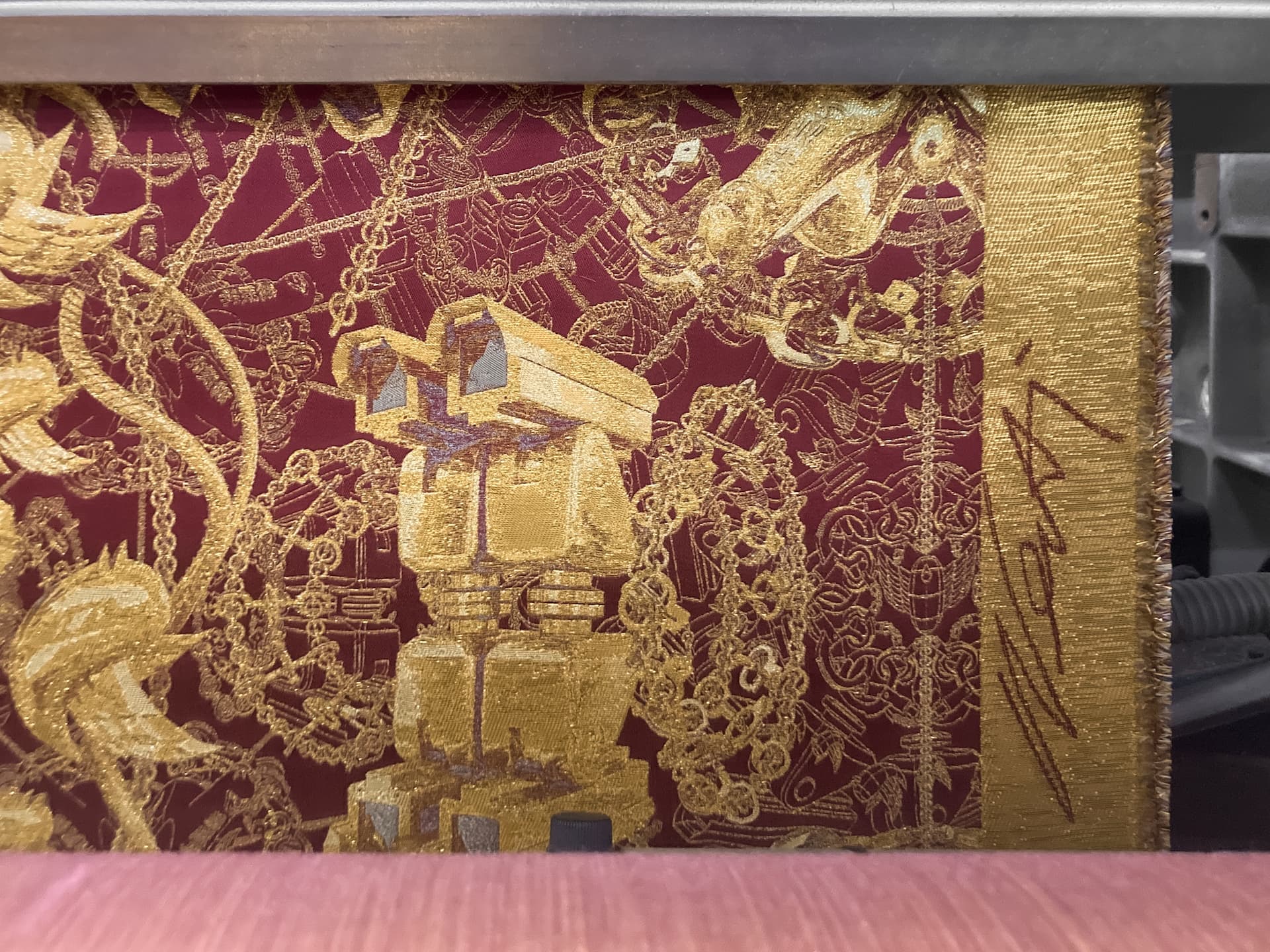
Rubelli’s most collectible moment came through Ai Weiwei, whose project About Silk was shown at the company’s showroom on Via Fatebenefratelli 9 from April 20 to 25, 2026. The installation centered on an immersive silk lampas and motifs drawn from Ai Weiwei’s visual language, including surveillance cameras, handcuffs, chains, the Twitter bird, and the llama/alpaca image. It was Ai Weiwei’s first time working in silk, a fact that matters as much to collectors as to design buyers, because novelty here sat on top of heritage. He has said he collects ancient silks, some more than 3,000 years old, and Rubelli’s encounter with him began at the Venice Biennale before the two reconnected in October 2025 to develop the project.
Osanna Visconti offered a different kind of luxury: bronze that reads like architecture in miniature. Her work is built around lost-wax casting, a process her brand traces back 6,000 years, and the pieces are made entirely by hand in natural bronze in Milan, then produced in an Italian art foundry. At Milan Design Week, her presentation The Permanence of Bronze, staged in her Via Santa Marta atelier with a set design by Dimorestudio, underscored why her objects suit gifting so well. Bronze has weight, permanence, and a patina that deepens over time, which makes it especially apt for a housewarming or a commemorative gift that is meant to stay in the family.
Haydn von Werp brought the most overtly decorative collecting energy to Museo Bagatti Valsecchi on Via Gesù, where he showed Tresse and Stemma. Tresse paired braided metal with carved natural stone, while Stemma combined Murano glass, mirrored glass, and Italian stone. Another presentation detail mentioned tables, a canopy, chairs, a mirror, and a lamp in opulent Murano glass, which gives the work a giftable edge: these are functional objects with enough rarity and material drama to feel like one-off commissions. That scarcity, especially in Murano glass and artisan bronze, is exactly what makes these Milan objects more compelling to give than to simply admire.
This article was produced by Prism’s automated news system from verified source data, official records, and press releases, then run through automated quality and moderation checks before publishing. The system is built and supervised by the people who set the standards it runs under. Read our full AI policy.
Did this article answer your question?