Audemars Piguet and Ambush unveil limited-edition Royal Oak Concept tourbillon
Only 150 Audemars Piguet x Ambush Royal Oak Concept tourbillons were released Friday, pairing a black aventurine dial with a first-ever red cage.

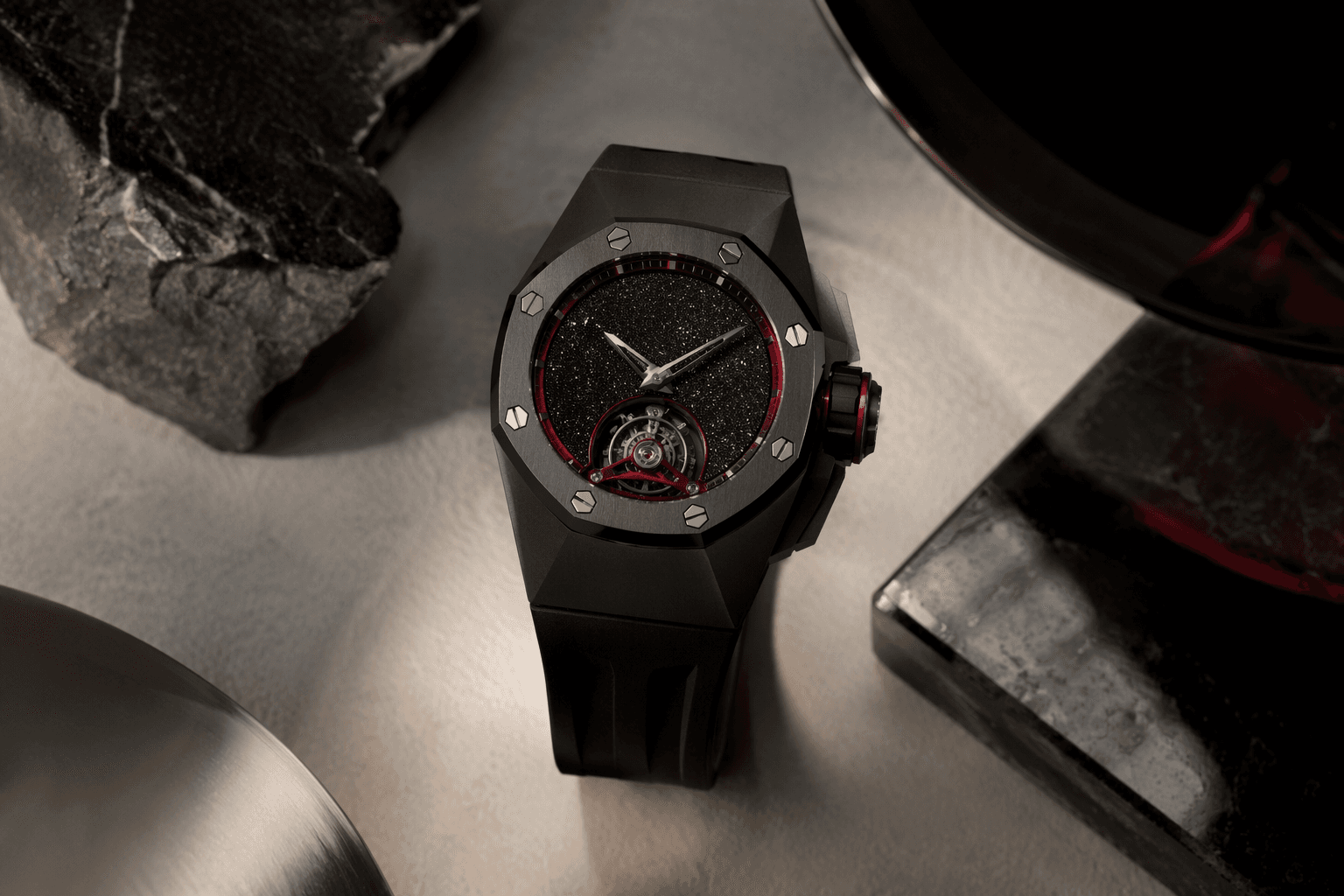
Audemars Piguet kept the drop tight and deliberate: just 150 pieces of the Royal Oak Concept Flying Tourbillon, released Friday at AP Houses and boutiques worldwide. The 38.5 mm titanium watch pairs a black aventurine dial with a red tourbillon cage, a color contrast that reads less like novelty and more like an object built to be noticed from across a room.
The partnership with Yoon Ahn and Verbal gives the piece cultural reach far beyond the usual watch-collector circuit. AMBUSH has long moved between Tokyo street culture, fashion, and jewelry, and that gives the collaboration a different kind of cachet inside a house that trades as much on image as on mechanics. Audemars Piguet framed the project as “born from collective energy,” while chief executive Ilaria Resta said the brand is “built on collective energy” and that working with the duo offered “a fresh lens on the Royal Oak Concept’s intricate architecture.” For buyers thinking in gifts, that matters: this is the sort of object that signals taste, access, and fluency in more than one luxury language.
The watch also carries enough technical drama to justify the spotlight. It uses Caliber 2982, a manually wound flying tourbillon movement developed specifically for this edition. Audemars Piguet said the red flying tourbillon cage is a first for the brand, and the watch comes with interchangeable black and red rubber straps finished with a quilted micro-mosaic motif. The result is sharp, graphic, and more wearable than many concept watches, which often lean so hard into spectacle that they lose the elegance needed for repeat use.
That balance is part of what makes the collaboration feel collectible rather than merely promotional. Audemars Piguet says the Royal Oak Concept line first appeared in 2002 to mark the Royal Oak’s 30th anniversary, and this latest edition sits neatly inside that tradition of turning a familiar icon into something more experimental. The timing also lands as the Royal Oak remains a central asset for the brand, commercially and culturally, which helps explain why a 150-piece run from Le Brassus to Tokyo can still feel like a global moment. For the buyer who wants a gift with status, scarcity, and real design intent, this is exactly the kind of watch that holds attention long after the release window closes.
Know something we missed? Have a correction or additional information?
Submit a Tip