Heirloom-Worthy Fine Jewelry Starter Pieces for Building a Timeless Collection
The smartest first heirloom pieces are the ones worn on repeat, not saved away. Here is how studs, hoops, tennis bracelets, pendants, bands, and chains earn their keep.
The case for buying jewelry that lives on the body
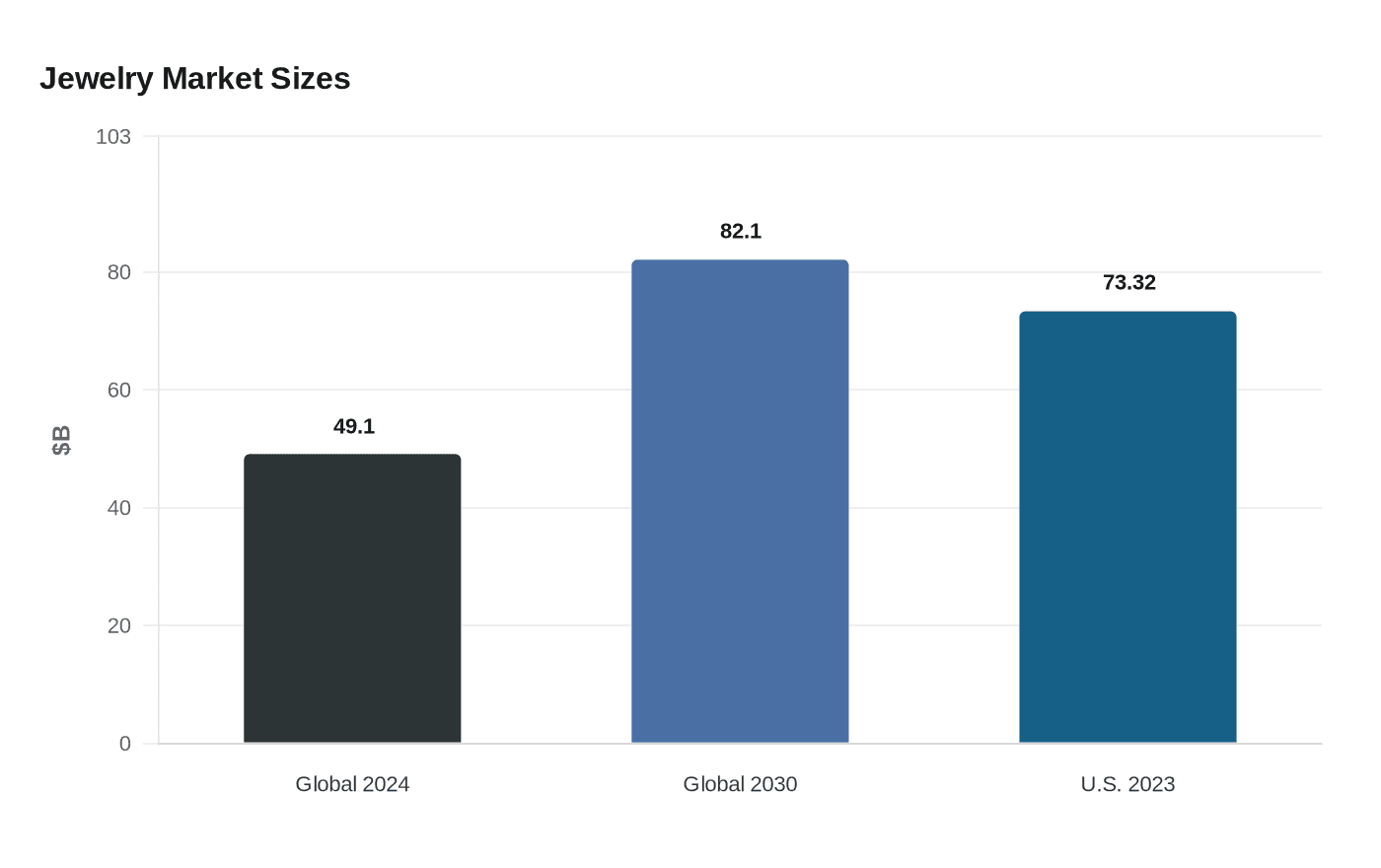
Fine jewelry earns its place when it becomes habitual. That is why starter pieces matter so much: they are the first items that can move from anniversary gift to everyday signature, then eventually into the kind of collection that carries memory as easily as it carries shine. The category is hardly niche. The global luxury jewelry market was estimated at $49.1 billion in 2024 and is projected to reach $82.1 billion by 2030, while the broader U.S. jewelry market was estimated at $73.32 billion in 2023. The money follows a simple truth: people want beautiful pieces that do not sit in a box.
That shift is visible in how people shop now. Mintel says 49% of shoppers have bought jewelry as a gift for others and 39% have treated themselves to something special, while BriteCo reports that 80% of American adults now purchase fine jewelry for themselves. In other words, the best first heirloom buys are no longer reserved for milestone gifting alone. They are increasingly chosen with the same logic as a wardrobe essential: how often will it be worn, how easily will it layer, and will it still feel right years from now?
Start with the pieces that never feel overthought
Diamond studs are the clearest place to begin because they work on nearly everyone. They are the fine-jewelry equivalent of a white shirt, polished without being loud, and they move easily from school drop-off to black tie. Their staying power is part history, part restraint: jewelers have long treated them as a classic with deep roots, and they resurfaced in the 1990s as a minimalist staple. If you want a gift that feels intimate but not risky, studs are the safest bet, especially for a partner, a new mother, or someone building a workwear collection.
Gold hoops are the same logic in a more relaxed register. They are less formal than studs, but often more lived-in, which makes them ideal for someone who wants one piece to do a lot of work. Small to medium hoops in solid gold are the sweet spot for long-term wear because they sit close to the face, soften casual outfits, and never feel too precious to wear daily. For a first fine-jewelry purchase under a stretch budget, this is often the category that gives the best cost-per-wear.
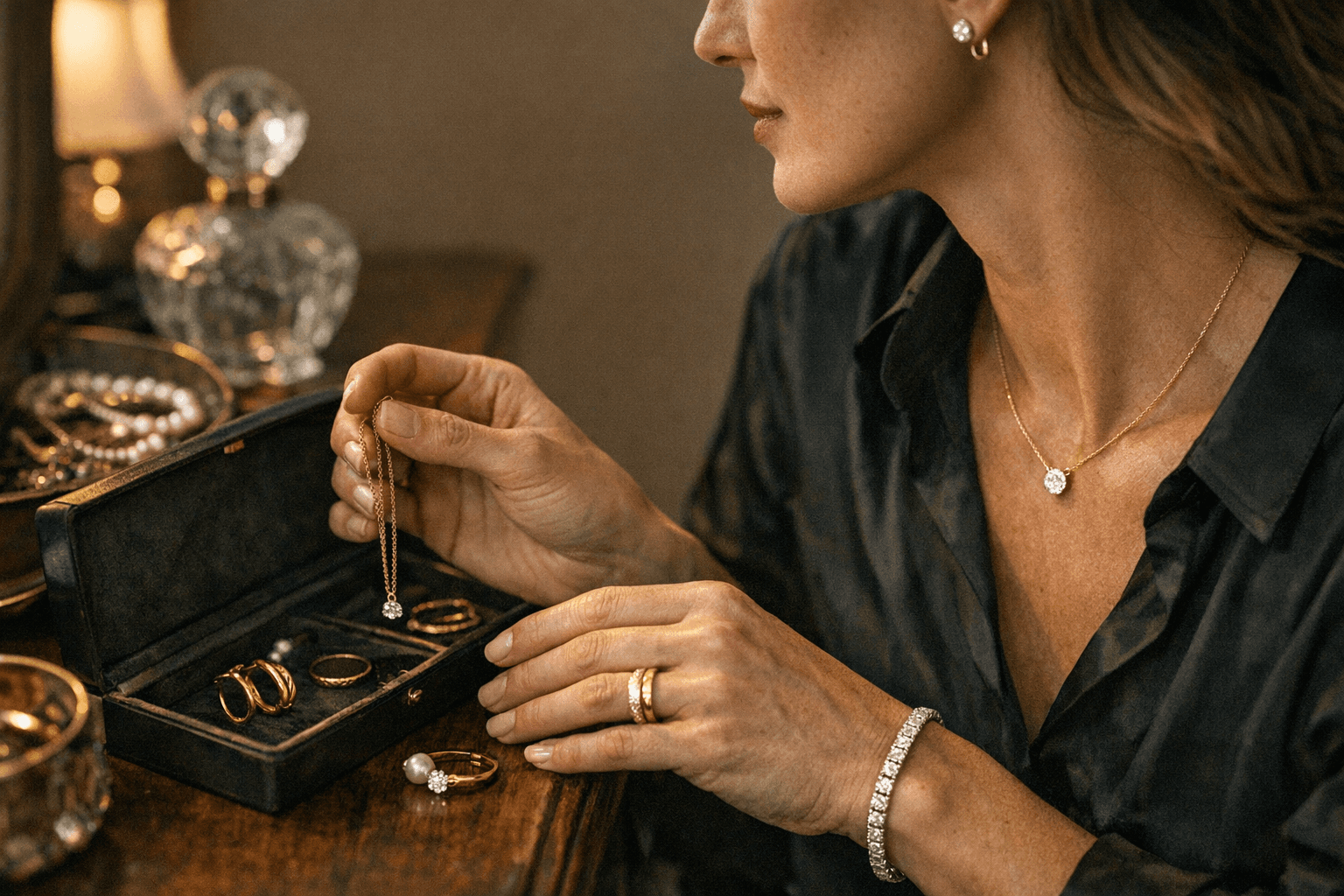
Pendants are the most personal of the starter pieces because they carry symbolism without requiring a grand narrative. A slim chain with a single pendant can mark a birth, an anniversary, or a promotion without feeling sentimental in an overly obvious way. For a recipient who likes quiet elegance, a pendant is often more useful than a statement necklace because it layers easily and can disappear under a shirt one day, then anchor a neckline the next.
The bracelet and necklace pieces that quietly do the most work
The tennis bracelet remains the category’s most recognized status piece, but its appeal has little to do with flash alone. The name is tied to Chris Evert’s famous bracelet mishap at the 1987 U.S. Open, which turned a flexible line of stones into an object of cultural memory. That history matters because it explains why the piece endures: it feels sporty, elegant, and easy to understand all at once. If you are shopping for a significant birthday, an anniversary, or a push present, a tennis bracelet says milestone without trying too hard.
Dorsey built its identity around that kind of clarity. Founded at the end of 2019 by Meg Strachan, the brand reimagines classic silhouettes such as rivière necklaces and tennis bracelets with lab-created gemstones. That makes it a smart entry point for someone who loves the look of traditional forms but wants a more contemporary price position or a slightly lighter commitment. It is especially strong for the buyer who wants a recognizable first heirloom, but prefers a modern construction story.
Chains deserve more credit than they usually get. A well-made chain can be worn alone, layered with a pendant, or used as the base for future charms and keepsakes. It is also one of the easiest categories to grow over time, which is why it works for recipients who are still defining their style. If you are buying for someone younger, or for someone who already wears a lot of necklaces, a chain offers flexibility without sacrificing polish.
When you want the gift to feel like the beginning of a collection
Stacked bands are the quiet collector’s category. They are useful because they do not demand a complete aesthetic on day one. One band can be worn alone; three can create a finished stack; and over time, each ring can mark a separate event. That makes them especially thoughtful for someone whose milestones are cumulative, like a new parent, a first-time homeowner, or someone marking successive anniversaries.
Pinky rings carry a little more personality, which is exactly why they belong in a first-heirloom conversation. They feel intentional and slightly unexpected, often reading more editorial than conventional. For a recipient who already owns studs or a bracelet and wants something with a point of view, a pinky ring adds character without closing off future wear. It is the category that says the collection has begun to develop a signature.
Kinn Studio is useful here because the brand was founded in 2017 by Jennie Yoon around heirloom-style jewelry meant to be worn every day. That philosophy is the right counterpoint to the idea that fine jewelry must be saved for special occasions. Kinn’s appeal is in its durability of meaning as much as its materials, which makes it a strong option for someone who wants jewelry that can become part of a uniform rather than a special-event costume.
Why certain founders fit this moment so well
Sophie Bille Brahe is one of the clearest examples of why provenance matters in fine jewelry. Born in Copenhagen, trained as a goldsmith, and later earning a master’s degree from London’s Royal College of Art, she also grew up in an old noble Danish family that taught her to appreciate ancient pieces and storytelling. That combination of craft and narrative is exactly what buyers want in a first heirloom piece: something that feels made, not merely produced. Her brand is a good fit for the shopper who values artistry, and for the recipient who will notice a subtle design point before a logo.
AARYAH brings a different kind of resonance. Launched by Megan Kothari in 2016 after earlier roles at L’Oréal and Estée Lauder, the New York City-based label was built around South Asian roots and artisan craft. That background gives the brand strong gifting appeal for anyone who wants a piece with cultural specificity, not just visual polish. It is especially compelling for milestone gifts because the jewelry feels tied to identity, not just occasion.
Steph Mazuera represents the newest version of heirloom thinking. Her fine-jewelry practice expanded into a full-time business during COVID-19 lockdowns and took nearly three years to develop, with an emphasis on how pieces move and live on the body. That detail matters because a lot of starter jewelry looks good in a case and average in motion. Pieces designed with movement in mind tend to become the ones people actually reach for, which is the real test of long-term value.
How to choose the right first heirloom
If the recipient is a minimalist, start with studs, a fine chain, or a slim pendant. If the goal is a gift that marks a major life event, a tennis bracelet or small hoops usually feels more celebratory without becoming precious. If you are stretching the budget for maximum wear, gold hoops and stacked bands tend to deliver the strongest daily return. If you want the piece to open a collection rather than complete one, choose the category with the most layering potential: chain, pendant, or band.
Blue Nile is an important benchmark in this space because it was founded in 1999 and describes itself as the original online jeweler. Its early promise was straightforward: make buying fine jewelry easier through value, technology, and a wide assortment of rings, necklaces, bracelets, and earrings. That model has helped normalize the idea that a first serious jewelry purchase can be practical as well as sentimental, which is exactly the mindset behind the best starter pieces.
The smartest heirloom-worthy gift is not necessarily the largest or most expensive one. It is the piece that can survive real life, repeat wear, and changing taste without losing its emotional charge. That is what turns a first fine-jewelry purchase into the beginning of a collection worth passing on.
This article was produced by Prism’s automated news system from verified source data, official records, and press releases, then run through automated quality and moderation checks before publishing. The system is built and supervised by the people who set the standards it runs under. Read our full AI policy.
Did this article answer your question?